Microlight taster flights near Swindon: restrictions and controls

Microlight taster flights near Swindon: restrictions and controls

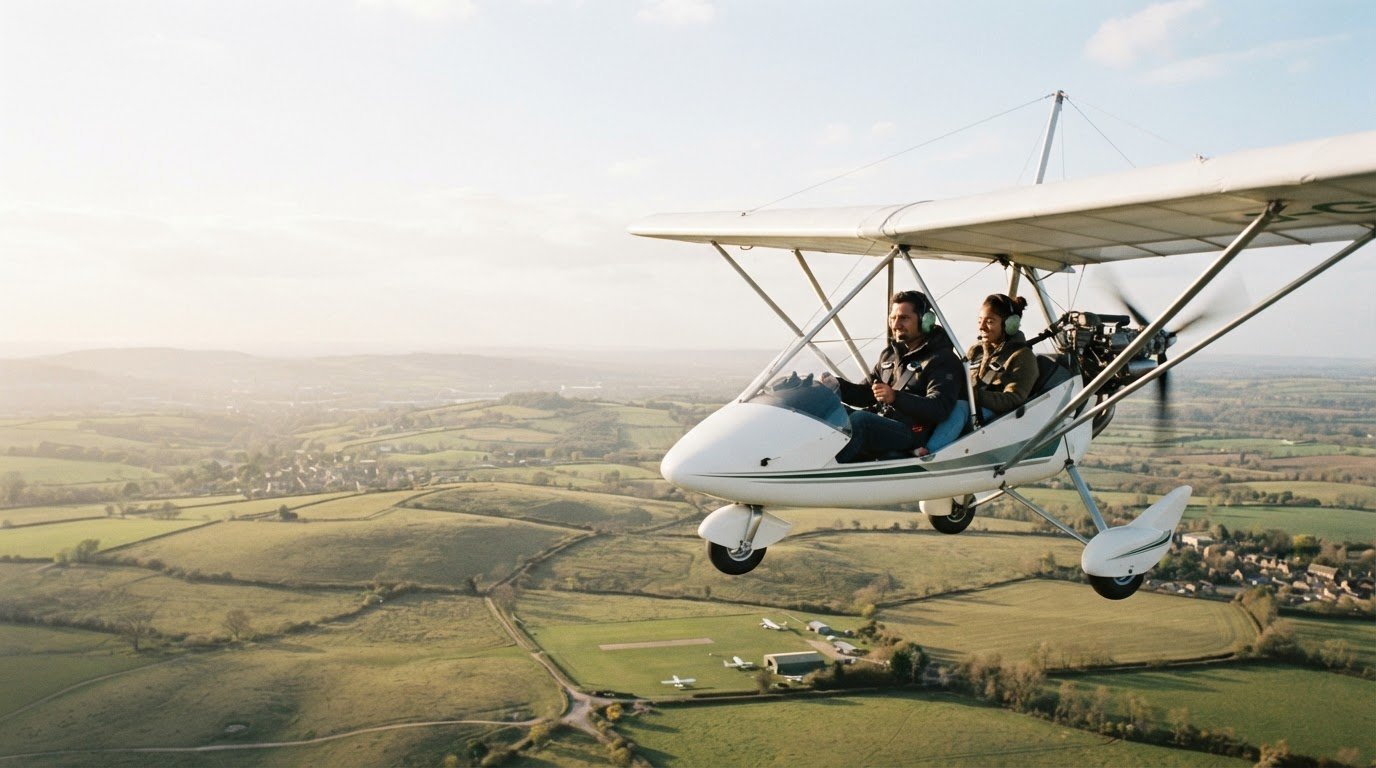
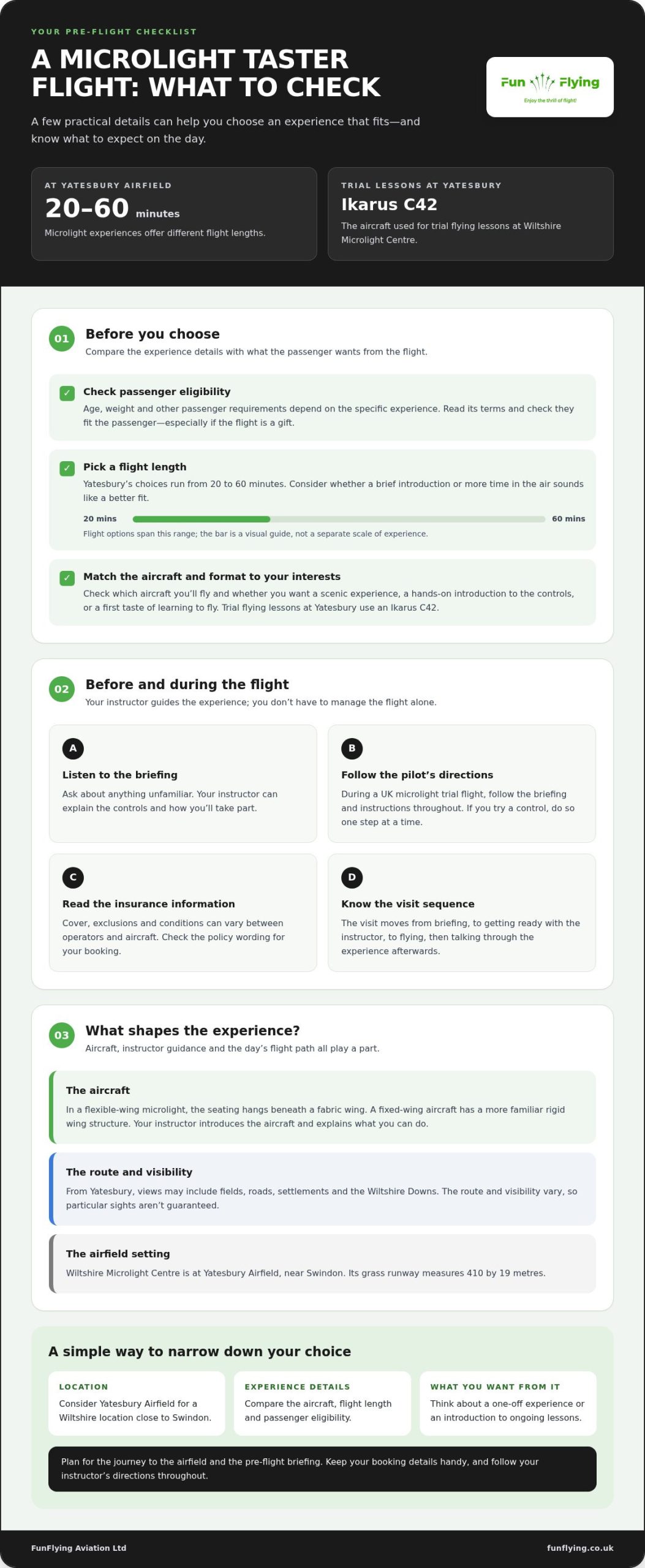
A microlight taster flight in Swindon comes with practical limits, but they depend on the aircraft and experience rather than one rule for every flight. At Yatesbury Airfield, microlight experiences range from 20 to 60 minutes. The right flight gives you a thrilling new view of the countryside, with an instructor guiding the experience.

It’s natural to wonder what to expect before booking a microlight taster flight in Swindon. Find out what can affect the flight, how flying with an instructor works and how the aircraft shapes the experience.

This guide also covers the Wiltshire scenery you may see from above and what to consider when choosing a taster flight near Swindon, so you can picture the experience and plan for the practical details.

Key Takeaways

  • Learn which practical limits can shape a microlight experience, including the aircraft and flight conditions.
  • Find out how an instructor guides you as you take a hands-on role in controlling the aircraft.
  • Discover what to look for in a flight over the countryside near Swindon and how the views can shape your experience.
  • Explore the experience flight and trial flight options available with Fun Flying Aviation Ltd.

Are there any restrictions for microlight flights?

Yes. Eligibility and arrangements can vary by aircraft and experience, so check the specific flight details before booking. At Yatesbury Airfield, microlight experiences range from 20 to 60 minutes.

Experience eligibility

Age, weight and other passenger requirements depend on the specific experience, rather than applying universally to every microlight flight. Read the eligibility terms before selecting a date and compare them with the passenger’s circumstances. This is especially useful when buying a gift voucher, as the recipient must meet the experience requirements when they fly.

Duration is another choice to make: Yatesbury’s 20-to-60-minute range gives visitors different options for a first flying experience. Consider how much time the passenger wants in the air and whether they’d prefer a brief introduction or a longer flight. The aircraft and experience description help you understand what you’re booking.

Safety rules and insurance

For a UK microlight trial flight, follow the pilot’s briefing and instructions throughout. Read the flight’s insurance information and terms to understand what cover applies and whether there are exclusions or conditions. Insurance arrangements can differ between operators and aircraft, so refer to the policy wording for your booking.

Which microlight flying schools and airfields near Swindon offer trial flights? Wiltshire Microlight Centre at Yatesbury Airfield is a local option, and trial flying lessons there use an Ikarus C42. The grass runway measures 410 by 19 metres, giving visitors a concrete picture of the airfield where the experience begins. Check the flight details for its eligibility requirements and duration before choosing.

Controlling the aircraft with an instructor

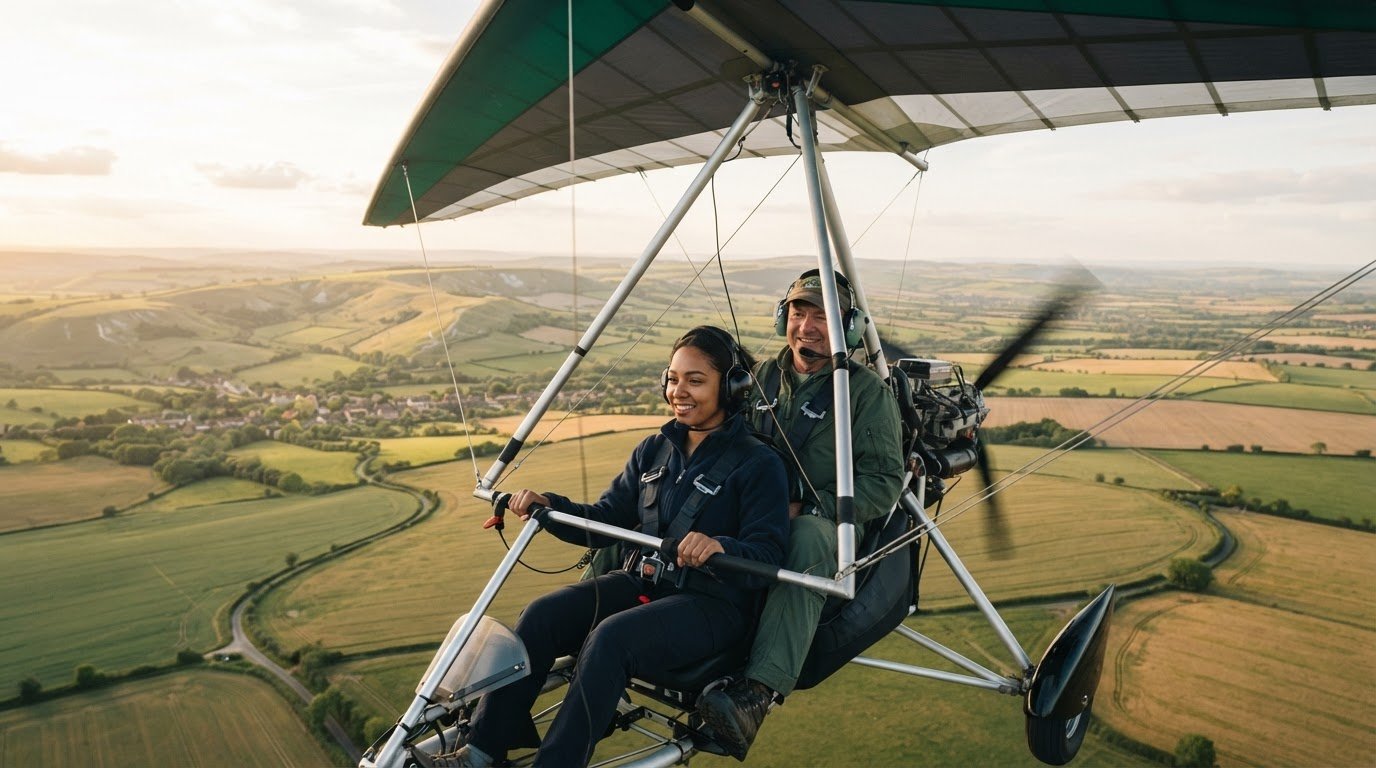
A taster flight can be more than a scenic ride: you may get a hands-on introduction to flying. Your instructor explains each step and guides you as you try handling the aircraft yourself.

Listen to the briefing before take-off and ask about anything unfamiliar. Your instructor can explain the controls and how you’ll take part during the flight. Once airborne, follow their directions one at a time: listen, try a control, then notice how the aircraft responds. You’re there to learn and enjoy the view, not to manage the flight alone.

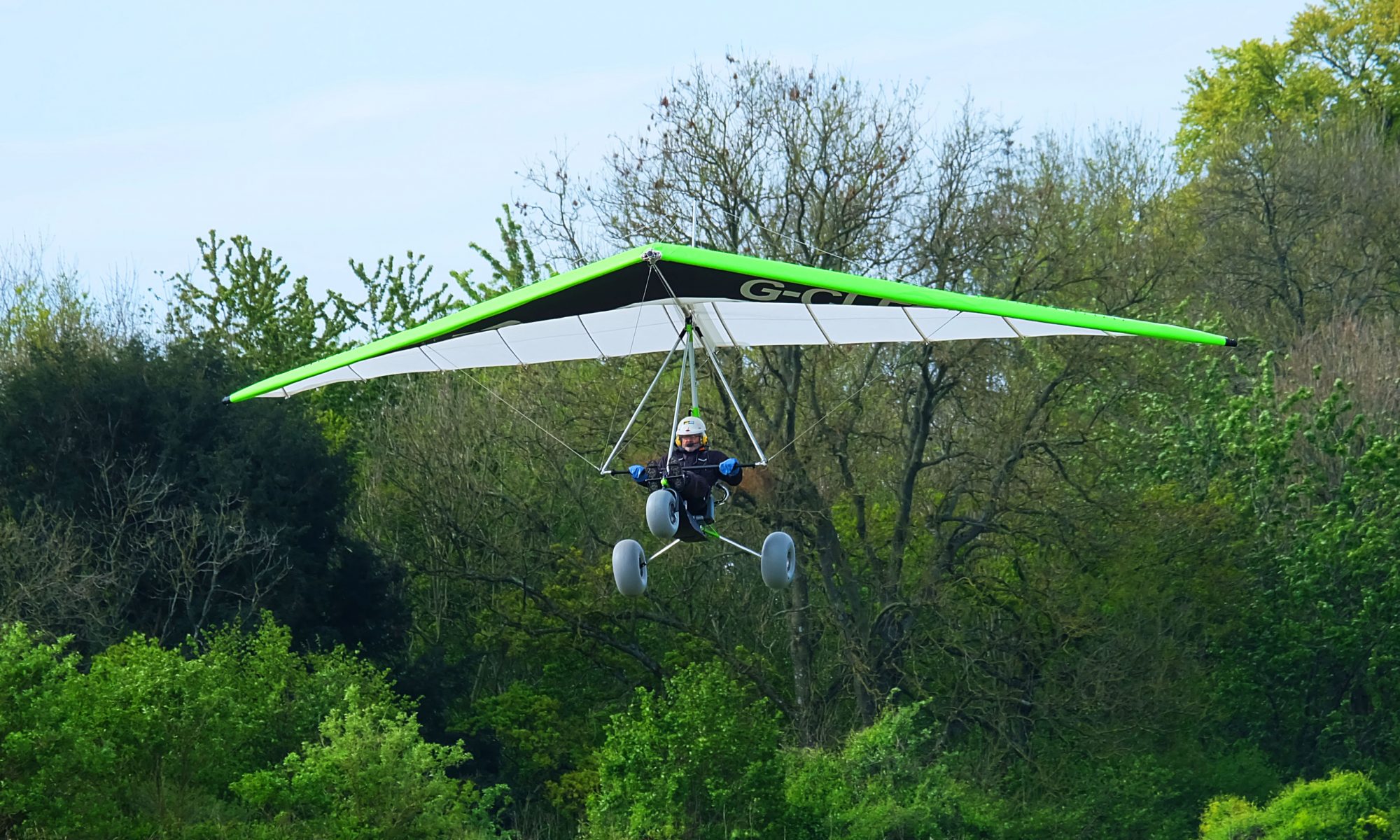
Aircraft options can affect how the experience feels. In a flexible-wing microlight, the seating hangs beneath a fabric wing; a fixed-wing aircraft has a more familiar rigid wing structure. At Yatesbury, the Ikarus C42 is used for trial flying lessons. Your instructor will introduce you to the aircraft you’re flying and explain what you can do. That makes the experience special without expecting you to arrive with flying skills.

Airfield facilities shape the visit, from where the briefing takes place to how you meet your instructor and reach the aircraft. The visit follows a simple sequence: arrive for the briefing, get ready with the instructor, fly, then talk through the experience afterwards. Pilots build skills through instruction and practice; a taster flight offers a first-hand look at that process, not a shortcut to flying independently.

If taking control sparks a bigger interest, explore how microlight lessons progress. It’s a useful next step for understanding how a first flight can lead into structured learning.

RAF Yatesbury trained more than 50,000 wireless operators, radar technicians and aircrew. Microlight aircraft can reach 1,500 feet above the ground.

Microlight flight over countryside near Swindon

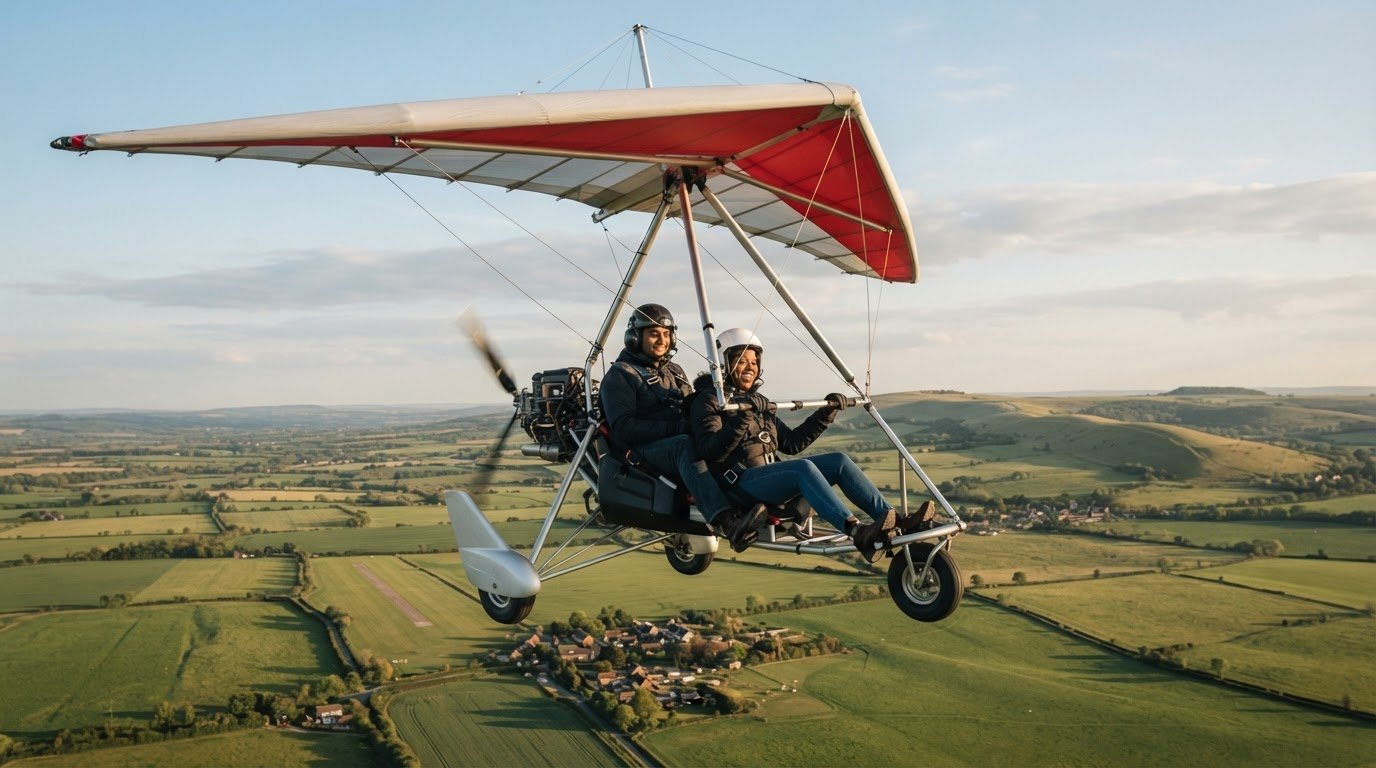
From Yatesbury Airfield, a microlight offers a close-up view of Wiltshire’s countryside. The experience depends on the aircraft’s pace, your instructor’s guidance and the flight path, rather than a guaranteed sightseeing route. Each trip is a chance to see the landscape from a fresh angle.

Look down to see a patchwork of fields, roads and settlements around Swindon. The Wiltshire Downs add a wider countryside backdrop, with the airfield as the flight’s starting point. The view changes with the route and visibility on the day. Take in the overall pattern, then look for familiar features such as a road or village as the aircraft passes.

How does a microlight taster flight compare with light aircraft or glider experiences near Swindon? A microlight is powered, while a glider experience centres on unpowered flight. A light aircraft offers a different aircraft and cabin experience. The right fit depends on whether you want a direct connection with the air in a microlight, the experience of gliding or a view of the countryside from another type of aircraft.

For a rewarding visit, choose an airfield and experience that suit your interests. Consider the flight duration and whether you’d like to try the controls with an instructor. The operator and pilot determine the route, so particular sights can vary. A local flying school can explain how the experience works, and the pilot can help you make the most of the view once airborne. Look outside and notice how fields, villages and roads form a map below.
Microlight taster flights near Swindon: restrictions and controls

Where can I book a microlight taster flight near Swindon?

A local option is Wiltshire Microlight Centre at Yatesbury, near Swindon. Before booking, match the experience description to what you want from the day: a scenic flight, an introduction to the controls or a first taste of learning to fly. This makes it easier to choose an option that feels right for you.

Use these steps to narrow down your choice:

  • Choose Yatesbury Airfield if you want a Wiltshire location close to Swindon.
  • Read the experience details for the aircraft, flight length and passenger eligibility.
  • Decide whether you’d prefer a one-off experience or an introduction to ongoing lessons.

Those details matter because microlight experiences can differ by aircraft and format. For example, a flight in an Ikarus C42 gives you a specific aircraft to consider, while an experience centred on taking the controls may better suit someone curious about pilot training. The booking information should make clear what the experience includes, so you can match it to your expectations before choosing.

Plan for the whole visit, not just the flight. Yatesbury is in the Wiltshire countryside, so allow time for your journey to the airfield and the pre-flight briefing. Keep your booking details handy and follow the instructor’s directions throughout. If you’re buying for someone else, compare their interests and eligibility with the experience terms before choosing.

For a flight near Swindon, choose an experience at Yatesbury that suits your preferred aircraft and level of involvement. If your first flight leaves you wanting to learn more, microlight lessons let you build on that introduction.

Explore microlight flying lessons

Fun Flying Aviation Ltd: Experience Flights

Fun Flying Aviation Ltd offers Experience Flights for anyone keen to see Wiltshire from the air and try microlight flying with an instructor. It’s a natural choice for a memorable first flight near Swindon, without committing straight away to training.

If your first taste leaves you wanting to fly more, Trial Flights and microlight licence training offer ways to explore what comes next. Ground School teaches the theory behind learning to fly alongside practical instruction. Choose what suits your curiosity, whether you want to enjoy the countryside from above or begin a longer learning journey.

For details about flying experiences and training, contact Fun Flying Aviation Ltd or visit funflying.co.uk.

Make your first flight the start of something bigger

A microlight taster flight in Swindon can be an adventure in itself or the start of a new passion. Think about what you want next: a special day in the air, more time exploring microlights or a structured route towards flying yourself. That choice can turn the excitement of a first flight into a plan that feels right for you.

Fun Flying Aviation Ltd offers Experience Flights and Trial Flights for anyone wanting to try microlighting, as well as microlight licence training for those ready to develop their flying skills. Take things at your own pace, whether your interest stays with occasional flights or grows into learning.

Contact Fun Flying Aviation Ltd to explore your next step

Your next adventure could begin with one flight. Let your curiosity lead the way.

Frequently Asked Questions

Should I buy a microlighting experience?

Yes, it can be a memorable gift for someone curious about aviation or keen to see Wiltshire from above. Consider whether they’d enjoy a hands-on introduction or prefer a scenic experience. Before buying, read the voucher’s expiry and booking terms, and make sure the recipient’s age and weight meet the experience requirements. This helps make the surprise both exciting and practical.

Is This Activity Weather Dependent?

Yes, microlight flying depends on the weather. Wind, cloud and visibility can affect whether a flight can take place and what the pilot can do safely. Conditions can also change the views over the countryside near Swindon. Keep your plans flexible and read the booking terms to understand how weather-related changes are handled. On a clear day, it may be easier to spot fields, villages and familiar landmarks.

What should I wear to go microlighting?

Choose comfortable clothes suited to the day’s conditions, along with flat, secure footwear for walking around the airfield. Layers are useful because the temperature can feel different away from the ground. Avoid loose accessories that could distract you or catch on equipment. A light jacket and trainers are practical for arriving at Yatesbury, listening to the briefing and getting ready for your flight.

Where will I be sitting in the microlight?

You’ll sit in the seat provided for the passenger, with the instructor or pilot controlling the flight. The layout depends on the aircraft used, so the view and feel can differ between microlights. At Yatesbury, trial flying lessons use an Ikarus C42. Before take-off, the instructor can explain the controls within reach and show you how you’ll take part during the experience.

How long is a microlight taster flight, and what is included?

At Yatesbury Airfield, microlight experiences range from 20 to 60 minutes in the air. The experience format determines what else is included, such as time with the instructor and any introduction before take-off. Check the details for the flight you’re choosing, especially if you’re comparing a shorter taster with a longer countryside flight. That way, you’ll know what the booked duration covers.

What age, weight, height, or health restrictions apply to microlight taster flights?

Limits depend on the specific aircraft and experience. For example, one Berkshire experience in a microlight with a flexible fabric wing has a minimum age of 14 years and a maximum weight of 16.5 stone. Those limits don’t automatically apply to every flight near Swindon. Read the chosen experience’s eligibility terms for age and weight requirements; height and health considerations should be assessed against its stated conditions.
Marce Colucci

Article by

Marce Colucci

Love to fly, and more importantly, love teaching others to fly.

What to Expect on a Trial Flight: Your First Microlight Flight

What to Expect on a Trial Flight: Your First Microlight Flight

What if your first microlight flight could be more than a scenic trip, without committing you to a full course? It’s natural to wonder what to expect on a trial flight, especially if you’ve never taken the controls of an aircraft before. You’ll be guided by an instructor and can take part at your own pace.

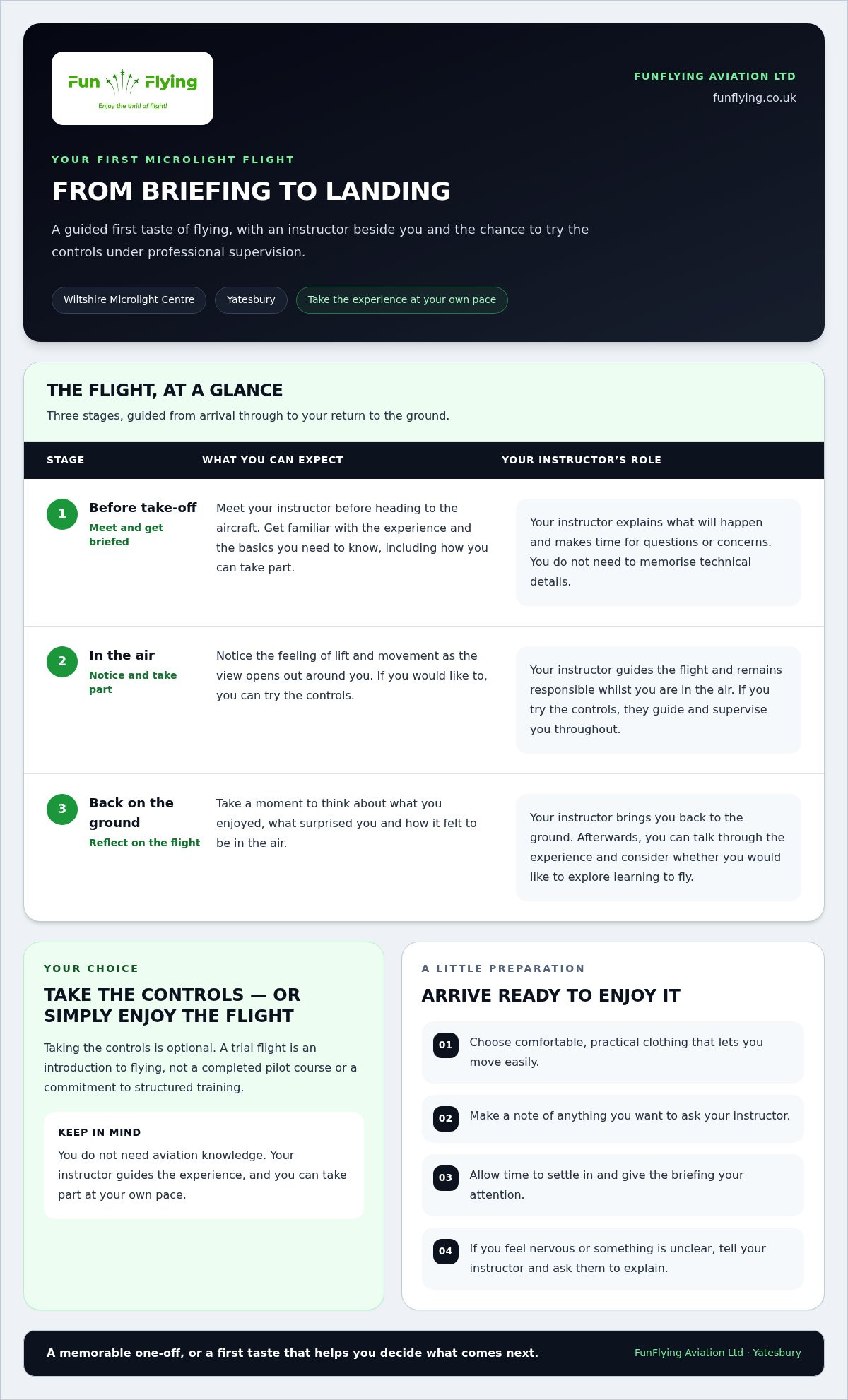
From arriving at Fun Flying Aviation Ltd to returning to the ground, this article walks you through how an introductory flight unfolds. You’ll find out what the briefing is for, what you might notice in the air and how your instructor supports you if you try the controls under professional supervision.

A trial flight is a chance to enjoy the view and get a real feel for flying, with no pressure to sign up for training. If you land wanting to learn more, it can also help you decide whether microlight licence training and ground school could be your next adventure.

Key Takeaways

  • Understand what to expect on a trial flight, including how the briefing helps you get familiar with the experience.
  • Find out how you can try the controls with your instructor’s professional supervision.
  • Get practical pointers for handling first-flight nerves, including listening closely and asking questions.
  • See how a flight from Yatesbury can be a memorable one-off or help you decide whether to explore microlight training.

What to expect on a trial flight: a guided first taste of flying

If you’re wondering what to expect on a trial flight, picture an introduction to flying with an instructor beside you, guiding the experience from the ground into the air. With Fun Flying Aviation Ltd, you can try the controls under professional supervision, so you’re not just watching the view pass by. Your instructor will guide you as you discover what being at the controls feels like.

A microlight trial flight is an instructor-guided flying experience, not a completed pilot course. It gives you a first-hand taste of being airborne and a chance to explore your curiosity, without committing you to structured training. The term “microlight” is used in different ways around the world; What is Ultralight Aviation? offers a wider overview of the category and its international variations.

Is a trial flight a lesson or an experience flight?

It’s a little of both, but its main purpose is to let you experience flying. Your instructor explains what’s happening and gives you the opportunity to take part. That makes the flight more hands-on than simply sitting back for a scenic outing, while keeping the focus on a first taste rather than a full programme of instruction.

One flight isn’t the same as learning to fly. Structured microlight training builds skills over time, with ground school to support your learning. If the experience leaves you keen to continue, you can explore microlight flight training as a separate next step.

Who is the first flight designed to reassure?

It’s for curious newcomers who want to find out how flying feels before deciding what comes next. You don’t need aviation knowledge or to know all the right words. Your instructor will guide you through the experience, explain things in an approachable way and help you make sense of what you’re seeing and doing. Bring your curiosity, and take the experience at your own pace.

From briefing to landing: how a microlight trial flight unfolds

Your first flight follows a clear progression, with your instructor guiding you from arrival through to landing. The briefing helps you get oriented, understand what will happen and ask about anything that’s on your mind. You don’t need to memorise technical details. Focus on listening, and speak up if something isn’t clear.

Meet your instructor, talk through the basics, fly with their guidance, then return to the ground and share your thoughts.

Before take-off: meeting the instructor and getting briefed

At the Wiltshire Microlight Centre, you’ll meet an instructor from Fun Flying Aviation Ltd before heading to the aircraft. They’ll explain the experience and introduce the basics you need to know, including how you can take part during the flight. Use this time to raise questions or concerns, whether you’re unsure about the controls or simply want to know what happens next. UK microlight information is also available from the British Microlight Aircraft Association.

In the air and back on the ground

Once airborne, the sensation can be a striking change from looking up at aircraft on the ground. Notice the feeling of lift and movement, and take in how the view opens out around you. Your instructor guides the flight and remains responsible while you’re in the air. If you’d like to try the controls, you can do so under their professional supervision, with guidance throughout.

As the flight comes to an end, your instructor brings you back to the ground. Afterwards, take a moment to talk about what you enjoyed, what surprised you and whether flying has sparked a bigger interest. If you want to build on the experience, you can explore structured microlight flight training at your own pace.

Feeling nervous? How to prepare for your first microlight flight

It’s completely understandable to feel a flutter of nerves before trying something new, especially when it involves flying. You don’t have to pretend you’re calm or arrive knowing what to do. The briefing is there to help you get comfortable with the experience, and you can speak up whenever something feels unclear.

Your instructor guides and supervises you throughout your participation in the flight.

What if you feel nervous about taking the controls?

Tell your instructor how you’re feeling before the flight, even if you’re not sure what’s making you anxious. Taking the controls is optional. If you choose to try them, your instructor will guide and supervise you. Listen to their instructions and ask them to explain anything you’re unsure about. There’s no need to master everything at once. Focus on one instruction at a time and let your instructor lead the way.

Simple ways to arrive ready

A little preparation can help you feel more settled and ready to enjoy the experience. Allow yourself time to arrive without rushing, so you can meet your instructor and give the briefing your attention. If you’re thinking about what to expect on a trial flight, remember that asking questions is part of getting ready, not a sign that you’re unprepared.

  • Choose comfortable, practical clothing that lets you move easily.
  • Make a note of any questions you want to raise with your instructor.
  • Give yourself a moment to settle in and take in the briefing before the flight.

Keep it simple. You don’t need special flying knowledge to make the most of your first experience. Arrive curious, listen closely and ask your instructor to explain something again if needed. That way, you can focus on discovering how it feels to be in the air, at a pace that feels manageable to you.

Explore microlight training

What to Expect on a Trial Flight: Your First Microlight Flight

Flying from Yatesbury: make your trial flight a first step or a one-off

Fun Flying Aviation Ltd operates from the Wiltshire Microlight Centre in Yatesbury, welcoming curious would-be flyers from across the region. If you’re travelling from Swindon, Bristol, Newbury, Reading, Basingstoke, Andover, Bournemouth or Portsmouth, Yatesbury is the local base for your introductory microlight flight. You might come simply to enjoy the experience and see what it’s like to be in the air. Or the flight might leave you wondering what it takes to learn to fly. Either way, you can enjoy it without pressure to make a bigger commitment.

What happens if the flight sparks an interest in learning?

A trial flight offers an introduction, while structured microlight lessons and ground school give you a way to keep developing your knowledge and skills. They serve different purposes: one lets you sample flying, while the other is a learning journey that builds over time. If you’re curious about that next step, you can explore how to become a microlight pilot. There’s no need to decide before your first experience. If your interest grows, you can explore learning to fly with Fun Flying Aviation Ltd.

A local introduction to flying at Yatesbury

For those in Swindon and across the wider region, Yatesbury is where you can begin your microlight experience with Fun Flying Aviation Ltd. The Wiltshire Microlight Centre gives your first flight a clear local setting, whether you’re treating it as a special day out or the start of a new interest. After landing, take time to reflect on what you enjoyed and whether you’d like to find out more about training.

Imagine looking back on your first flight as the moment a new interest took off. Whatever you decide, let your curiosity set the pace.

Ready to see where flying could take you?

Knowing what to expect on a trial flight can help you focus less on the unknown and more on the feeling of being up in the air. Afterwards, think about what surprised you, what you enjoyed and whether the experience left you curious to learn more. There’s no wrong answer. A first flight can be a brilliant day out in its own right, or the beginning of a new ambition.

If the idea of building your skills is starting to take shape, explore the learning pathway at your own pace. Find out what microlight training involves and consider whether it feels like the right next adventure. You don’t need to make every decision straight away. Let the experience settle, then follow the curiosity it sparks.

Explore learning to fly with Fun Flying Aviation Ltd

Whether you’re ready to take another step or simply want to savour the memory, let curiosity lead. The sky may feel closer than you imagined.

Frequently Asked Questions

Can I buy a microlight trial flight as a gift?

Yes, FunFlying offers introductory experience flight vouchers for someone curious about aviation. The recipient can enjoy being in a microlight with an instructor and may try the controls under professional supervision. It’s an experience to look forward to, rather than a promise of a particular date, flight length or route. It could suit an aviation enthusiast in Swindon, Bristol, Newbury, Reading, Basingstoke, Andover, Bournemouth or Portsmouth.

Does a trial flight include ground school?

No, ground school is part of structured microlight pilot training, rather than the trial flight itself. For the introductory experience, the instructor explains what you need to know for that flight. If it sparks an interest in learning, FunFlying offers ground school alongside microlight training. That gives you a separate way to build aviation knowledge as you explore whether pilot training is right for you.

How long does it take to become a microlight pilot after a trial flight?

There’s no single timetable to expect after a trial flight. It’s an introduction, not a set amount of training, and progressing involves structured lessons and ground school. FunFlying offers flexible training schedules, but the time it takes will depend on your own learning journey. You can use the first flight to decide whether you’d like to explore training, without needing to set a target date for becoming a pilot.

Is a microlight trial flight the same as travelling in a commercial aeroplane?

No. A microlight trial flight is a flying experience with an instructor, not transport between destinations. If you’re wondering what to expect on a trial flight, the key difference is that you’re there to experience flying itself, and you may take the controls under supervision. It’s a chance to engage with flying rather than simply travel from one place to another.

Can a trial flight be a one-off experience if I don’t want pilot training?

Yes, you can enjoy a trial flight as a one-off experience, with no expectation that you’ll go on to take lessons. You might come away with a memorable story and leave it there. Or, if you find yourself wanting to understand more about flying, microlight training and ground school are available as possible next steps. The choice is yours, before the flight and afterwards.

Marce Colucci

Article by

Marce Colucci

Love to fly, and more importantly, love teaching others to fly.

Become a Pilot in the UK: Find the Cheapest Route for You

Become a Pilot in the UK: Find the Cheapest Route for You

If you’re searching for the “become a pilot UK cheapest route”, start by deciding what kind of flying you want to do. Recreational microlight flying and a professional aviation career involve different training pathways, so their costs and commitments are not like for like.

Look beyond an advertised starting figure. The aircraft you train in, how regularly you fly and the time you set aside for ground study all affect your training journey. This guide explains how to compare recreational routes and plan around your goals, schedule and budget.

If microlight flying sounds like your kind of adventure, you can start in Wiltshire. At the Wiltshire Microlight Centre in Yatesbury, Fun Flying Aviation Ltd provides microlight training and ground school. You take control of the aircraft from your first lesson under instructor supervision, with flexible scheduling to fit around busy lives.

Key Takeaways

  • The right route depends on your goal: recreational microlight flying and a professional aviation career require different training pathways.
  • To find the become a pilot UK cheapest route for you, compare what each option prepares you to do, not just its headline price.
  • Plan for lesson continuity, personal progress, weather and ground study, as well as the training requirements for your chosen route.
  • If you’re near Swindon, Bristol or Newbury, consider whether Yatesbury is a practical base for microlight training.

What does the cheapest route to become a pilot in the UK really mean?

The lowest-cost option on paper isn’t automatically the best value. A route makes sense when it prepares you for the flying you want to do. First, decide whether you want to enjoy recreational flights in a microlight or pursue a professional aviation career. These are different ambitions, with different training pathways, so comparing them as if they were interchangeable can lead you in the wrong direction.

Your overall commitment depends on more than the route’s headline requirements. It also depends on how your skills develop, how regularly you can take lessons and how much time you devote to learning away from the aircraft. When comparing options, consider how each one fits your routine and what it prepares you to do. Gaps between lessons may affect your progress, so a realistic plan is more useful than choosing by an initial figure alone.

Are you aiming to fly for fun or pursue a flying career?

Start with the kind of flying you picture yourself doing. If you want to fly a microlight for enjoyment, recreational microlight training is the relevant route to explore. If your aim is professional flying, look into a career-focused pathway designed for that goal, or discover Florida Flyers Flight Academy to explore commercial pilot licence options and costs. The two routes have different purposes and should be assessed separately.

The Pilot licensing in the UK overview introduces different licence routes, including microlights. For a practical first step towards recreational flying, explore learning to fly a microlight. Ground study is part of building your knowledge alongside practical lessons, so consider how you’ll fit both into your routine.

In short, the become a pilot UK cheapest route depends on what “become a pilot” means to you. Define your destination, then compare the training requirements and the time and effort involved. That helps you focus on the flying that excites you, rather than a pathway that doesn’t match your ambitions.

Why microlight training may suit a recreational pilot in the UK

If you want to enjoy flying microlight aircraft, training for recreational microlight flying is a natural place to focus. The aim isn’t to choose a route because it sounds quicker or less involved. It’s to learn the skills and knowledge that relate to the flying you want to do. A career-focused pathway has a different objective, so compare each option by what it prepares you for.

What does microlight training involve?

Learning combines practical instruction in the aircraft with ground study, which builds your understanding beyond the controls and the view from the cockpit. At FunFlying Aviation Ltd, lessons are hands-on: from your first lesson, you take control of the aircraft under instructor supervision. Ground school supports your practical experience and helps you develop knowledge as your flying progresses. The British Microlight Aircraft Association also offers information for people exploring microlighting in the UK.

How is a recreational route different from professional training?

Recreational microlight training is designed for people learning to fly for personal enjoyment. Professional training has a career objective and follows a different pathway. Licence privileges, meaning what a particular licence allows you to do, and training requirements depend on the route. Use current Civil Aviation Authority guidance when comparing qualifications and their requirements.

If you’re weighing microlight training against a professional aim, how to learn to fly a microlight explains how training fits a recreational goal. Start with the aircraft you want to fly, then make sure the route you’re considering is designed for that outcome.

How to keep UK pilot training costs manageable without cutting corners

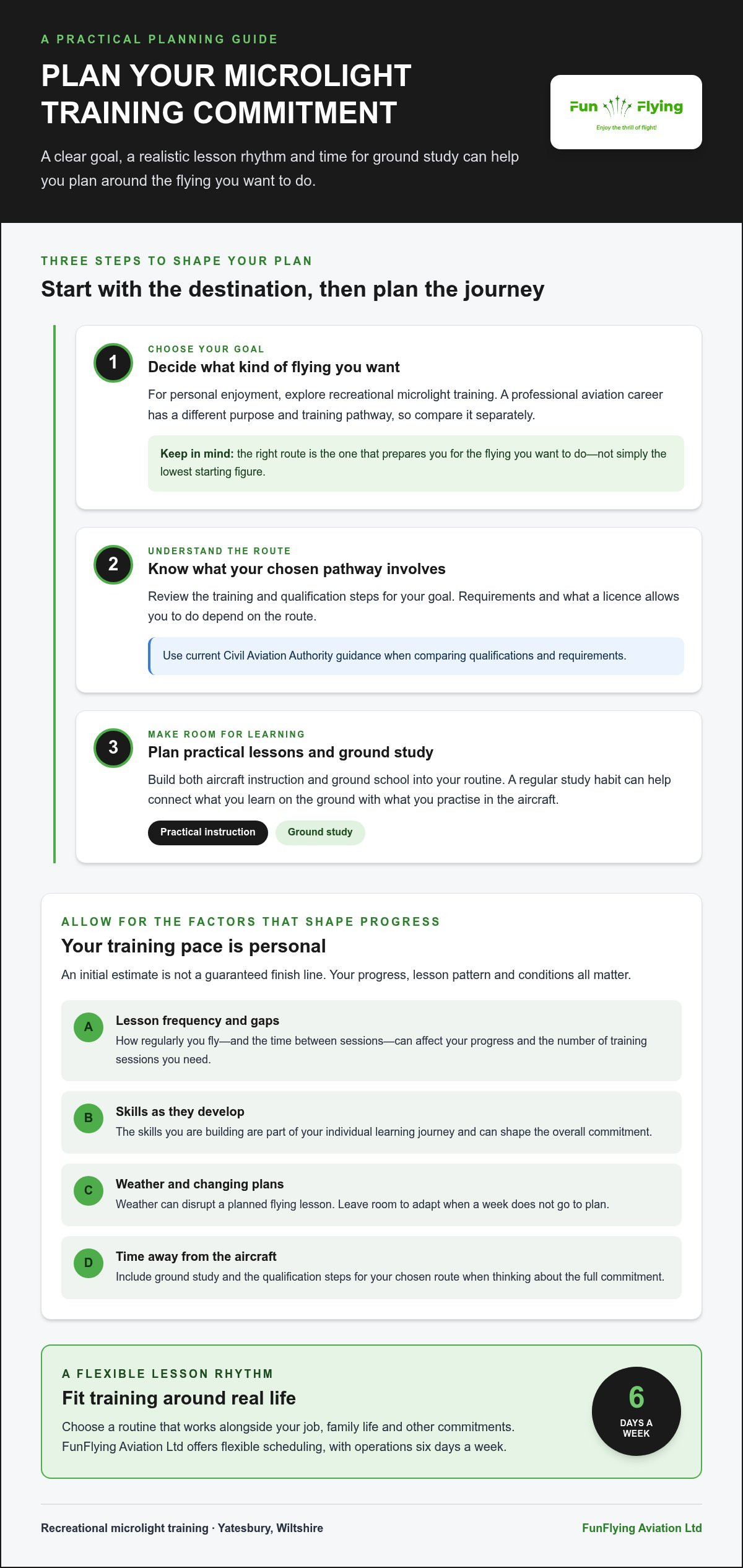
A sensible budget starts with a clear plan, not a shortcut. The become a pilot UK cheapest route for you depends on matching your ambition to the right training and allowing for how learning unfolds. Before setting expectations, work through these steps:

  1. Define your goal. Decide what kind of flying you want to do and which aircraft you want to learn in.
  2. Understand the route. Review the training and qualification steps for that goal, using current guidance for the relevant route.
  3. Plan lessons and study. Make room in your routine for practical instruction and ground school, not just time in the aircraft.

Which factors affect the overall training commitment?

Your progress is personal. Lesson frequency, the time between sessions and the skills you’re developing can all affect how many training sessions you need. Weather can also disrupt a planned flying lesson, so don’t treat a minimum or initial estimate as a guaranteed finish line. Include ground study and the qualification steps for your chosen route when planning the full commitment.

Ground study gives context to practical flying and helps you build knowledge alongside your handling skills. A regular study routine can help you connect what you learn on the ground with what you practise in the aircraft. Explore the microlight ground school and training guide as you plan.

How can flexible scheduling help you stay on track?

Choose a lesson rhythm that works alongside your job, family life and other commitments. A realistic routine is more useful than an ambitious one that’s hard to maintain. FunFlying Aviation Ltd offers flexible scheduling, with operations six days a week, to help lessons fit around busy lives. Weather and personal progress still shape the pace, so leave room to adapt when a week doesn’t go to plan.

Explore microlight flight training

Become a Pilot in the UK: Find the Cheapest Route for You

Starting microlight pilot training near Wiltshire: your next steps

Fun Flying Aviation Ltd provides recreational microlight training in Yatesbury. If you’re in Swindon, Bristol, Newbury, Reading, Basingstoke, Andover, Bournemouth or Portsmouth, think about how the journey to Yatesbury would fit into your routine, especially if you plan to fly regularly. Factoring in travel alongside work and other commitments can help you choose a realistic lesson pattern.

What can you expect from your first step at Yatesbury?

An introductory flight lets you experience microlight flying before deciding whether to begin a full training programme. It’s a flying experience in its own right, with the chance to take the controls under professional supervision. If you decide you want to learn, you can explore the structured training route and consider how it fits your goals and everyday routine.

You can choose a first step that suits you. If you’re ready to learn, explore the training route and what it involves. If you’d rather experience a flight first, book an introductory flight. Either way, you’ll have a clearer idea of what you want from flying.

Where can you explore the microlight training route?

As you consider the become a pilot UK cheapest route, keep your focus on recreational microlight flying and the training that supports that goal. Look at how practical instruction and ground study fit into your plans, then consider whether travelling to Yatesbury works for you. A route needs to feel manageable in everyday life, not just on paper.

Explore the microlight training route and take a relaxed first step towards flying.

Take your next step towards the skies

You don’t need to have every detail of your flying future mapped out before taking a first step. Turn the ambition into a practical decision: what would you most enjoy learning to fly, and what would make training fit your life? Keeping your personal goal in view helps you compare routes on more than a headline figure.

The become a pilot UK cheapest route question is easier to answer when it’s tied to the flying you actually want to do. If microlights capture your imagination, learning about the training route can help you picture what’s involved. You can take the next step at your own pace, with a clearer sense of what you’re working towards.

Explore microlight pilot training

Your first step towards the skies can be a small one. Explore microlight training with FunFlying Aviation Ltd and discover whether this route is right for you.

Frequently Asked Questions

What is the cheapest way to learn to fly in the UK?

For recreational flying, microlight training is a route to consider if microlights are what you want to fly. The become a pilot UK cheapest route depends on your aircraft and qualification goal, so compare what each training pathway covers rather than choosing based on an introductory offer alone. Professional flying has a separate training pathway; check current Civil Aviation Authority guidance for the requirements that apply.

Can you become a pilot in the UK without spending a fortune?

You can make the commitment more manageable by focusing on the kind of flying you want to do and planning training around your budget. For example, if you want to fly microlights recreationally, explore training for that goal rather than a career-focused pathway. Set aside time for study as well as flying, and don’t assume an initial estimate covers every step.

Is microlight training cheaper than PPL training in the UK?

Microlight training and PPL training prepare you for different types of flying, so compare the purpose and qualification requirements of each route rather than treating them as interchangeable. Your overall commitment also depends on your progress and lesson pattern. FunFlying Aviation Ltd provides microlight training and ground school.

How long does it take to become a microlight pilot in the UK?

There’s no set calendar time that applies to every student. Your progress, how regularly you can fly, the weather and the requirements for your chosen qualification all play a part. Someone with a steady lesson routine may progress at a different pace from someone whose work or family commitments create longer gaps. Treat any timeline as personal, not as a guaranteed completion date.

Where can I learn to fly a microlight near Swindon?

FunFlying Aviation Ltd provides microlight training at the Wiltshire Microlight Centre in Yatesbury, a local option for people based in Swindon. The centre is also relevant to people travelling from Bristol, Newbury, Reading, Basingstoke, Andover, Bournemouth or Portsmouth. Consider how regularly you can make the journey, then explore the training route or start with an introductory flight.

Marce Colucci

Article by

Marce Colucci

Love to fly, and more importantly, love teaching others to fly.

Verified by ExactMetrics