
If you’re searching for the “become a pilot UK cheapest route”, start by deciding what kind of flying you want to do. Recreational microlight flying and a professional aviation career involve different training pathways, so their costs and commitments are not like for like.
Look beyond an advertised starting figure. The aircraft you train in, how regularly you fly and the time you set aside for ground study all affect your training journey. This guide explains how to compare recreational routes and plan around your goals, schedule and budget.
If microlight flying sounds like your kind of adventure, you can start in Wiltshire. At the Wiltshire Microlight Centre in Yatesbury, Fun Flying Aviation Ltd provides microlight training and ground school. You take control of the aircraft from your first lesson under instructor supervision, with flexible scheduling to fit around busy lives.
Key Takeaways
- The right route depends on your goal: recreational microlight flying and a professional aviation career require different training pathways.
- To find the become a pilot UK cheapest route for you, compare what each option prepares you to do, not just its headline price.
- Plan for lesson continuity, personal progress, weather and ground study, as well as the training requirements for your chosen route.
- If you’re near Swindon, Bristol or Newbury, consider whether Yatesbury is a practical base for microlight training.
What does the cheapest route to become a pilot in the UK really mean?
The lowest-cost option on paper isn’t automatically the best value. A route makes sense when it prepares you for the flying you want to do. First, decide whether you want to enjoy recreational flights in a microlight or pursue a professional aviation career. These are different ambitions, with different training pathways, so comparing them as if they were interchangeable can lead you in the wrong direction.
Your overall commitment depends on more than the route’s headline requirements. It also depends on how your skills develop, how regularly you can take lessons and how much time you devote to learning away from the aircraft. When comparing options, consider how each one fits your routine and what it prepares you to do. Gaps between lessons may affect your progress, so a realistic plan is more useful than choosing by an initial figure alone.
Are you aiming to fly for fun or pursue a flying career?
Start with the kind of flying you picture yourself doing. If you want to fly a microlight for enjoyment, recreational microlight training is the relevant route to explore. If your aim is professional flying, look into a career-focused pathway designed for that goal, or discover Florida Flyers Flight Academy to explore commercial pilot licence options and costs. The two routes have different purposes and should be assessed separately.
The Pilot licensing in the UK overview introduces different licence routes, including microlights. For a practical first step towards recreational flying, explore learning to fly a microlight. Ground study is part of building your knowledge alongside practical lessons, so consider how you’ll fit both into your routine.
In short, the become a pilot UK cheapest route depends on what “become a pilot” means to you. Define your destination, then compare the training requirements and the time and effort involved. That helps you focus on the flying that excites you, rather than a pathway that doesn’t match your ambitions.
Why microlight training may suit a recreational pilot in the UK
If you want to enjoy flying microlight aircraft, training for recreational microlight flying is a natural place to focus. The aim isn’t to choose a route because it sounds quicker or less involved. It’s to learn the skills and knowledge that relate to the flying you want to do. A career-focused pathway has a different objective, so compare each option by what it prepares you for.
What does microlight training involve?
Learning combines practical instruction in the aircraft with ground study, which builds your understanding beyond the controls and the view from the cockpit. At FunFlying Aviation Ltd, lessons are hands-on: from your first lesson, you take control of the aircraft under instructor supervision. Ground school supports your practical experience and helps you develop knowledge as your flying progresses. The British Microlight Aircraft Association also offers information for people exploring microlighting in the UK.
How is a recreational route different from professional training?
Recreational microlight training is designed for people learning to fly for personal enjoyment. Professional training has a career objective and follows a different pathway. Licence privileges, meaning what a particular licence allows you to do, and training requirements depend on the route. Use current Civil Aviation Authority guidance when comparing qualifications and their requirements.
If you’re weighing microlight training against a professional aim, how to learn to fly a microlight explains how training fits a recreational goal. Start with the aircraft you want to fly, then make sure the route you’re considering is designed for that outcome.
How to keep UK pilot training costs manageable without cutting corners
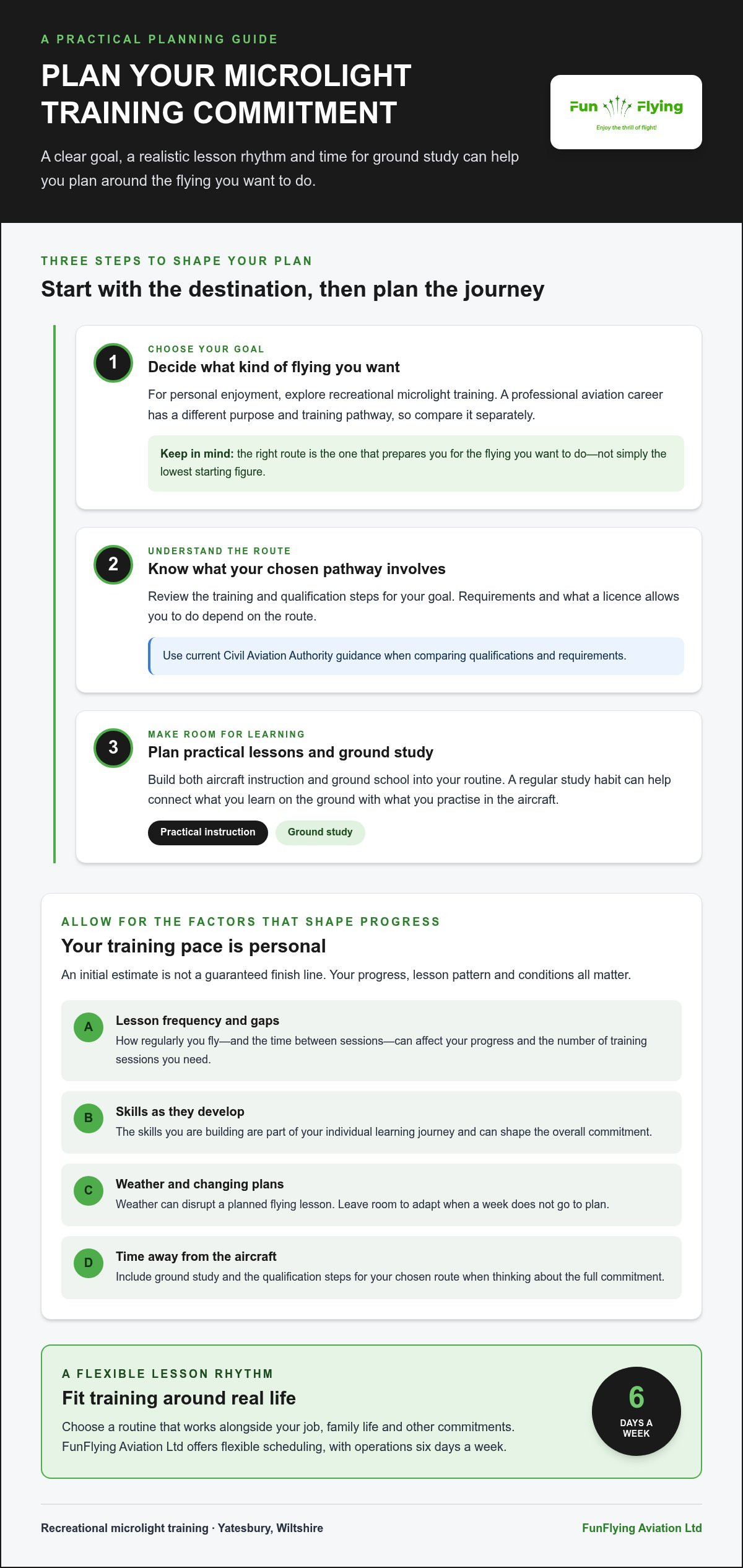
A sensible budget starts with a clear plan, not a shortcut. The become a pilot UK cheapest route for you depends on matching your ambition to the right training and allowing for how learning unfolds. Before setting expectations, work through these steps:
- Define your goal. Decide what kind of flying you want to do and which aircraft you want to learn in.
- Understand the route. Review the training and qualification steps for that goal, using current guidance for the relevant route.
- Plan lessons and study. Make room in your routine for practical instruction and ground school, not just time in the aircraft.
Which factors affect the overall training commitment?
Your progress is personal. Lesson frequency, the time between sessions and the skills you’re developing can all affect how many training sessions you need. Weather can also disrupt a planned flying lesson, so don’t treat a minimum or initial estimate as a guaranteed finish line. Include ground study and the qualification steps for your chosen route when planning the full commitment.
Ground study gives context to practical flying and helps you build knowledge alongside your handling skills. A regular study routine can help you connect what you learn on the ground with what you practise in the aircraft. Explore the microlight ground school and training guide as you plan.
How can flexible scheduling help you stay on track?
Choose a lesson rhythm that works alongside your job, family life and other commitments. A realistic routine is more useful than an ambitious one that’s hard to maintain. FunFlying Aviation Ltd offers flexible scheduling, with operations six days a week, to help lessons fit around busy lives. Weather and personal progress still shape the pace, so leave room to adapt when a week doesn’t go to plan.
Starting microlight pilot training near Wiltshire: your next steps
Fun Flying Aviation Ltd provides recreational microlight training in Yatesbury. If you’re in Swindon, Bristol, Newbury, Reading, Basingstoke, Andover, Bournemouth or Portsmouth, think about how the journey to Yatesbury would fit into your routine, especially if you plan to fly regularly. Factoring in travel alongside work and other commitments can help you choose a realistic lesson pattern.
What can you expect from your first step at Yatesbury?
An introductory flight lets you experience microlight flying before deciding whether to begin a full training programme. It’s a flying experience in its own right, with the chance to take the controls under professional supervision. If you decide you want to learn, you can explore the structured training route and consider how it fits your goals and everyday routine.
You can choose a first step that suits you. If you’re ready to learn, explore the training route and what it involves. If you’d rather experience a flight first, book an introductory flight. Either way, you’ll have a clearer idea of what you want from flying.
Where can you explore the microlight training route?
As you consider the become a pilot UK cheapest route, keep your focus on recreational microlight flying and the training that supports that goal. Look at how practical instruction and ground study fit into your plans, then consider whether travelling to Yatesbury works for you. A route needs to feel manageable in everyday life, not just on paper.
Explore the microlight training route and take a relaxed first step towards flying.
Take your next step towards the skies
You don’t need to have every detail of your flying future mapped out before taking a first step. Turn the ambition into a practical decision: what would you most enjoy learning to fly, and what would make training fit your life? Keeping your personal goal in view helps you compare routes on more than a headline figure.
The become a pilot UK cheapest route question is easier to answer when it’s tied to the flying you actually want to do. If microlights capture your imagination, learning about the training route can help you picture what’s involved. You can take the next step at your own pace, with a clearer sense of what you’re working towards.
Your first step towards the skies can be a small one. Explore microlight training with FunFlying Aviation Ltd and discover whether this route is right for you.
Frequently Asked Questions
What is the cheapest way to learn to fly in the UK?
For recreational flying, microlight training is a route to consider if microlights are what you want to fly. The become a pilot UK cheapest route depends on your aircraft and qualification goal, so compare what each training pathway covers rather than choosing based on an introductory offer alone. Professional flying has a separate training pathway; check current Civil Aviation Authority guidance for the requirements that apply.
Can you become a pilot in the UK without spending a fortune?
You can make the commitment more manageable by focusing on the kind of flying you want to do and planning training around your budget. For example, if you want to fly microlights recreationally, explore training for that goal rather than a career-focused pathway. Set aside time for study as well as flying, and don’t assume an initial estimate covers every step.
Is microlight training cheaper than PPL training in the UK?
Microlight training and PPL training prepare you for different types of flying, so compare the purpose and qualification requirements of each route rather than treating them as interchangeable. Your overall commitment also depends on your progress and lesson pattern. FunFlying Aviation Ltd provides microlight training and ground school.
How long does it take to become a microlight pilot in the UK?
There’s no set calendar time that applies to every student. Your progress, how regularly you can fly, the weather and the requirements for your chosen qualification all play a part. Someone with a steady lesson routine may progress at a different pace from someone whose work or family commitments create longer gaps. Treat any timeline as personal, not as a guaranteed completion date.
Where can I learn to fly a microlight near Swindon?
FunFlying Aviation Ltd provides microlight training at the Wiltshire Microlight Centre in Yatesbury, a local option for people based in Swindon. The centre is also relevant to people travelling from Bristol, Newbury, Reading, Basingstoke, Andover, Bournemouth or Portsmouth. Consider how regularly you can make the journey, then explore the training route or start with an introductory flight.