Flying Lessons near Chippenham: Guide to Wiltshire Skies

Flying Lessons near Chippenham: Guide to Wiltshire Skies

Imagine sitting in the pilot’s seat, looking down at the golden Wiltshire hills while you personally bank the aircraft into a gentle turn. Most people assume that taking flying lessons near Chippenham is a dream reserved for the wealthy or those with years of engineering knowledge. You might worry about drowning in complex technical jargon or think it’s impossible to squeeze training into your hectic work week. We get it. The truth is that starting your aviation journey is far more accessible and affordable than you ever imagined.

This guide reveals how you can take control of a microlight from your very first lesson at a friendly, local centre just a 15-minute drive away in Yatesbury. We’ll show you a clear path to earning your licence with a flexible schedule that works around your life, six days a week. From the heart-pounding excitement of trial flights to the ultimate freedom of the open sky, discover why your seat in the cockpit is already waiting for you.

Key Takeaways

  • Discover how easy it is to start flying lessons near Chippenham and soar above iconic Wiltshire landmarks like the historic white horses.
  • Learn why microlighting is the most cost-effective and modern way to earn your wings without the high costs or complexity of traditional aviation routes.
  • Find out why a supportive instructor and a modern, well-maintained fleet are the most important factors when choosing your local flight school.
  • Understand how you can take control of the aircraft from your very first lesson and fit training into your life with flexible schedules six days a week.

Your Sky-High Adventure: Discovering Flying Lessons near Chippenham

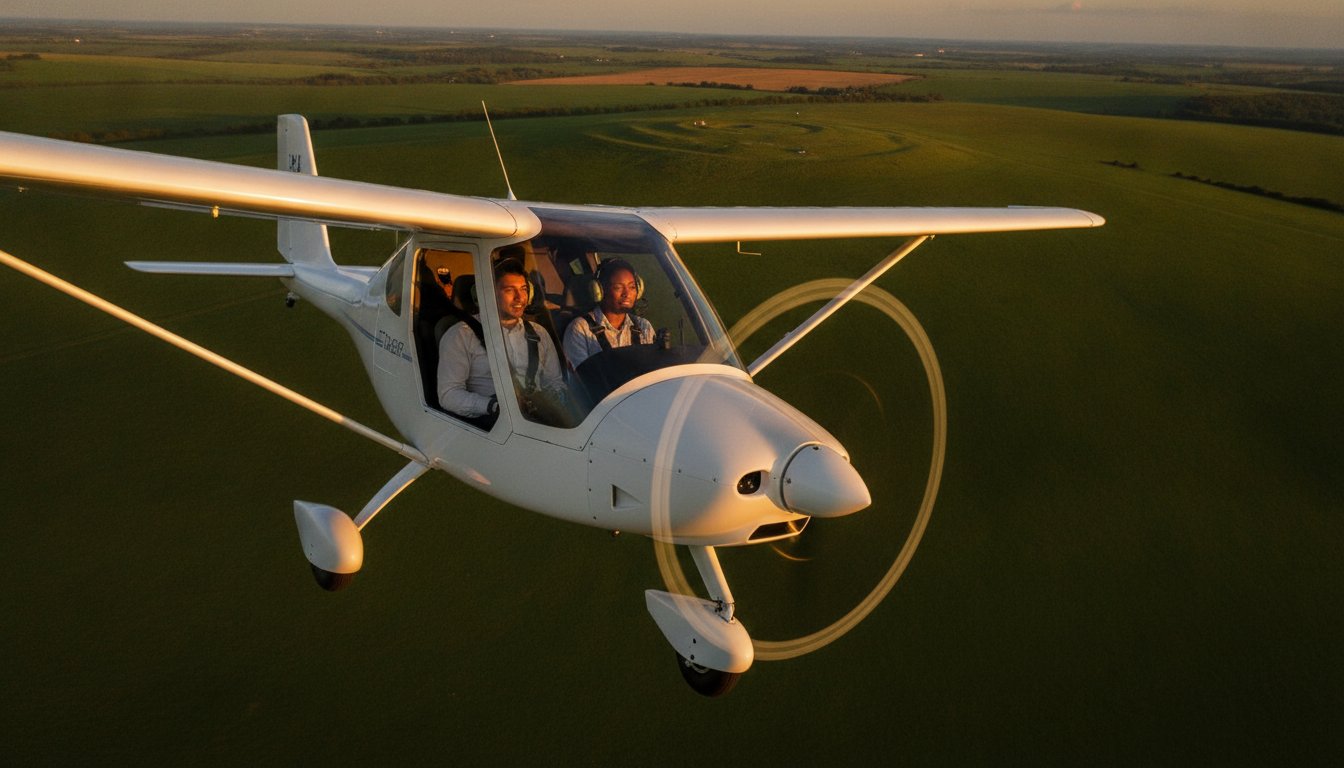
Imagine the sensation of lifting off and seeing the world shrink beneath you. It’s not just a dream; it’s exactly what happens when you start flying lessons near Chippenham. Unlike traditional aviation, which can feel heavy and disconnected, microlighting offers a pure, tactile experience. These modern, lightweight aircraft are the ultimate game-changers, providing a responsive and exciting way to explore the skies. You aren’t just a passenger here. From your very first trial flight, you’ll have your hands on the controls, feeling the aircraft react to your every move under the guidance of a professional instructor. It’s the most accessible way to start your aviation journey right on your doorstep in Wiltshire.

The Magic of the Wiltshire Landscape from Above

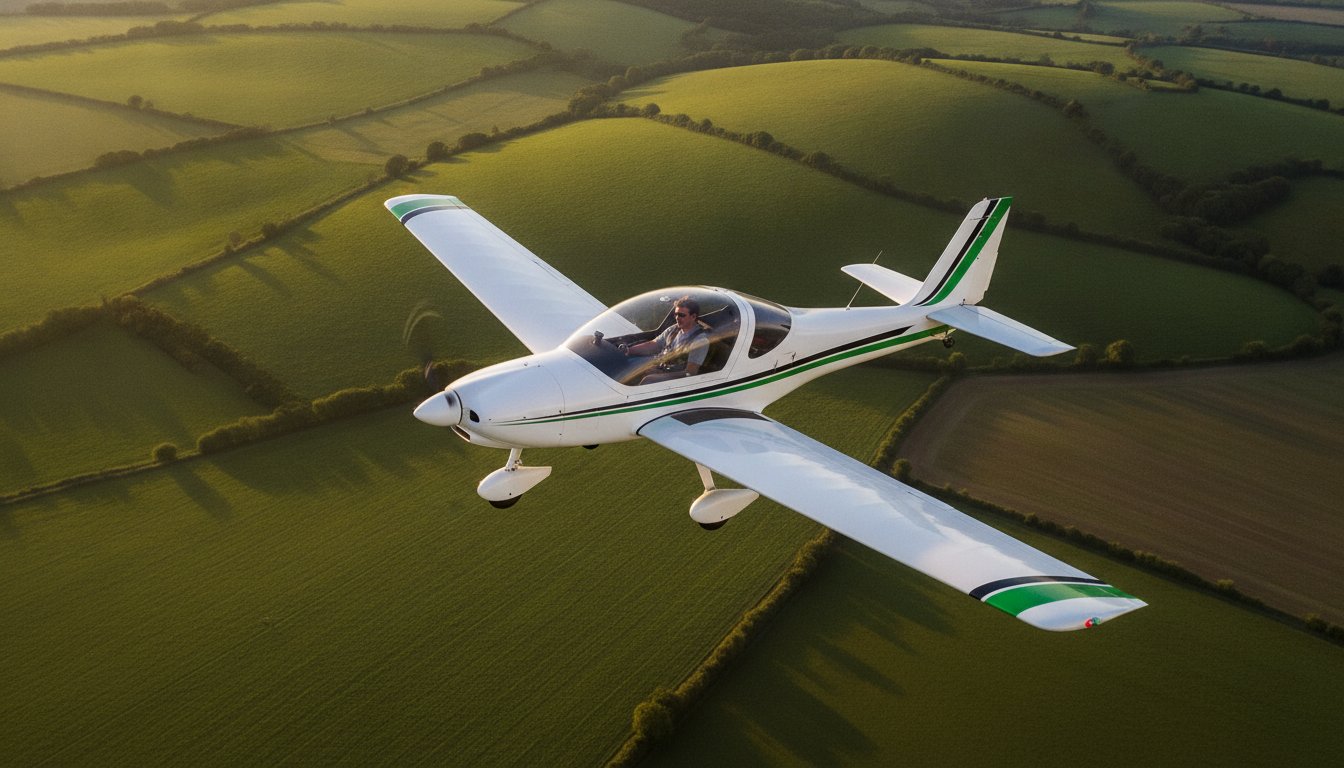
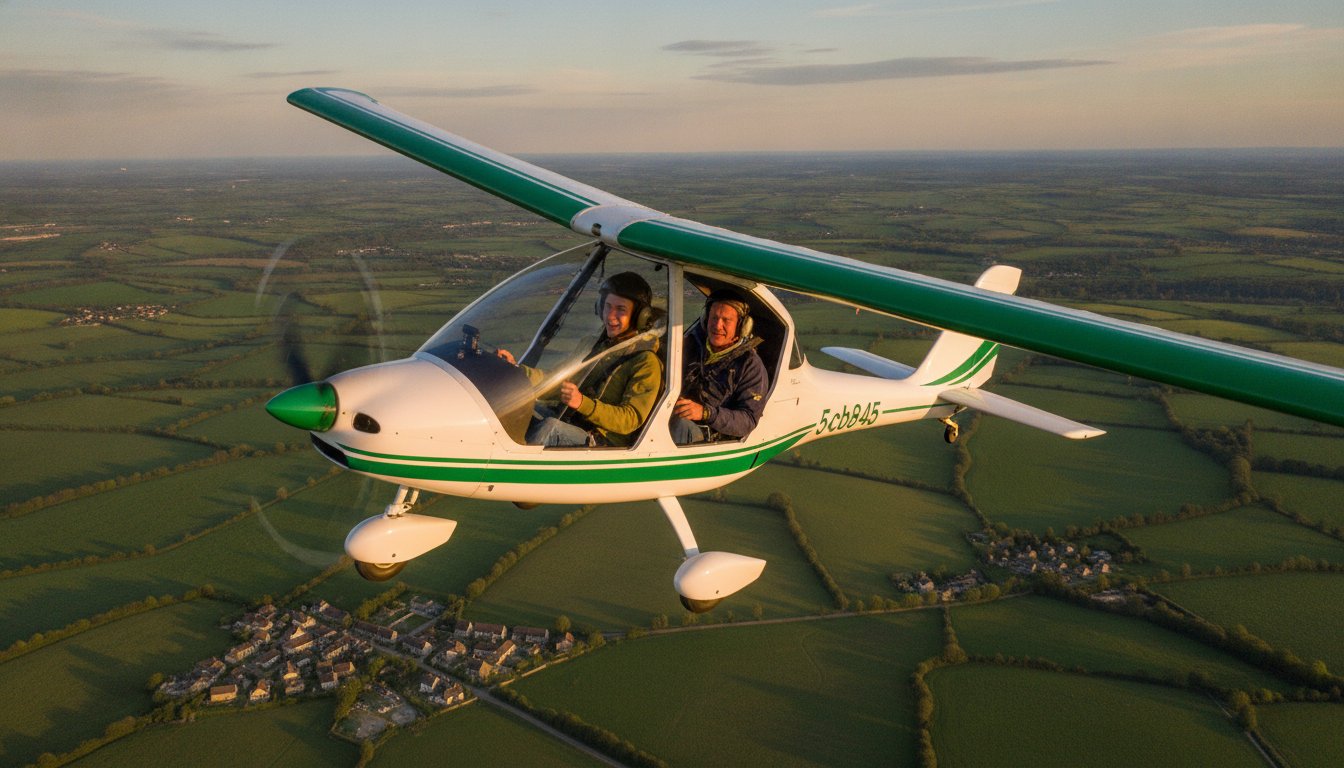
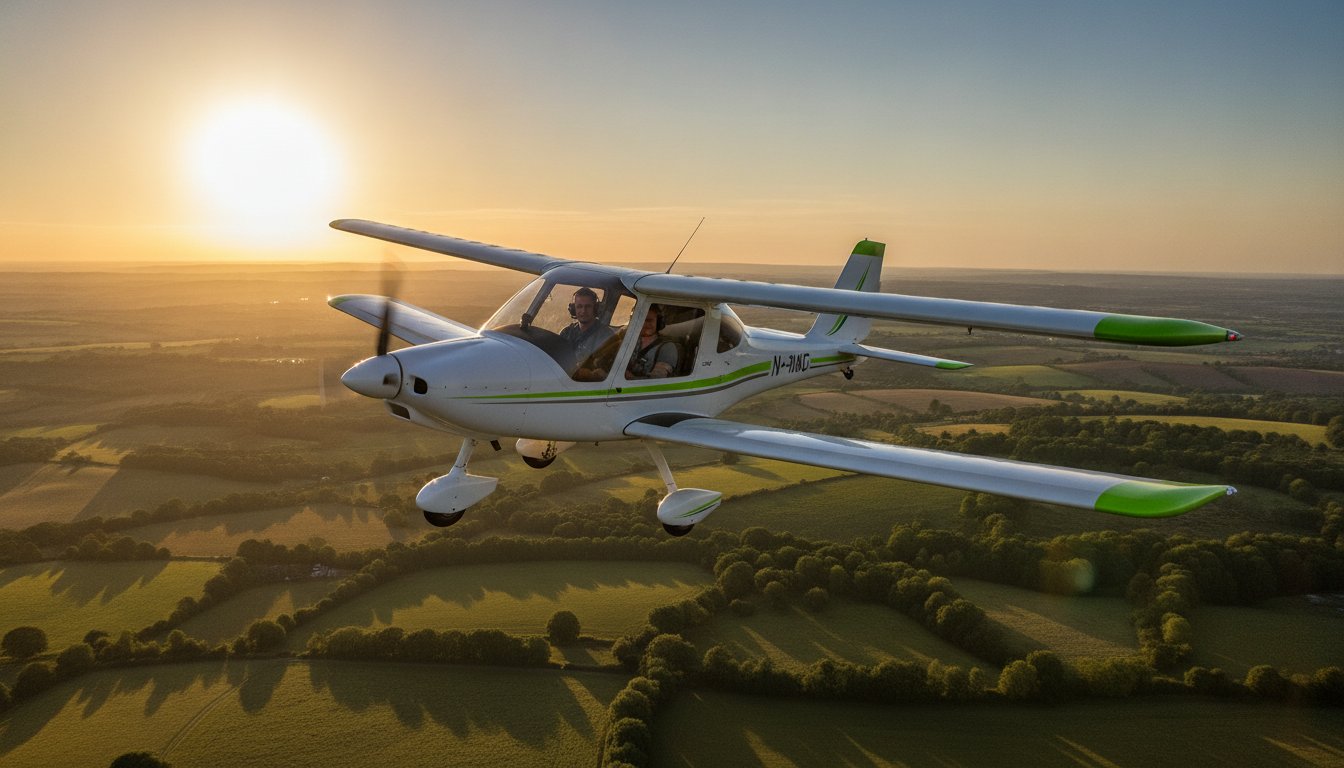
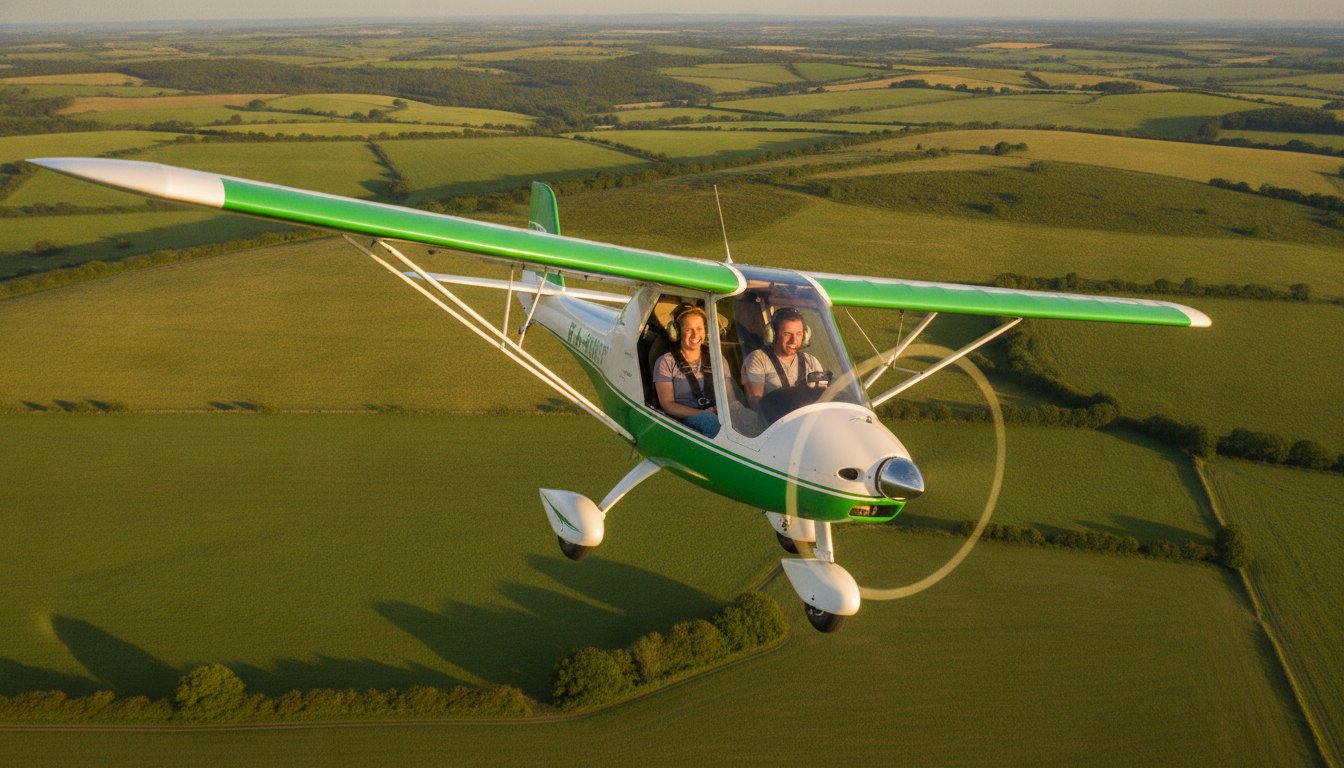
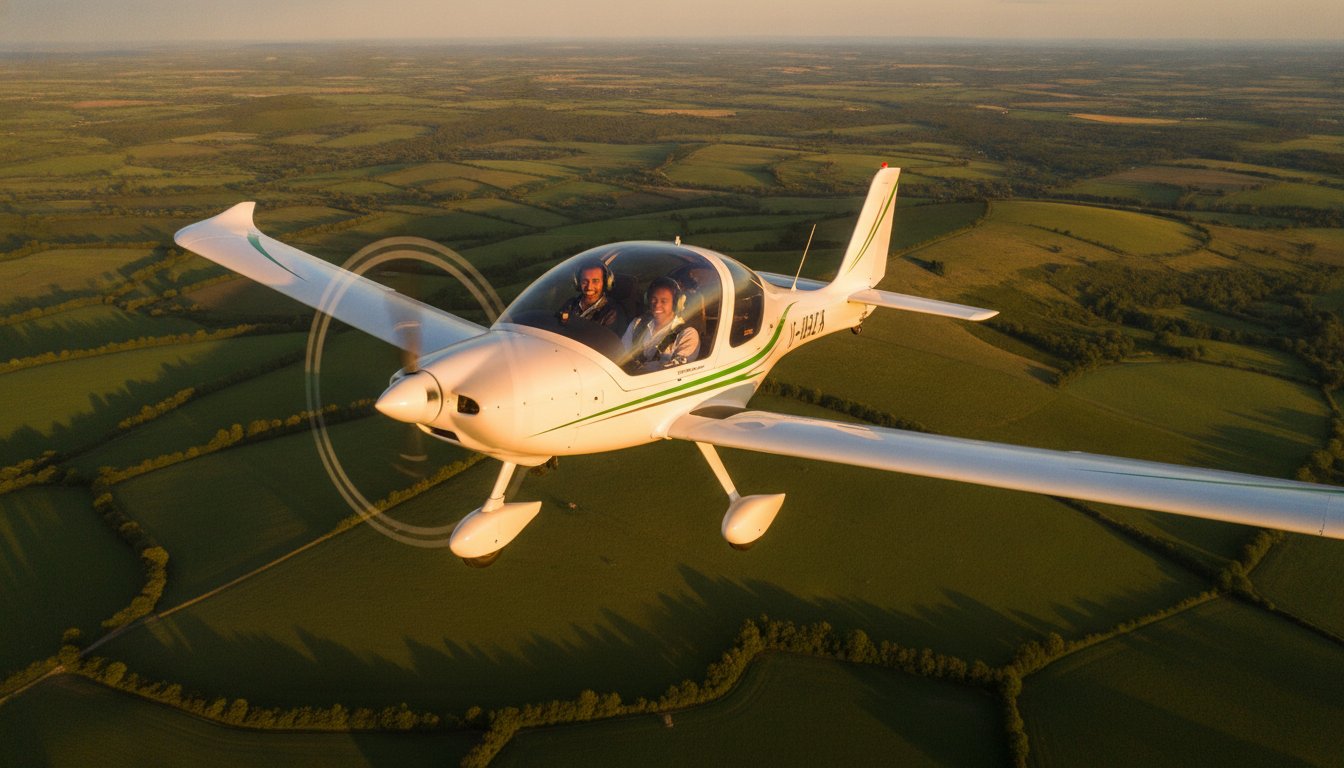
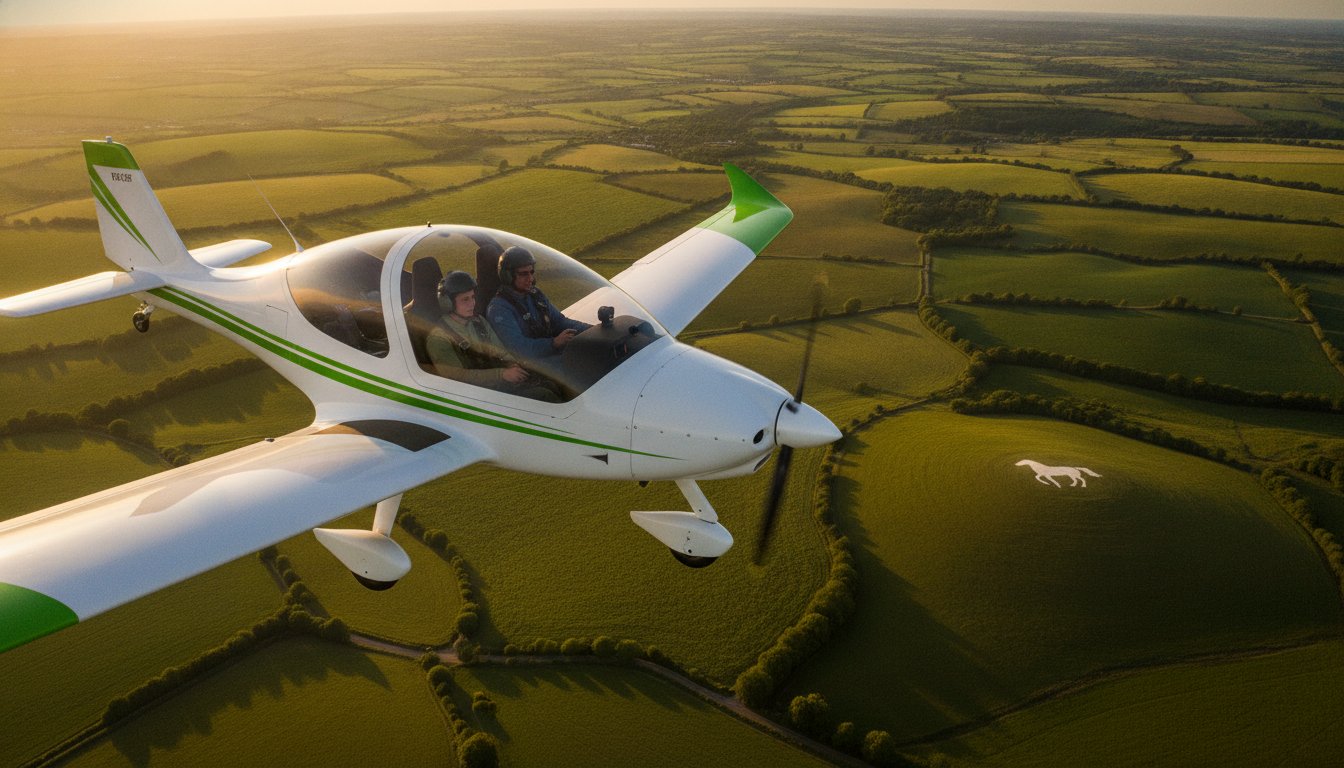
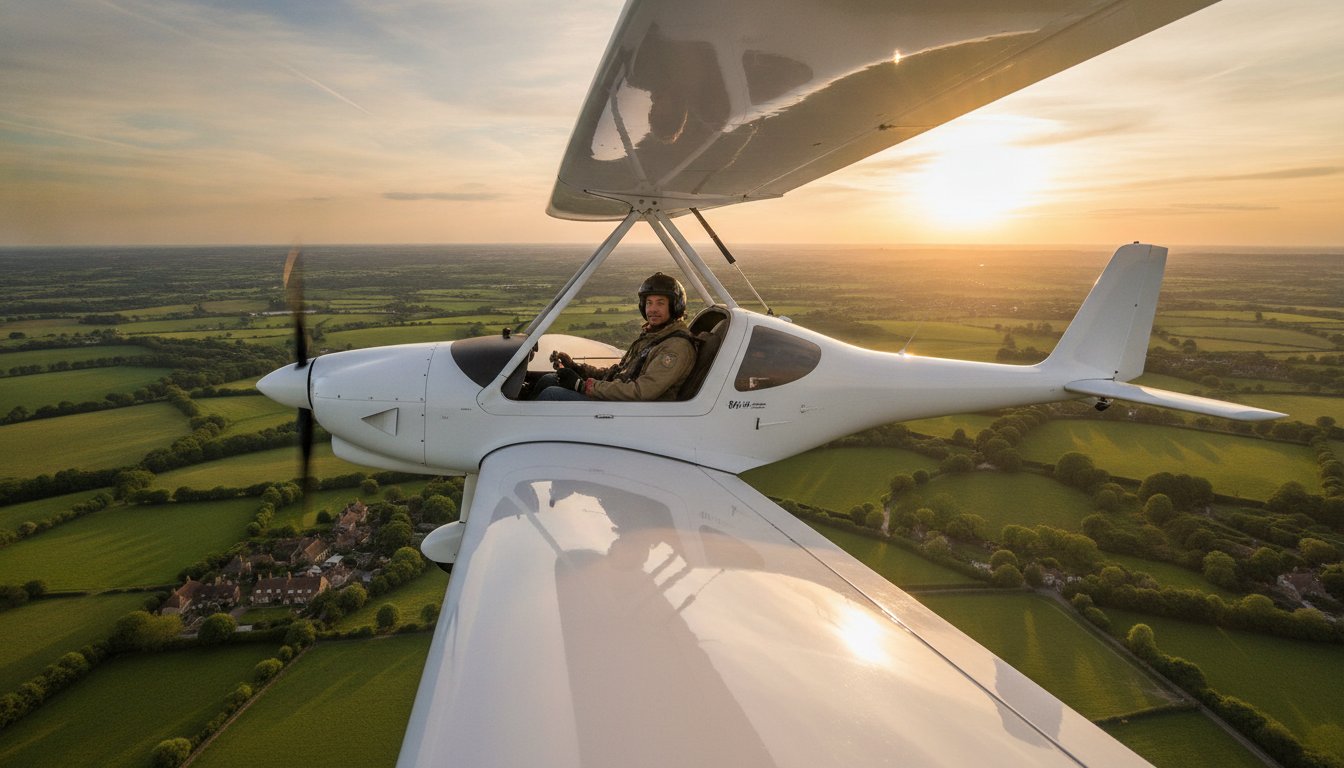
Flying over Wiltshire is a visual feast. As you climb, the historic Cherhill White Horse reveals itself in full glory; it’s a view few ever get to see from this perspective. The rolling Wiltshire Downs provide more than just a stunning backdrop. The local geography often creates stable flying conditions that are perfect for newcomers. Spotting local landmarks from a bird’s eye view transforms the familiar landscape into a vast, breathtaking playground. There’s nothing quite like identifying your own neighbourhood from a thousand feet up.

Why Local Matters: Convenience for Your Aviation Journey

Choosing a school close to home is the secret to success. Our centre at Yatesbury is just a short, 15-minute drive from Chippenham, meaning you spend less time commuting and more time in the cockpit. Maintaining training momentum is vital when you’re mastering new skills. Because we operate six days a week, you can easily learn to fly around your existing work schedule. This flexibility ensures your new favourite hobby remains a joy rather than a chore, helping you progress quickly towards your pilot licence.

Microlights vs Traditional Aircraft: Which Path is Right for You?

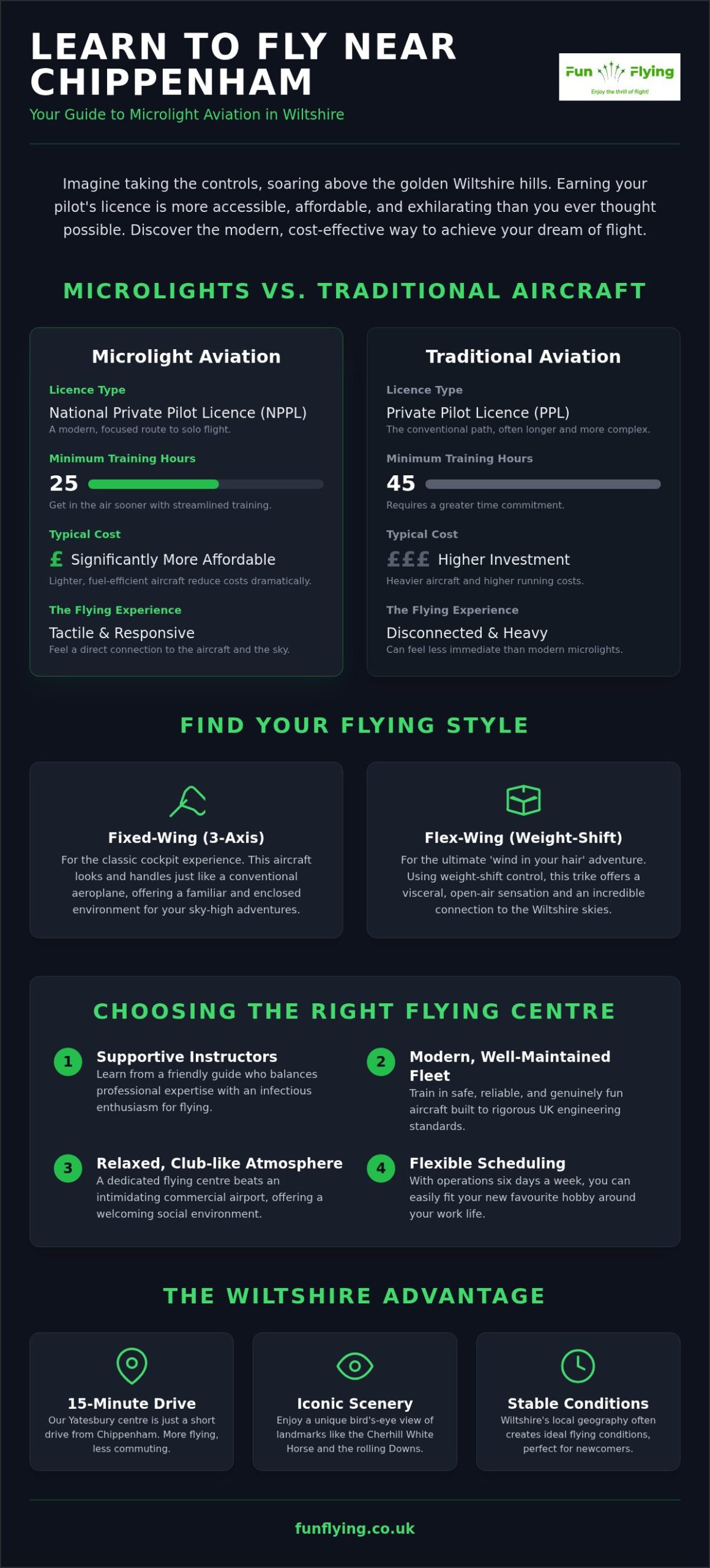
Choosing the right path for your flying lessons near Chippenham often comes down to one question: what kind of pilot do you want to be? Traditional aviation often feels like a steep, expensive climb, but microlighting opens a much more accessible door. Modern microlights are high-performance aircraft that are just as safe and sophisticated as their larger cousins. Because they’re lighter and more fuel-efficient, the cost of training is significantly reduced. You’re getting the same thrill of flight without the elite price tag or the stuffy atmosphere often found in traditional flight schools.

Fixed-Wing vs Flex-Wing: Finding Your Style

Do you crave the classic cockpit experience or the ultimate “wind in your face” adventure? Three-axis microlights look and handle exactly like a conventional aeroplane, providing a familiar and enclosed environment. If you want a more visceral, open-air sensation, the flex-wing trike is for you. It uses weight-shift control, giving you an incredible sense of connection to the Wiltshire skies. Both styles are exhilarating; it simply depends on the feeling of flight you’re looking for.

The NPPL Advantage: A Simpler Route to Your Wings

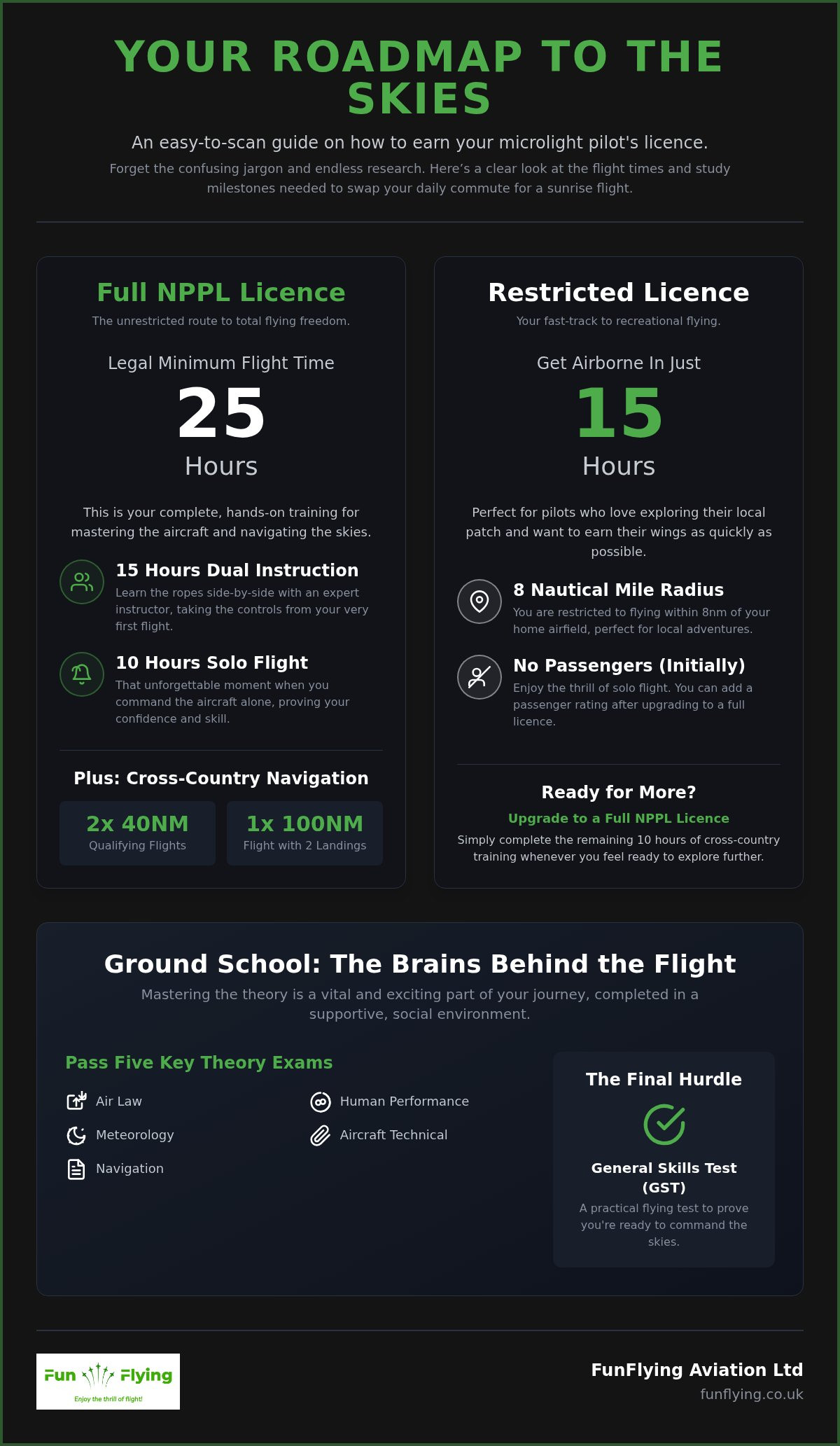
The National Private Pilot Licence (NPPL) is the secret weapon for recreational pilots. While a traditional Private Pilot Licence often requires 45 hours of training, the NPPL for microlights can be achieved in as little as 25 hours. This focused approach gets you into the air sooner and keeps your training momentum high. It’s a practical, modern route to solo flight that doesn’t compromise on safety or skill. Learn more about NPPL microlight training UK to see how this streamlined training fits your goals.

Safety is always the top priority. Modern microlights are built to rigorous UK engineering standards and are incredibly robust. They offer a stable, reliable platform for learning, ensuring you feel confident and secure from your very first take-off. If you’re looking for a smart, thrilling way to start your journey, this is it.

Choosing Your Local Flying School: 4 Essential Factors to Consider

Selecting the right environment for your flying lessons near Chippenham is the most important decision you’ll make. It’s not just about finding a place with a runway; it’s about finding a community that fuels your passion. You need an instructor who acts as a friendly guide, balancing professional expertise with infectious enthusiasm. Fleet quality is just as vital. Learning in a modern, well-maintained aircraft ensures your time in the air is both safe and genuinely fun. Don’t settle for a school that feels like a factory.

Why Atmosphere Beats Infrastructure

Busy commercial airports can be intimidating for newcomers. A dedicated flying centre offers a relaxed, club-like feel where you can chat with other pilots and students. This social side makes the learning process much more inclusive. It’s also worth checking if they provide dedicated microlight ground school UK support. Having expert help with the theory side of aviation turns a daunting task into an achievable goal.

Checking for Flexibility and Support

Does the school fit your lifestyle? Since your time is precious, look for a centre that operates six days a week. This flexibility allows you to maintain training momentum without sacrificing your work-life balance. A top-tier school should offer a complete range of services, including trial flights, full licence training, and even licence revalidations. Your first lesson should always be a no-pressure trial flight, giving you the chance to take control and see if the instructor vibe is right for you.
Book your first lesson and take control

Flying Lessons near Chippenham: Guide to Wiltshire Skies

Why Yatesbury is the Favourite Hub for Chippenham Pilots

Location is everything. While some schools operate from busy, impersonal tarmac strips, the Wiltshire Microlight Centre at Yatesbury feels like home. It’s just a 15-minute drive from the town centre, making flying lessons near Chippenham incredibly convenient. Our Fun Flying philosophy is simple. We believe aviation should be inclusive, upbeat, and undeniably exciting for everyone. You won’t find any stuffy, elite attitudes here; just a group of people who truly love being in the air.

Your First Lesson at Yatesbury: What to Expect

The moment you arrive at the airfield, the buzz of anticipation is real. You’ll meet your instructor, an “Expert Enthusiast” who perfectly balances professional safety with pure, unadulterated fun. After a brief but thorough walkaround of the aircraft, you’re straight into the cockpit. We don’t believe in making you sit on the sidelines. You’ll be taking the controls and feeling the aircraft climb into the Wiltshire air from your very first minute. It’s a visceral, heart-pounding experience that immediately turns observers into active participants.

Joining the Fun Flying Family

Joining us means becoming part of a local family that shares your passion for the clouds. We provide comprehensive support that goes far beyond the cockpit. Whether it’s tackling theory in our ground school sessions or joining group fly-outs to other airfields, you’re never flying alone. This camaraderie is what makes Yatesbury the perfect spot for flying lessons near Chippenham. If you’re ready to map out your progress, check out how many hours you might need for your licence and see how quickly you can join our ranks. The Wiltshire skies are calling; it’s time to answer.

Your Journey to the Clouds Starts Today

The dream of flight is closer than you think. You’ve discovered that microlighting isn’t just a hobby for the elite; it’s an accessible, high-energy adventure right on your doorstep. By choosing flying lessons near Chippenham at our Yatesbury centre, you’re opting for a supportive community and expert instructors who live for the thrill of the sky. Remember, you won’t be a spectator. You’ll take control of the aircraft from your very first lesson. With our flexible schedules operating six days a week, fitting your training around a busy work life has never been simpler. It’s time to stop looking up at the clouds and start looking down at the world from the pilot’s seat.

Start your aviation journey with a trial flight at Fun Flying today!

We can’t wait to see you at the airfield and help you earn your wings. The Wiltshire skies are waiting for their newest pilot, and that pilot is you.

Frequently Asked Questions

How much do flying lessons near Chippenham usually cost?

Costs for flying lessons near Chippenham depend on whether you are booking a one-off experience or a full training course. Microlighting is widely regarded as the most accessible and cost-effective route into aviation. It offers a much lower entry point than larger aircraft types. You can pay for lessons as you go, which helps you manage your budget whilst you work towards the freedom of your own pilot licence.

Do I need any previous experience to book a trial flying lesson?

No previous experience is required to step into the cockpit. These lessons are tailored for complete newcomers, providing a supportive environment where you can learn at your own pace. Your instructor will guide you through every step, and you’ll be encouraged to take control of the aircraft during your very first flight. It’s all about making the magic of aviation inclusive and exciting for everyone, regardless of their background.

What is the minimum age to start taking flying lessons in the UK?

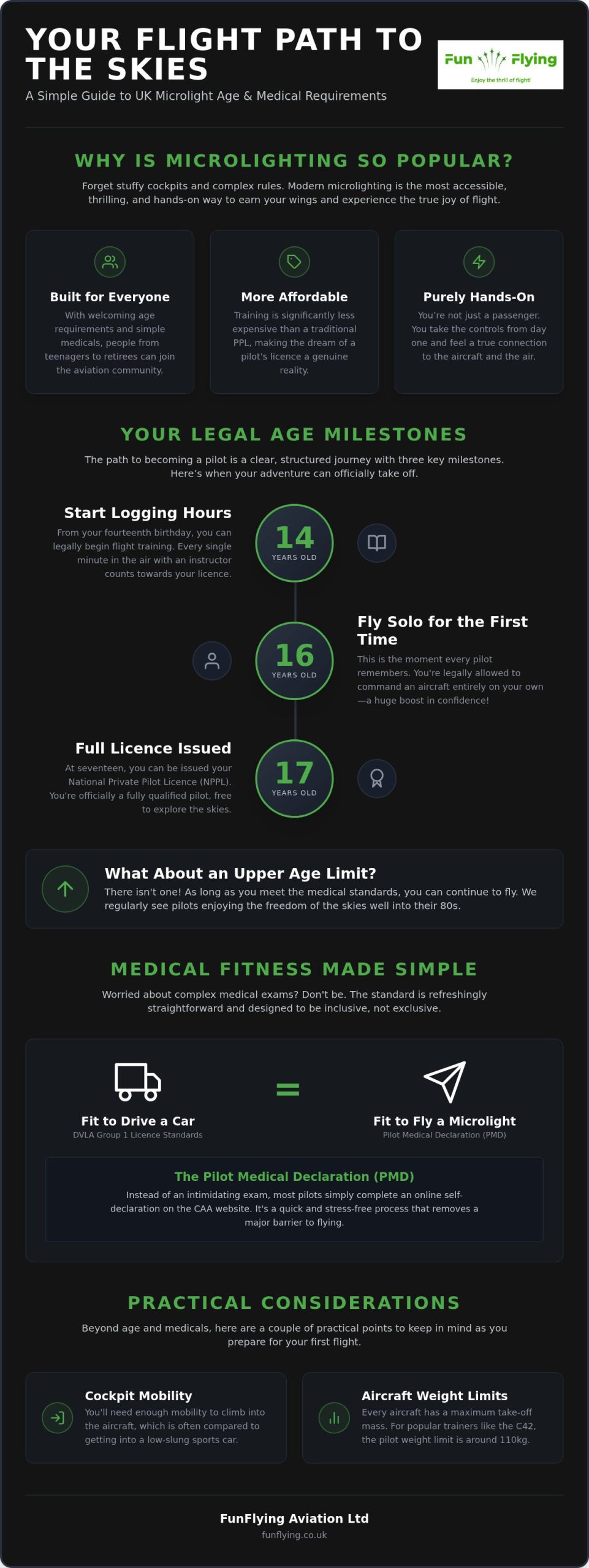
There is no upper age limit, but the UK has clear rules for younger pilots. You can start your training at any age; however, you must be 14 for hours to count towards a licence. You can fly solo from age 16 and hold a full licence at 17. Starting young is a brilliant way to develop discipline and a lifelong passion for the Wiltshire skies whilst building technical skills.

Is microlight flying safer than traditional light aircraft?

Modern microlights are exceptionally safe and engineered to the highest UK standards. They are often more agile than traditional light aircraft and have much lower landing speeds, which provides a significant safety advantage. Every aircraft in our fleet is meticulously maintained. Our professional instructors focus on building your confidence through practical, hands-on training, ensuring you feel secure and supported every time you leave the ground at Yatesbury.

How long does it take to get a microlight pilot licence from a local school?

You can earn your NPPL (Microlight) licence in as little as 25 hours of flight training. This is much faster than traditional aircraft requirements, making it the perfect choice for flying lessons near Chippenham. Because we operate six days a week, you can maintain a consistent training rhythm. Your progress depends on how often you fly, but the journey is designed to be straightforward, rewarding, and undeniably fun.
Marce Colucci

Article by

Marce Colucci

Love to fly, and more importantly, love teaching others to fly.

Flying School Near Basingstoke: Your Ultimate Guide to Microlight Aviation

Flying School Near Basingstoke: Your Ultimate Guide to Microlight Aviation

What if your very first step into the cockpit wasn’t just to watch, but to actually take the controls and feel the lift beneath your wings? It’s a common frustration when searching for microlight flying near Basingstoke; you want the thrill of aviation, but you’re worried about being treated like just another number at a busy commercial hub. You’ve likely spent time wondering if you’ll actually get to fly or if you’ll be stuck watching someone else have all the fun whilst you sit in a classroom.

We understand that desire for genuine freedom and the need for a friendly, expert guide to show you the ropes. This guide will help you navigate the different types of microlights and show you why a short trip to the tranquil Wiltshire countryside offers a superior path to your National Private Pilot’s Licence. We’ll explore how you can take charge of the aircraft on your very first lesson, the specific benefits of training at Yatesbury, and the clear, exciting steps involved in earning your wings. Get ready to stop dreaming about the clouds and start navigating them yourself.

Key Takeaways

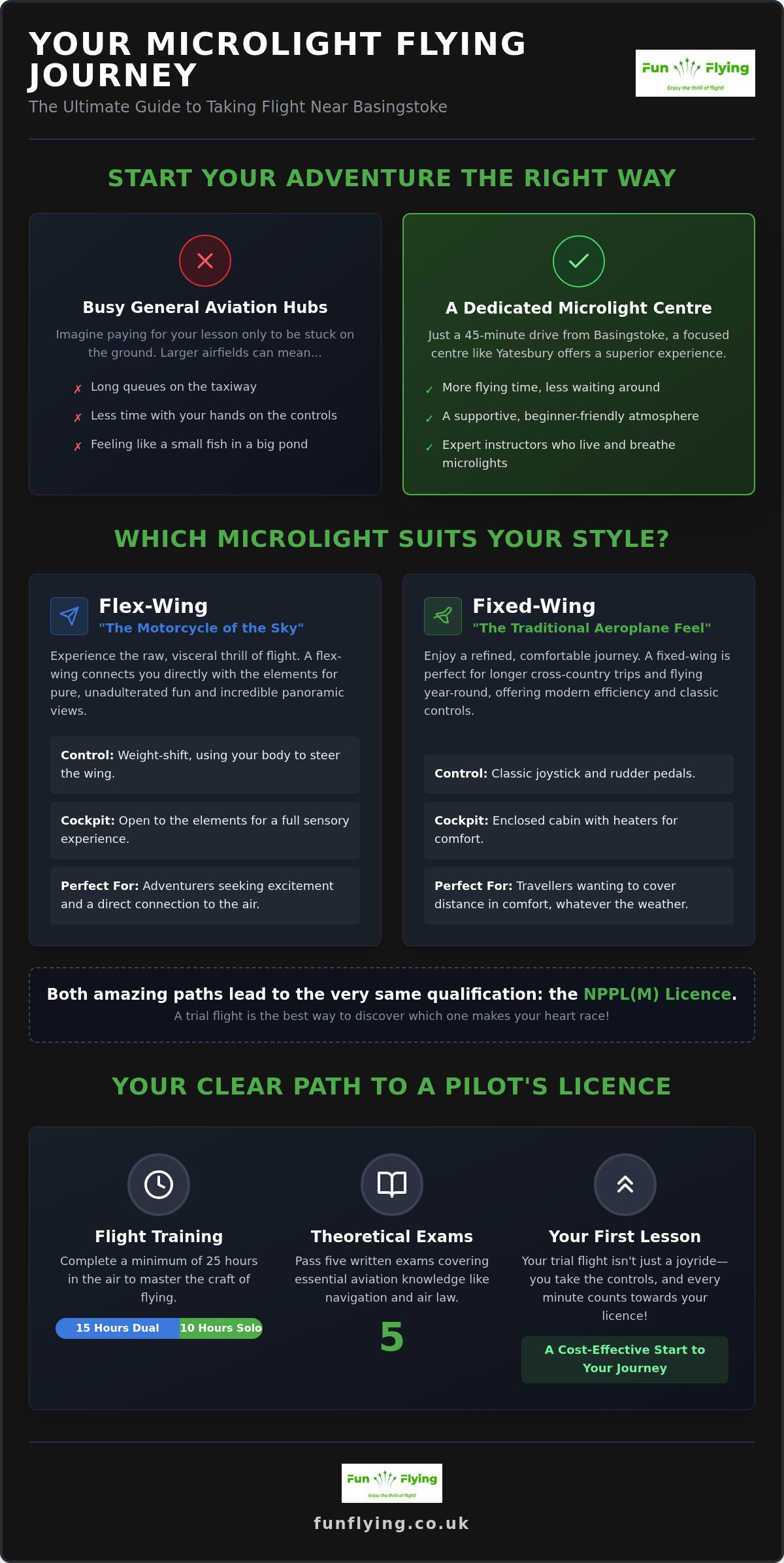
  • Discover why microlight flying near Basingstoke is more accessible than you think, with world-class training centres located just a 45-minute drive away in the scenic Wiltshire countryside.
  • Understand the difference between the open-cockpit thrills of a flex-wing aircraft and the traditional aeroplane feel of a fixed-wing microlight to find your perfect flying style.
  • Learn how a hands-on approach allows you to take the controls and start learning to fly from your very first lesson, rather than just being a passenger.
  • Visualise your clear path to earning a pilot’s licence and joining a friendly community of adventurers who prioritse freedom and fun in the skies.

Choosing the Right Microlight Flying School Near Basingstoke

If you’re hunting for microlight flying near Basingstoke, you’re actually in a bit of a sweet spot. Within a 45-minute drive, you have access to some of the most iconic airfields in the South of England. But here’s the kicker: the best choice isn’t always the closest one. You need to decide between a busy general aviation hub and a dedicated microlight centre. While larger airfields are exciting, they often come with long queues on the taxiway. Imagine paying for a lesson only to spend fifteen minutes waiting for a commercial twin-engine plane to land. It’s frustrating!

Choosing a quieter spot like Yatesbury means more time with your hands on the controls. It’s about the “vibe” too. You want a school where the instructors feel like knowledgeable peers. Look for a place that offers a variety of aircraft and a genuine community. After all, microlight aviation is as much about the social side as it is about the skill of flying. When you search for microlight flying near Basingstoke, prioritising a tranquil environment over proximity can transform your training experience.

The Benefits of Training at a Dedicated Microlight Centre

When a school focuses purely on lightweight aircraft, the learning environment changes. You aren’t just a small plane dodging larger traffic; you’re the priority. Dedicated centres offer a more supportive atmosphere for beginners. You’ll find instructors who live and breathe this specific style of flight. They can help you learn to fly by focusing on the unique handling and freedom that microlights provide. This specialist expertise ensures you aren’t just following a generic syllabus, but truly mastering your craft in a scenic setting whilst working towards your NPPL. Plus, flexible schedules make it easy for busy professionals to fit lessons into their week.

Flex-wing or Fixed-wing: Which Microlight Suits Your Style?

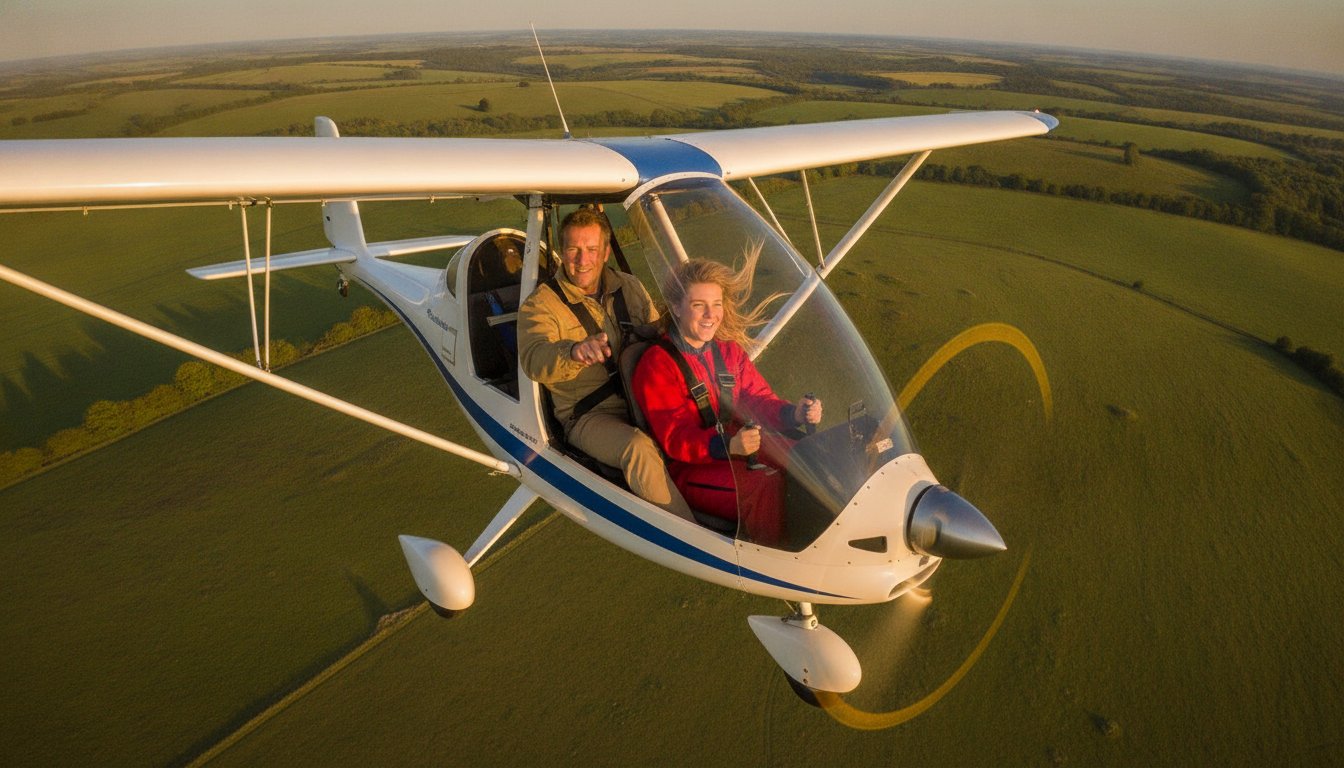
Imagine the rush of the wind against your face as you soar over the rolling hills of the North Wessex Downs. This is the flex-wing experience. Often called the ‘motorcycle of the sky’, these aircraft use weight-shift control, meaning you move the wing itself to steer. It’s raw, visceral, and incredibly exciting. If you’re looking for microlight flying near Basingstoke that connects you directly with the elements, this is the ultimate choice for pure, unadulterated fun. You’ll feel every thermal and see the world from a truly panoramic perspective.

Alternatively, fixed-wing microlights offer a more traditional ‘aeroplane’ feel. They feature enclosed cabins, heaters, and classic controls like a joystick and pedals. It’s a refined way to travel, making it perfect if you want to fly comfortably throughout the British winter or take longer cross-country trips with a friend. These aircraft are incredibly efficient and modern, often outperforming older, heavier planes. Your choice will influence your training and the type of adventures you’ll have once you’ve qualified.

Whilst the sensory experiences of these two aircraft are worlds apart, both paths lead to the exact same NPPL(M) licence. You don’t have to decide today; a trial flight is the best way to see which style of microlight flying near Basingstoke makes your heart race.

Understanding the NPPL(M) Licence

The NPPL(M) is the most affordable route into British aviation. To qualify, you’ll complete a minimum of 25 hours of flight training, including 10 hours of solo flight. You’ll also sit five theoretical exams covering essential knowledge like navigation. It’s a rewarding process that focuses on the joy of flight. If you’re curious about the steps, you can learn to fly with a syllabus tailored to your pace. Once you’ve earned your licence, it’s also worth staying ahead of the rules by understanding your microlight licence revalidation UK requirements, especially with significant CAA changes coming into effect by November 2026.

Your First Lesson: Taking Control Over the Hampshire and Wiltshire Border

Start with the rush. Most people searching for microlight flying near Basingstoke expect to sit back and watch. That’s not how we do things. At Fun Flying Aviation Ltd, you aren’t just a passenger; you are the pilot from day one. Our hands-on philosophy means you’ll feel the aircraft respond to your touch almost immediately. It’s an empowering, high-energy experience that replaces nerves with pure excitement. You’re in control.

The journey starts with a relaxed ground briefing where your instructor explains the basics of flight. No dry lectures here. You’ll move quickly to the aircraft for pre-flight checks before heading to the runway for an exhilarating take-off. As you climb, the landscape transforms. You’ll see the stunning North Wessex Downs unfold beneath you, with ancient landmarks like the Avebury stone circle appearing like tiny toys from your unique vantage point. The sense of autonomy is incredible.

Best of all, this isn’t just a one-off thrill. If you decide to pursue your licence, your very first trial flight counts towards your total training hours. It’s a practical, cost-effective way to start your aviation journey whilst enjoying the best scenery the South has to offer. Every minute in the air brings you closer to your goal of pilot freedom.

Book your first trial flight today

What to Bring to Your First Flight

Comfort is key. We suggest wearing layers, as it can be cooler at 2,000 feet than on the ground. Bring a pair of sunglasses to protect your eyes from the glare. We provide the rest, including professional headsets and flight suits. If you’re comparing Microlight vs PPL Training, you’ll quickly see that our approach is much more accessible and focused on the pure joy of being in the air. It’s about making flight feel possible for everyone.

Flying School Near Basingstoke: Your Ultimate Guide to Microlight Aviation

From Basingstoke to the Sky: Why the Drive to Yatesbury is Worth It

The drive from Basingstoke to Yatesbury takes about 45 minutes. It’s a small price to pay for what many consider the ‘hidden gem’ of the South. Whilst you might find options for microlight flying near Basingstoke that are slightly closer, they often lack the tranquil, historic charm of the North Wessex Downs. At the Wiltshire Microlight Centre, you aren’t just buying a lesson; you’re joining a vibrant community of adventurers. It’s a place where pilots swap stories over coffee and newcomers are welcomed like old friends. We pride ourselves on this social spirit.

We know life in the town can be hectic. That’s why we operate six days a week, offering the flexible scheduling busy professionals need to make their dreams a reality. Imagine waking up on a crisp Saturday morning, leaving the bustle of the town behind, and heading straight for the clouds. The freedom of having your own wings is closer than you think. Whether you’re looking for a one-off thrill or a lifelong hobby, the journey to Yatesbury is where your new life as a pilot truly begins.

Starting Your Aviation Journey Today

Ready to take the leap? Booking your first trial flight is simple. It’s the perfect way to test the waters, or you can purchase a gift voucher to give a loved one the ultimate surprise. For those who already hold a licence but want to experience the agility of these aircraft, we offer specialised Microlight Conversion Training UK. We help experienced pilots transition smoothly, and we also keep them informed about the latest microlight licence revalidation UK requirements and 2026 rule changes to ensure their rating stays current. This proves that microlight flying near Basingstoke offers a unique brand of freedom that heavier planes simply can’t match. Your path to the sky starts with a single phone call or click.

Take to the Skies and Claim Your Freedom

You’ve discovered that the best microlight flying near Basingstoke is actually found just 45 minutes away in the tranquil Wiltshire countryside. By choosing a dedicated centre like Yatesbury, you swap busy taxiways for more time in the air with our expert instructors who bring decades of experience to every lesson. Whether you crave the raw, open-air thrill of a flex-wing or the refined cabin comfort of a fixed-wing aircraft, your journey to pilot freedom starts with that very first hands-on minute in the cockpit. We prioritise your autonomy and progress from the moment you arrive at our historic airfield.

Book your first microlight lesson and take the controls today!

It’s time to stop looking up from the ground and start seeing the world from the pilot’s seat. With bespoke training tailored to your pace and a friendly community of adventurers waiting to welcome you, your aviation goals are well within reach. The sky is calling; let’s get you airborne today.

Frequently Asked Questions

Is microlight flying safe for beginners?

Microlight flying is incredibly safe; these modern aircraft are engineered to rigorous standards and regulated by the Civil Aviation Authority. Your safety is our absolute priority. Our expert instructors have decades of experience guiding beginners through their first steps. Because we operate in the tranquil airspace at Yatesbury, you don’t have to worry about the pressure of busy commercial traffic whilst you’re learning the fundamentals of flight.

How long does it take to get a microlight licence near Basingstoke?

You can earn your National Private Pilot’s Licence (Microlight) with a minimum of 25 hours of flight training. Most students find that 35 hours is a more realistic timeframe to feel truly confident. If you’re looking for microlight flying near Basingstoke, our six-day-a-week schedule helps you build momentum quickly. Your progress depends entirely on your personal aptitude and how frequently you can visit the airfield for lessons.

What is the age limit for learning to fly a microlight in the UK?

You can start your training as young as 14 years old in the United Kingdom. You’ll need to wait until you’re 16 to fly solo and 17 to officially hold your licence. There is no upper age limit at all. As long as you can make a medical self-declaration on the CAA website, you’re clear for take-off. It’s an inclusive hobby that welcomes adventurers of all generations.

Can I fly a microlight if I have no previous aviation experience?

No previous experience is required to start your journey into the clouds. In fact, most of our students arrive with zero aviation background. We specialise in taking you from total novice to confident pilot using a peer-to-peer approach that removes any intimidation. This focus on clear, expert guidance for newcomers is essential; just as englishdrivingschoolutrecht.nl supports international students on the road, we ensure you’ll find that microlight flying near Basingstoke is the most accessible way to take control of an aircraft and experience the thrill of flight yourself.

How much does it cost to start microlight flight training?

Starting your training involves paying for flight hours, ground school, and theoretical exams. Many students choose to pay for each lesson as they go, which makes the journey into aviation much more manageable for your monthly budget. This flexible approach allows you to progress at a pace that suits your lifestyle. We recommend starting with a trial flight to experience the magic before committing to a full training syllabus.

Marce Colucci

Article by

Marce Colucci

Love to fly, and more importantly, love teaching others to fly.

Microlight Gift Voucher UK: The Ultimate Flying Lesson Gift in Wiltshire

Microlight Gift Voucher UK: The Ultimate Flying Lesson Gift in Wiltshire

Have you ever looked up at a light aircraft and wondered what it actually feels like to be the one making it climb? Imagine the ground falling away as you pull back on the controls, soaring high above the ancient landscape whilst the world shrinks below you. Finding the perfect flying lesson gift Wiltshire shouldn’t involve worrying about whether the recipient will just be a passive passenger. In an era where UK consumers increasingly prioritise experiences over physical goods, you want a gift that offers real autonomy. We believe the best adventures are those where you’re right in the heart of the action.

In this guide, we’ll show you why a microlight experience is the ultimate choice for anyone craving a genuine pilot experience. You’ll discover how easy it is to take the controls under expert guidance, the stunning landmarks you’ll spot from the cockpit, and why our friendly Yatesbury centre makes booking a breeze. We’re diving into everything from aircraft types to the simple steps for organising an unforgettable day in the clouds. By the time you’ve finished reading, you’ll know exactly how to give the gift of flight with total confidence.

Key Takeaways

  • Learn why a microlight voucher isn’t just a passenger ride, but a hands-on adventure where the recipient actually takes the controls.
  • Understand the differences between fixed-wing and flex-wing aircraft to help you choose the perfect flying lesson gift Wiltshire for your friend or family member.
  • Find out what happens during the pre-flight briefing at our historic Wiltshire centre, where experts explain aviation basics whilst keeping things simple and fun.
  • Explore the stunning aerial views of historic landmarks like Silbury Hill and the White Horses that make soaring over the Wiltshire countryside so unforgettable.

Why a Microlight Gift Voucher is the Ultimate UK Adventure

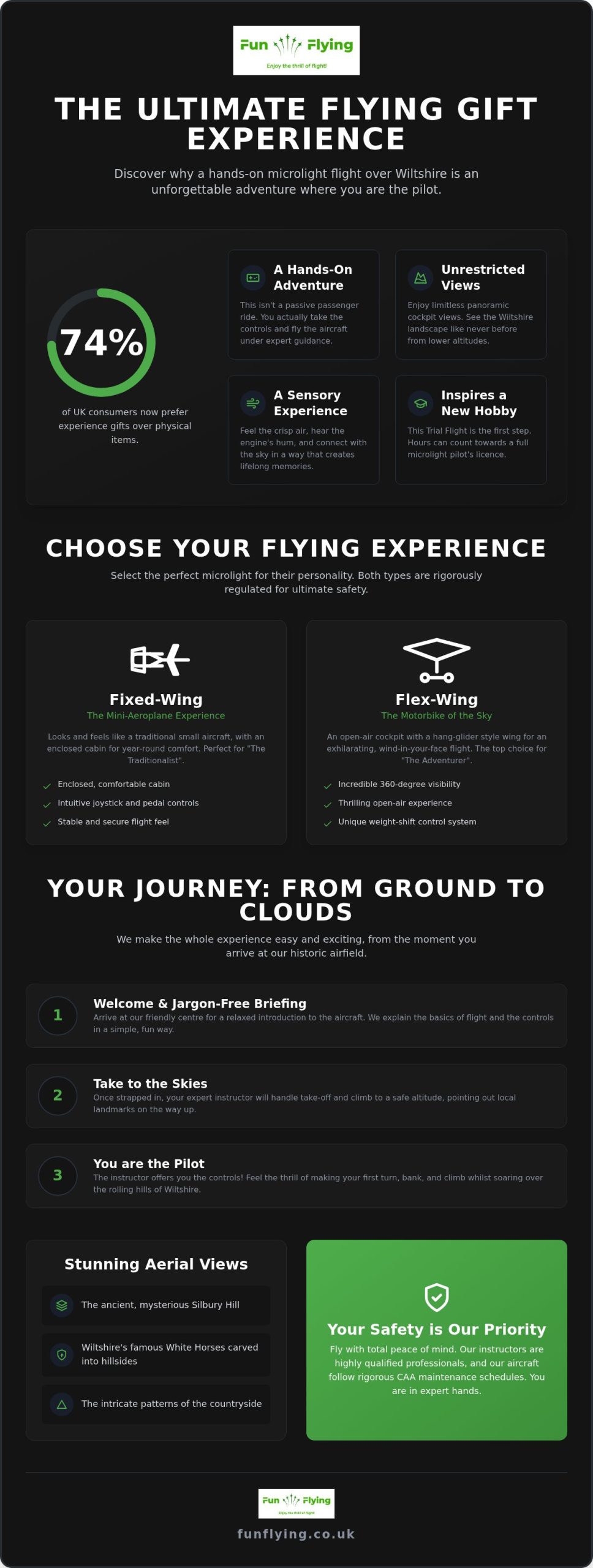
A flying lesson gift Wiltshire is about more than just a ride; it’s a sensory explosion. The hum of the engine, the scent of the countryside, and the feeling of crisp air on your face create a visceral connection to the sky. Unlike traditional presents that gather dust, this is a memory that sticks for a lifetime. Recent data from April 2026 shows that 74% of UK consumers now prefer experience gifts over physical items. It’s easy to see why when you’re soaring over the downs whilst the world shrinks below. To truly grasp what microlight aviation is, you have to experience its simplicity. It’s the most accessible, pure form of flight, putting you right in the front-row seat of the clouds.

The Joy of Unrestricted Views

Commercial jets offer tiny, scratched windows that distance you from the world. In a microlight, you enjoy a panoramic cockpit view that feels truly limitless. Flying at lower altitudes transforms the Wiltshire landscape into a living, breathing map. You can see the intricate texture of the fields and the ancient paths of the countryside in stunning detail. It’s an immersive perspective that makes the earth feel vast yet strangely intimate.

A Gift That Inspires a New Hobby

Fixed-Wing vs Flex-Wing: Selecting the Perfect Flying Lesson Gift

Choosing a flying lesson gift Wiltshire can feel a bit daunting when you see terms like “fixed-wing” and “flex-wing” popping up in your search. Don’t worry. Both types are strictly regulated by the Civil Aviation Authority (CAA), so professional safety is always the top priority. The British Microlight Aircraft Association provides extensive oversight to ensure every flight follows rigorous standards. The choice really comes down to the recipient’s personality and the specific kind of “freedom” they want to feel whilst soaring amongst the clouds.

Fixed-Wing: The Mini-Aeroplane Experience

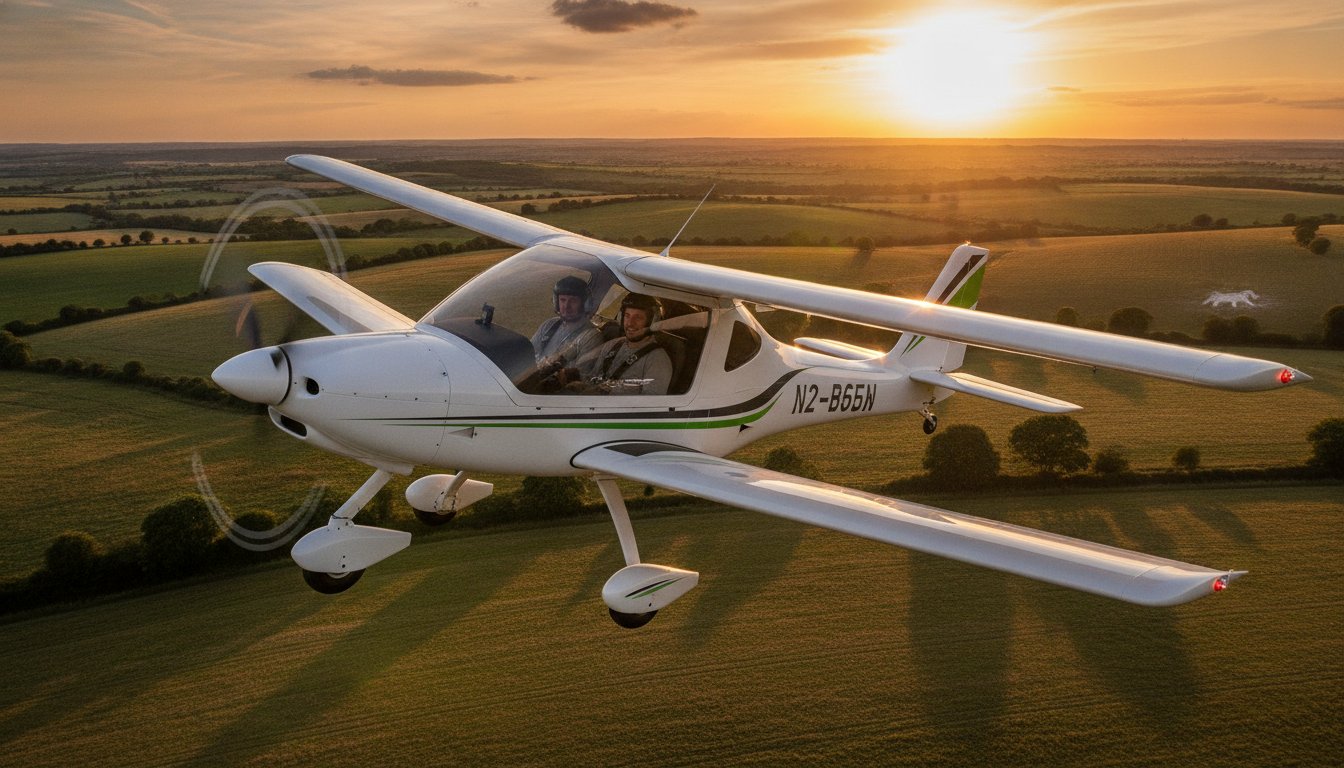
A fixed-wing or “three-axis” microlight looks, feels, and controls exactly like a traditional small aeroplane. It features a standard cockpit with a joystick, throttle, and pedals, offering a stable and intuitive flying experience. This is the ideal choice for “The Traditionalist” or anyone who prefers the comfort and security of an enclosed cabin. It’s a fantastic option for year-round flying, as the recipient is shielded from the wind and cold. If they’ve ever dreamed of sitting in a pilot’s seat, this provides a familiar, professional environment to start their journey. Those based further west can also explore microlight flying near Bristol as another accessible option for taking the controls in a three-axis aircraft.

Flex-Wing: The ‘Motorbike of the Sky’

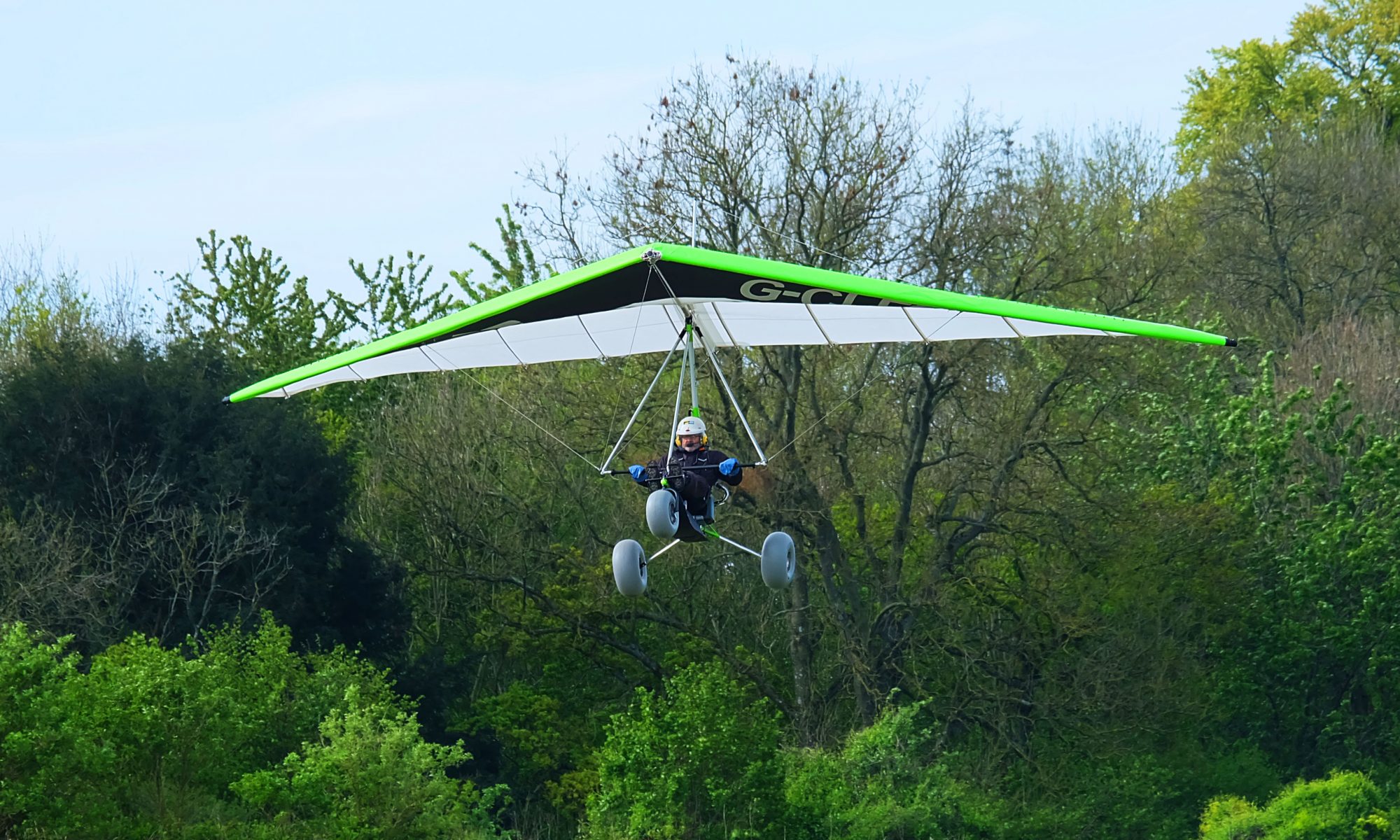
For “The Adventurer” in your life, nothing beats a flex-wing aircraft. Often described as the “motorbike of the sky,” these use a weight-shift system with a hang-glider style wing positioned above the trike. It’s an open-air experience that offers incredible 360-degree visibility. There’s a visceral, wind-in-your-face feeling that you simply won’t find in a cabin. It’s the ultimate way to see the Wiltshire countryside with no barriers between you and the horizon, making it a firm favourite for those who love the great outdoors. If you’re looking for a flying lesson gift Wiltshire that feels like pure, unadulterated flight, this is the one to pick.

What to Expect: From Unboxing to Taking the Controls

The moment the recipient arrives at our historic airfield, the excitement becomes real. A flying lesson gift Wiltshire is designed to be approachable from the very start, beginning with a warm, friendly welcome from experts who live and breathe aviation. Forget the stiff, formal atmosphere of commercial airports. We begin with a relaxed, jargon-free briefing. It’s a simple introduction to how the aircraft stays in the air and what each control does. We want our guests to feel prepared and confident before they even strap into the cockpit. It’s about removing the mystery and replacing it with pure, infectious enthusiasm.

Taking the Controls: You are the Pilot

This isn’t a passive sightseeing tour. It’s a genuine lesson. Once you’re at a safe altitude, your instructor will offer you the controls. Imagine the rush of making your very first turn amongst the clouds whilst under expert supervision. You’ll feel the aircraft respond to your touch as you steer and bank over the rolling hills. Discover how our hands-on flying lessons work and see why taking the reins is the highlight of any flying lesson gift Wiltshire.

Expertise and Reassurance in the Air

Safety is the foundation of everything we do. Modern microlights are engineered to incredible standards, offering a level of reliability that often surprises newcomers. Our instructors are highly qualified professionals who follow rigorous maintenance schedules for every aircraft in the fleet. You can fly with total peace of mind, knowing you’re in expert hands. We focus on creating a supportive environment where the student feels both safe and empowered to explore the sky.

After landing, there’s a short debrief to celebrate the flight. Stepping back onto solid ground with the “I actually did it” grin is a feeling like no other. It’s a sense of genuine achievement that lasts long after the engine has cooled.

Book your hands-on flying experience here

Microlight Gift Voucher UK: The Ultimate Flying Lesson Gift in Wiltshire

The Fun Flying Aviation Ltd Difference: Why a Wiltshire Experience Wins

Yatesbury isn’t just an airfield; it’s a historic aviation hub perfectly situated for some of the most scenic flights in the country. When you choose a flying lesson gift Wiltshire with us, you aren’t just buying a voucher; you’re securing a front-row seat to England’s ancient soul. The instructors at Fun Flying Aviation Ltd embody the “Friendly Guide” persona, combining deep technical knowledge with a genuine passion for the skies. They make every student feel at ease, turning nerves into pure, infectious enthusiasm. We also understand that British weather can be unpredictable. That’s why our vouchers are valid for a full year, ensuring you can wait for that perfect, crisp morning to take to the air.

Flying Over the Wiltshire White Horses

From the ground, the famous chalk hill figures are impressive, but from the cockpit of a microlight, they are truly breathtaking. You’ll soar over the iconic White Horses and the mysterious, prehistoric Silbury Hill, gaining a perspective that ground-dwellers simply can’t imagine. It’s a chance to see the landscape as a living map, tracing the curves of the downs whilst the wind whistles past. Learn why Yatesbury is a centre for recreational aviation and discover how our unique location turns a simple lesson into a historic adventure.

A Personal Touch for Your Special Occasion

National gift aggregators often provide a cold, corporate experience where you’re just another booking number. Fun Flying Aviation Ltd offers a personal, school-run service that prioritises the joy of flight and the individual needs of every student. This personal touch is what makes a flying lesson gift Wiltshire from our team so special for birthdays, anniversaries, or retirement surprises. We want this to be a milestone that’s talked about for years to come. Read our guide to the Wiltshire Microlight Centre at Yatesbury to get a feel for our welcoming community. Book now and give them the freedom of the skies.

Ready to Take the Controls?

We have covered everything from the historic chalk figures of the downs to the technical differences between aircraft types. Now, it’s about turning that knowledge into a genuine adventure. A flying lesson gift Wiltshire is the key to unlocking a perspective few ever see. You aren’t just giving a ticket; you’re giving the autonomy of the skies and the expert guidance of Fun Flying Aviation Ltd. Whether it’s a milestone birthday or a surprise for a loved one, the feeling of that first take-off is incomparable.

Purchase a Fun Flying Microlight Gift Voucher Today

It is time to stop watching the horizon and start chasing it. Our team is ready to welcome you to the airfield, where the transition from passenger to pilot begins the moment you arrive. Let’s make this the year they finally take flight and discover the incredible freedom of the Wiltshire clouds.

Frequently Asked Questions

What is the age limit for a microlight gift voucher in the UK?

There is no upper age limit for enjoying a flying lesson gift Wiltshire, though the minimum age to have a lesson count towards a licence is 14. We’ve welcomed everyone from teenagers to adventurous retirees. As long as the recipient is agile enough to climb into the cockpit, they can experience the sky. It’s a truly inclusive hobby that proves you’re never too old for adventure, and for those who value shared experiences, reallyfungameslp.com provides award-winning card and conversation games that are perfect for all generations.

Yes, the weight limit for a flying lesson gift Wiltshire is typically between 100kg and 110kg including clothing. This is purely for safety and aircraft performance. If you aren’t sure, just check before booking so we can ensure a comfortable experience. Our instructors are experts at managing these logistics, keeping the focus on the fun and freedom of flight.

What happens to my flying voucher if the weather is bad on the day?

If the weather isn’t suitable for flying, we simply reschedule your lesson for another time that suits you. Safety is our absolute priority, and we only take to the skies when conditions are right for a great experience. Our vouchers are valid for a full year, giving you plenty of flexibility to find that perfect, clear day. You won’t lose your flight; you’ll just have something exciting to look forward to.

Can the recipient take photos or a camera during their microlight lesson?

Absolutely, we encourage you to capture the stunning aerial views of the Wiltshire countryside during your flight. We just ask that any cameras or phones are secured with a sturdy neck or wrist strap for safety. You’ll want to preserve the memory of soaring over the White Horses or making your first turn. It’s a perspective you’ll definitely want to share with friends and family once you’re back on the ground.

Do I need a medical certificate to use a microlight trial flight voucher?

You don’t need a formal medical certificate to enjoy a trial flight or use a gift voucher. A simple self-declaration of fitness is usually all that’s required for recreational flying. If the recipient eventually decides to pursue a pilot licence, the medical requirements are much simpler than those for commercial pilots. For now, the focus is purely on the joy of the experience and the thrill of taking the controls.

Marce Colucci

Article by

Marce Colucci

Love to fly, and more importantly, love teaching others to fly.

Microlight vs PPL Training: Which Path to the British Skies is Right for You?

Microlight vs PPL Training: Which Path to the British Skies is Right for You?

What if you could experience the pure, unadulterated thrill of the British countryside from 2,000 feet for less than the price of a second-hand hatchback? Most aspiring pilots assume that taking to the skies is a pursuit reserved for the ultra-wealthy or those aiming for a career in the airlines. It’s completely natural to feel overwhelmed by the staggering costs and the mountain of jargon that usually accompanies traditional flight training. When weighing up microlight vs PPL training, it’s easy to worry about making the wrong investment or getting stuck behind intimidating medical requirements.

You’re about to discover that becoming a pilot is far more accessible and exhilarating than you’ve been led to believe. This article uncovers the real-world differences in cost, freedom, and that unmistakable sense of joy you only get from being in control. You’ll see why these modern, high-performance machines are a genuine, safe path to the clouds. We will compare the financial commitment, the training hours required, and the sheer fun factor to help you decide which licence will get you airborne the fastest.

Key Takeaways

  • Discover how a Microlight licence offers a significantly more affordable and faster route to the cockpit without sacrificing the thrill of flight.
  • Learn the critical differences in microlight vs PPL training to determine which licence matches your personal flying goals and budget.
  • Understand the “hands-on” advantage of microlighting, where you take control of a modern, high-performance aircraft from your very first lesson.
  • Identify the simple steps to start your journey, from booking a trial flight to joining a vibrant aviation community at the Wiltshire Microlight Centre.

The Pilot’s Dilemma: Choosing Your Path to the Skies

Imagine the sheer liberation of soaring over the Wiltshire Downs with the world at your feet. It’s the ultimate escape. But for many, that dream hits a wall when faced with the complexity of Pilot licensing in the United Kingdom. You’re likely standing at a crossroads. Deciding between microlight vs PPL training shouldn’t feel like a chore. Do you choose the traditional Private Pilot Licence (PPL) or the National Private Pilot Licence (NPPL) for Microlights?

The right path depends entirely on your ultimate goal. If you’re dreaming of a career in the airlines, the PPL is your foundation. But if you’re looking for weekend adventures and pure flying joy, the microlight path is often the smarter choice. Today’s microlights are high-tech, agile aircraft that challenge every old stereotype. They aren’t just lightweight alternatives. They are high-performance machines designed for absolute fun.

The Dream of Flight vs. The Reality of Choice

Connecting your aspiration for freedom with the practicalities of UK aviation doesn’t have to be daunting. For recreational flyers, lighter almost always means more fun. These aircraft offer a seat of the pants experience that heavier planes simply can’t match. When comparing microlight vs PPL training, the lighter option often wins on agility and accessibility. It’s about stripping away the corporate feel of aviation and getting back to the soul of flying.

A Brief Look at the PPL and NPPL(M)

The PPL is the Gold Standard for those wanting to fly larger aircraft across international borders. It’s a rigorous, comprehensive route. In contrast, the NPPL(M) is tailored specifically for the recreational pilot. It’s the fastest way to learn to fly whilst keeping your budget under control. Both paths lead to the same sky. The journey just feels different. One is a professional qualification; the other is your passport to pure, unadulterated freedom.

Understanding the Difference: PPL vs. Microlight Licences

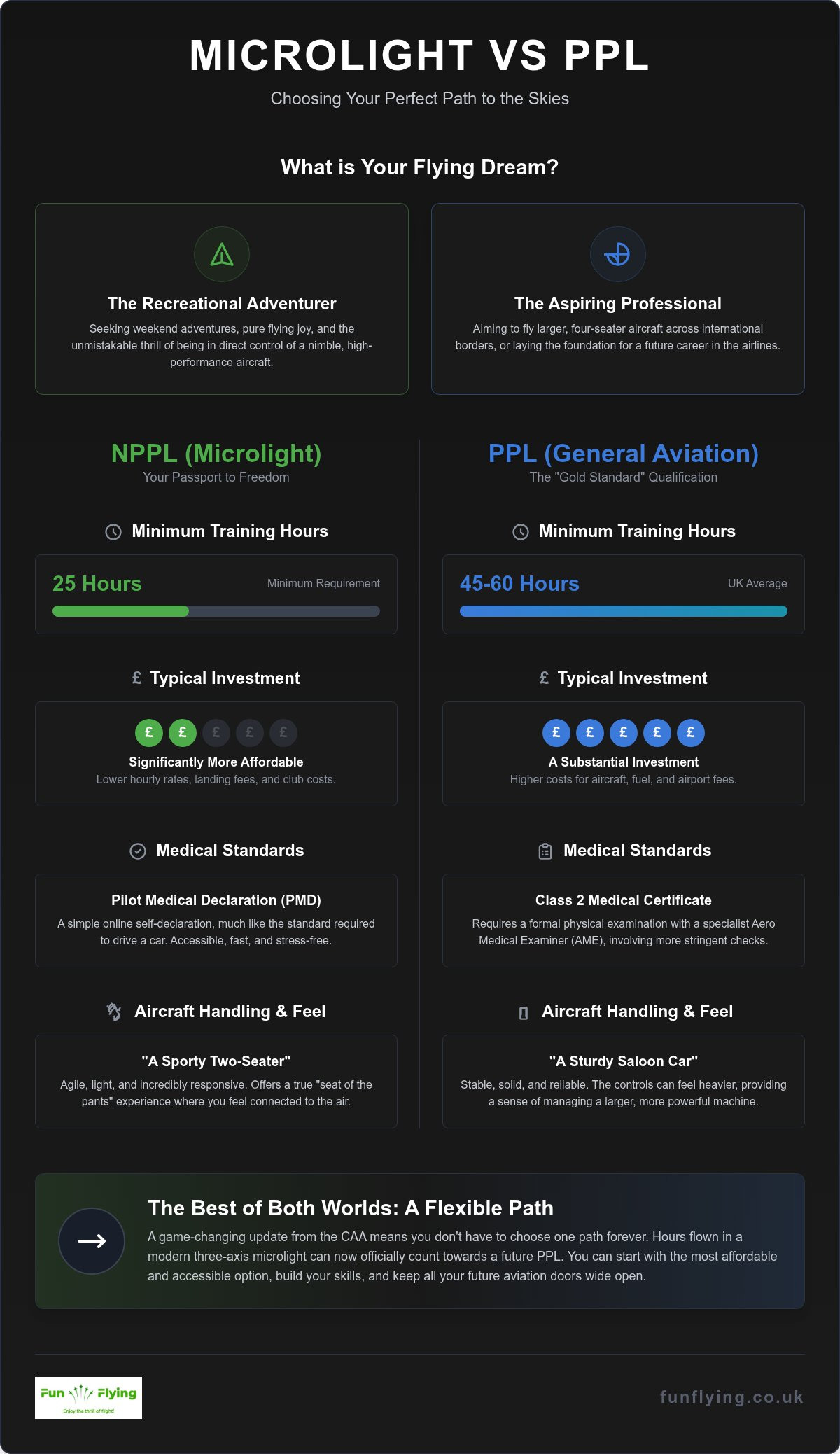
Choosing between microlight vs PPL training often comes down to what you want to see when you look out of the cockpit window. The PPL is frequently called the “Gold Standard.” It’s designed for those who want to fly larger, four-seater aircraft or eventually earn a living in the clouds. In contrast, the NPPL (Microlight) is built specifically for the recreational pilot. It’s all about maximum fun for your budget. While a traditional Cessna feels like a sturdy “heavy” car, a modern microlight is more like a sporty two-seater convertible. It’s agile, responsive, and incredibly rewarding to fly. For a deeper look at the official definitions, you can check the UK Civil Aviation Authority licence guide.

Training Requirements and Hour Thresholds

The legal minimum for a PPL is 45 hours, though the national average shows most UK students take between 55 and 60 hours to finish. For an unrestricted microlight licence, the minimum is just 25 hours. That’s a huge difference in both time and financial commitment. A game-changing update from the CAA now allows hours flown in a three-axis microlight to count towards a future PPL. This means you don’t have to choose one path forever; you can start with the most affordable option and build your skills from there.

Medical Standards and Accessibility

Accessibility is another massive win for the microlight path. Most people can fly with a simple Pilot Medical Declaration (PMD). It’s a straightforward online self-declaration that matches the standards required to drive a car. Compare this to the formal Class 2 medical required for a PPL, which involves a visit to a specialist Aero Medical Examiner (AME). If you have minor health considerations, the NPPL is often the more inclusive choice. It removes the stress of medical bureaucracy so you can focus on the sky. If you’re ready to see how simple the process can be, you can learn to fly with a team that prioritises your progress and enjoyment.

Microlight vs PPL Training: Which Path to the British Skies is Right for You?

The Real-World Reality: Costs, Hours, and Handling

When you finally step onto the airfield, the differences between microlight vs PPL training become tangible. A traditional Cessna often feels like driving a sturdy saloon car; it’s stable but can feel heavy on the controls. In contrast, a modern microlight offers a “seat of the pants” experience that is hard to beat. It’s light, incredibly responsive, and provides a direct connection to the air around you. You aren’t just managing a machine. You are part of it. You’ll quickly learn that a microlight doesn’t just fly; it dances through the sky. Don’t believe the myth that these aircraft only fly in perfect calm. Modern designs handle typical British breezes with surprising grace and agility.

Budgeting for Your Wings

Your flying budget simply goes further at a microlight school. Beyond the lower hourly rates for the aircraft itself, you’ll often find that landing fees and club memberships are far more wallet-friendly than those at larger commercial airports. These smaller overheads mean you can afford to fly more often. It makes the hobby sustainable for years of adventure rather than a one-off achievement. You’ll find the atmosphere at these centres is usually more relaxed and geared towards the hobbyist. If you’re based in the south of England and searching for microlight flying near Basingstoke, a short trip to the Wiltshire countryside could offer you the ideal combination of expert instruction and stunning scenery.

The Learning Curve: Is One Easier than the Other?

While both paths require dedication, the complexity of the systems differs. PPL students often spend significant time mastering complex avionics and navigation equipment. Microlight training prioritises the pure mechanics of flight. It’s about looking out of the window and feeling the aircraft rather than staring at a digital screen. This accessibility extends to the classroom too. The microlight ground school UK syllabus is designed to be practical and focused on the essentials of safe, recreational flying. Similarly, for those looking to master unmanned flight, AINautics University offers specialised drone education and UAS training programmes.

You don’t just watch from the sidelines here; you take the lead. At Yatesbury, we believe in a hands-on philosophy that puts you on the controls from your very first lesson. When weighing up microlight vs PPL training, this immediate involvement is often what seals the deal for our students. It transforms a distant aspiration into a physical, heart-pumping reality. Beyond the cockpit, the social scene at the Wiltshire Microlight Centre is incredibly vibrant. It’s a welcoming community of enthusiasts who truly live for the adventure of flight. If you are also interested in the technical side of unmanned systems, you can find out more about the drone training and repair services offered by Caswell Aviation Ltd.

The Joy of Low and Slow

Imagine drifting over the iconic White Horse or the ancient, mysterious stones of Avebury. In a microlight, you aren’t tucked away behind a small, high-set window. The visibility is far superior to traditional aircraft, making it the perfect platform for sightseeing. You get to experience the British countryside in stunning high definition. It’s “low and slow” flying at its absolute finest. For those seeking total independence, SSDR pilot training UK offers a path to single-seat freedom, allowing you to fly without the regulatory weight of larger machines.

Ready to Switch? Conversion and Flexibility

Already hold a pilot’s licence? You aren’t alone in looking for something more responsive and affordable. We specialise in microlight conversion training UK, helping seasoned flyers transition their skills to these agile, modern aircraft. At FunFlying Aviation, we pride ourselves on an inclusive atmosphere where every student is treated as a future pilot. The choice between microlight vs PPL training doesn’t have to be a one-way street. Your next step is simple. Book a trial flight today and feel that unmistakable “seat of the pants” magic for yourself.

Your Passport to the British Skies

The debate of microlight vs PPL training isn’t about which licence is “better” but which one fits your life and your dreams. If you want a professional career, the PPL is waiting. But if you want the freedom of the Wiltshire Downs, the agility of a modern sports aircraft, and a budget that lets you fly every weekend, the microlight path is unbeatable. You’ve seen how the NPPL(M) offers a faster, more accessible route to the clouds whilst keeping the thrill of flight at its core.

Our expert instructors with years of experience are ready to guide you through every bank and climb. With stunning Wiltshire flight paths as your classroom and flexible training scheduled around your lifestyle, there’s never been a better time to start. You could be in control of a high-performance machine sooner than you think.

Start your journey today: Book your first lesson or experience flight

The sky is calling. It’s time to stop dreaming and start flying.

Frequently Asked Questions

Do microlight flying hours count towards a full PPL licence in 2026?

Yes, hours flown in a modern three-axis microlight can now be credited toward your PPL(A) requirements. This regulatory shift makes the choice of microlight vs PPL training even more flexible for those who might want to upgrade later. It is a fantastic way to build your confidence and stick-and-rudder skills whilst keeping your initial costs manageable. You get the same sky, just at a fraction of the investment.

Is a microlight licence easier to get than a PPL?

It is certainly faster and more accessible. With a shorter minimum hour requirement than the PPL, you can reach your goal much sooner. The syllabus is focused on the essentials of recreational flight, stripping away the complex commercial procedures you won’t need for weekend adventures. Whilst the flying skills required are just as real, the path to your licence feels much more streamlined and achievable for those with busy lifestyles.

What are the medical requirements for a microlight pilot in the UK?

Most pilots can fly using a simple online Pilot Medical Declaration. This is a self-declaration process that generally matches the health standards required for a UK driving licence. You won’t need to visit a specialist doctor unless you have specific pre-existing conditions. It’s one of the biggest reasons people choose microlight vs PPL training, as it removes the stress and expense of formal aero-medical examinations for recreational flyers.

Can I carry passengers with a microlight licence?

Absolutely, you can share the magic of flight with a friend or family member once you hold your unrestricted licence. Most modern microlights are designed as comfortable two-seaters, perfect for taking a passenger on a scenic tour of the Wiltshire countryside. There is nothing quite like the look on a loved one’s face when you show them the world from a completely different perspective for the very first time.

How much cheaper is it to learn to fly a microlight compared to a PPL?

Choosing the microlight route can save you thousands of pounds over the course of your training. Because the aircraft are more efficient and the hour requirements are significantly lower, the total investment is often less than half of what you would expect for a traditional PPL. You will also find that ongoing costs like fuel and landing fees are much lighter on the wallet, making your new hobby sustainable for the long term. Once you have earned your wings, be sure to stay current with the latest microlight licence revalidation UK requirements to ensure your rating remains valid and your flying adventures continue uninterrupted.

Marce Colucci

Article by

Marce Colucci

Love to fly, and more importantly, love teaching others to fly.

Microlight Pilot Training Cost: Your 2026 Guide to Budgeting for the Sky

Microlight Pilot Training Cost: Your 2026 Guide to Budgeting for the Sky

What if the only thing standing between you and the open sky wasn’t a lack of courage, but a confusing spreadsheet? It’s a common hurdle. Many aspiring pilots feel held back by the mystery surrounding the microlight pilot training cost, fearing that hidden landing fees or unexpected fuel surcharges will ground their dreams before they’ve even begun. We understand that anxiety. You want to know exactly what you’re signing up for without the dense jargon or the ‘add-on’ surprises that often haunt the aviation world.

We’re here to clear the air and show you that the cockpit is well within your reach. This guide provides a transparent, honest breakdown of budgeting for your licence in 2026, from your first lesson at the controls to the final skills test. You’ll learn the difference between permit types, how many hours it really takes to qualify, and how to save money through efficient, structured training. Imagine the freedom of soaring over the British countryside; let’s build the financial flight plan to get you there.

Key Takeaways

  • Discover why the NPPL is the clever choice for recreational pilots, offering the same thrill of flight with much lower fuel and maintenance costs than traditional planes.
  • Get a clear breakdown of the microlight pilot training cost and see how ‘pay as you learn’ options let you manage your budget at your own pace.
  • Plan for success by mapping out essential extras like ground school exams and pilot gear, ensuring your journey to the sky is completely surprise-free.
  • Learn how simple habits like regular flying and ‘chair flying’ can sharpen your skills faster and save you a significant amount on your total training bill.

Investing in Your Freedom: Why Microlight Training Offers the Best Value in Aviation

Imagine waking up on a crisp Saturday morning, checking the wind, and deciding to fly to the coast for lunch. This isn’t just a dream for the elite; it’s the daily reality for those who hold a National Private Pilot’s Licence (NPPL). For recreational flyers in the UK, the NPPL is the gold standard for accessibility and pure, unadulterated enjoyment. When you look at the microlight pilot training cost, you aren’t just paying for a certificate. You’re investing in a ticket to a vibrant community and a lifetime of weekend adventures.

Modern microlight and ultralight aircraft are marvels of engineering. They’re incredibly fuel-efficient, often running on regular unleaded petrol rather than expensive aviation fuel. Simpler regulations and lower maintenance needs mean these aircraft are much cheaper to operate than traditional Group A planes. At FunFlying, we focus on providing immediate value. You’ll learn to fly by taking the controls in your very first lesson, ensuring every penny of your budget goes toward building hands-on experience from day one.

NPPL vs. PPL: The Financial Breakdown

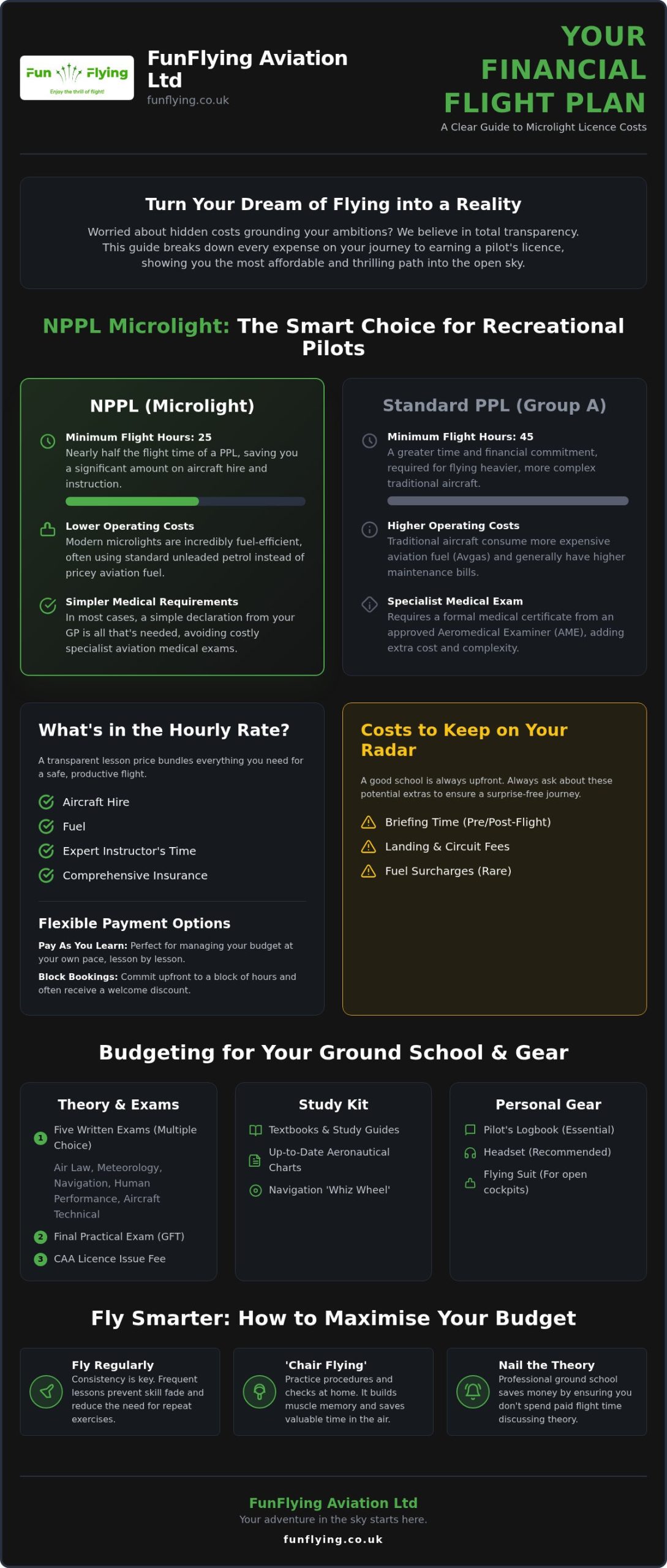
The most significant saving is found in the training requirements. A standard PPL requires a minimum of 45 flight hours, but you can earn an NPPL for microlights in just 25 hours. That’s nearly half the time spent paying for aircraft hire. Medical costs are also much lower; you can often use a simple GP declaration rather than paying for specialist aviation doctor fees. Whether you choose a restricted rating for local hops or an unrestricted rating for touring, the total microlight pilot training cost remains the most budget-friendly path into the sky.

The Hourly Rate Explained: What is Included in Your Flying Lessons?

When you see a price for a flying lesson, you might wonder exactly what that covers. Is it just the time the engine is running? Not quite. A transparent microlight pilot training cost typically bundles several vital elements into one figure. You’re paying for the aircraft hire, the fuel that powers your ascent, the instructor’s years of expertise, and comprehensive insurance. It’s a complete package designed to keep you safe and focused on the joy of flight.

You generally have two ways to manage your budget. The ‘pay as you learn’ model is fantastic for flexibility, allowing you to fund your hobby lesson by lesson. Alternatively, many students choose block-booking packages. These often provide a tidy discount in exchange for upfront commitment. You should also consider the type of aircraft you’ll be piloting. Fixed-wing microlights, which look like traditional aeroplanes, sometimes carry a slightly higher hourly rate than flex-wing (weight-shift) models due to their more complex systems. To see how this fits your plan, you can learn to fly at FunFlying and explore our current Yatesbury rates.

Hidden Costs to Watch Out For

Transparency is key to a stress-free journey. Some schools might charge extra for ‘briefing time’. This is the essential pre-flight chat where you discuss the lesson goals and safety procedures. Always ask if this is included in the hourly rate or billed separately. You should also look out for landing fees or circuit fees. Think of these as a small ‘toll’ for using the airfield’s runway. Whilst fuel surcharges can occasionally appear if global oil prices spike, a good school will always keep you informed of these shifts before you take off.

Essential Extras: Budgeting for Ground School, Exams, and Equipment

Becoming a pilot isn’t just about stick and rudder skills; you’ve also got to master the theory of the sky. To earn your licence, you must pass five multiple-choice exams: Air Law, Human Performance, Meteorology, Navigation, and Aircraft Technical. Budgeting for these fees is a vital part of the overall microlight pilot training cost. You’ll also need some physical kit for your studies, including up-to-date aeronautical charts, textbooks, and a mechanical navigation computer, often called a ‘whiz wheel’. While it looks like a vintage tool, it’s essential for calculating wind drift and fuel burn during your cross-country flights.

Start your aviation journey today

Gearing Up: Personal Pilot Equipment

You don’t need to buy every piece of equipment at once. Start with a logbook to record your progress from your very first flight. Whilst schools provide headsets for your lessons, many students prefer to buy their own for comfort and better noise reduction once they’re fully committed to their training. If you’re flying an open-cockpit flex-wing, a warm flying suit and sturdy gloves are essential for staying comfortable at altitude. A great tip for saving money is to check club noticeboards or local pilot networks for high-quality second-hand gear.

Microlight Pilot Training Cost: Your 2026 Guide to Budgeting for the Sky

Maximising Your Budget: How to Earn Your Wings Efficiently

The secret to keeping your microlight pilot training cost low isn’t just finding a competitive rate; it’s about making every minute in the air count. We call this the ‘Consistency Rule’. If you fly once a week, your muscle memory stays sharp. Leave it once a month, and you’ll spend the first half of your next lesson relearning what you’ve already covered. This ‘skill fade’ is the biggest hidden drain on any student’s budget.

You can also master the cockpit from your own sofa. ‘Chair flying’ involves sitting in a quiet space and mentally rehearsing your checks and procedures. It’s a free way to ensure that when you’re actually in the sky, you aren’t wasting expensive airborne minutes trying to remember your downwind checks. For those balancing a career, exploring Flexible Flying Lessons UK strategies can help you maintain momentum. Looking ahead, qualifying opens the door to SSDR (Single Seat De-Regulated) aircraft, which provide some of the most affordable microlight lessons UK pilots can find for solo adventures.

Why Yatesbury is the Smart Choice for Wiltshire Pilots

Training at the Wiltshire Microlight Centre in Yatesbury provides a focused, professional environment. It’s more than just a school; it’s a community. At FunFlying, our friendly, club-like atmosphere means you’ll learn as much from chatting with fellow pilots as you do during your flight time. This peer support makes the process less daunting and helps you qualify more efficiently. If you’re ready to start, book an introductory flying lesson for a low-cost taster of the freedom that awaits.

Your Clear Path to the Cockpit Starts Now

You’ve seen that the microlight pilot training cost doesn’t have to be a barrier to your aviation dreams. By choosing the NPPL route, staying consistent with your weekly lessons, and utilising ground school effectively, you can manage your budget with total confidence. It’s about making a smart, transparent investment in your personal freedom and opening up a world of weekend adventures that most people only ever see from the ground.

At FunFlying, our professional instructors at Yatesbury are ready to guide you through every step of the process. Much like the specialist tuition offered by SAMZ Automatic Driving School for those on the road, we operate a flexible six-day-a-week schedule to fit around your busy life, and we bring infectious enthusiasm to every single lesson. You aren’t just another student in a logbook; you’re a future pilot joining a vibrant community that loves the sky as much as you do. The view from the top is waiting for you.

Start your journey with a Trial Flight at FunFlying today!

Let’s get you airborne and turn that dream of flight into your new favourite reality. We can’t wait to see you at the airfield.

Frequently Asked Questions

What is the total average cost to get a microlight licence in the UK in 2026?

A realistic budget to obtain your NPPL for microlights usually falls between £6,000 and £8,000. This total includes your flight training, ground exams, and essential pilot gear. Whilst the legal minimum is 25 hours, most students realistically require 35 to 40 hours to reach the standard. Budgeting for this range ensures your microlight pilot training cost is transparent and achievable from the very start.

Do I have to pay for the whole microlight pilot training course upfront?

No, you aren’t required to pay for the whole course upfront. We love the flexibility of the ‘pay as you learn’ model, which allows you to fund your lessons one at a time. It’s a fantastic way to progress at your own pace without a large initial outlay. If you do want to save, you can often find discounts by purchasing block-booking packages for ten hours.

How much do the microlight ground exams cost and can I self-study?

Individual exam fees are approximately £35 to £39 per subject. You can certainly choose to self-study with the right textbooks and navigation tools to keep your budget lean. However, many students find that attending professional ground school is a brilliant investment. It often simplifies the most technical subjects, helping you pass your exams first time and potentially reducing your total time spent in the cockpit.

Are there extra ‘membership fees’ to join a flying school like FunFlying?

Many flying schools and airfields do require an annual membership fee to help maintain the runways and clubhouse facilities. These fees vary depending on the location, so it’s always a good idea to ask for a full breakdown of any club charges before you begin. At Yatesbury, you’ll find a welcoming environment where these costs contribute to a supportive community that cheers you on throughout your training.

Can I save money on microlight training if I already have some flying experience?

You can certainly save money if you have previous flying experience. Your instructor will evaluate your existing skills and may be able to credit some of your previous flight time toward your licence requirements. This structured approach ensures you aren’t paying to relearn basics you already master. It is a highly efficient way to reduce your total microlight pilot training cost whilst focusing on the unique handling of microlights.

Marce Colucci

Article by

Marce Colucci

Love to fly, and more importantly, love teaching others to fly.

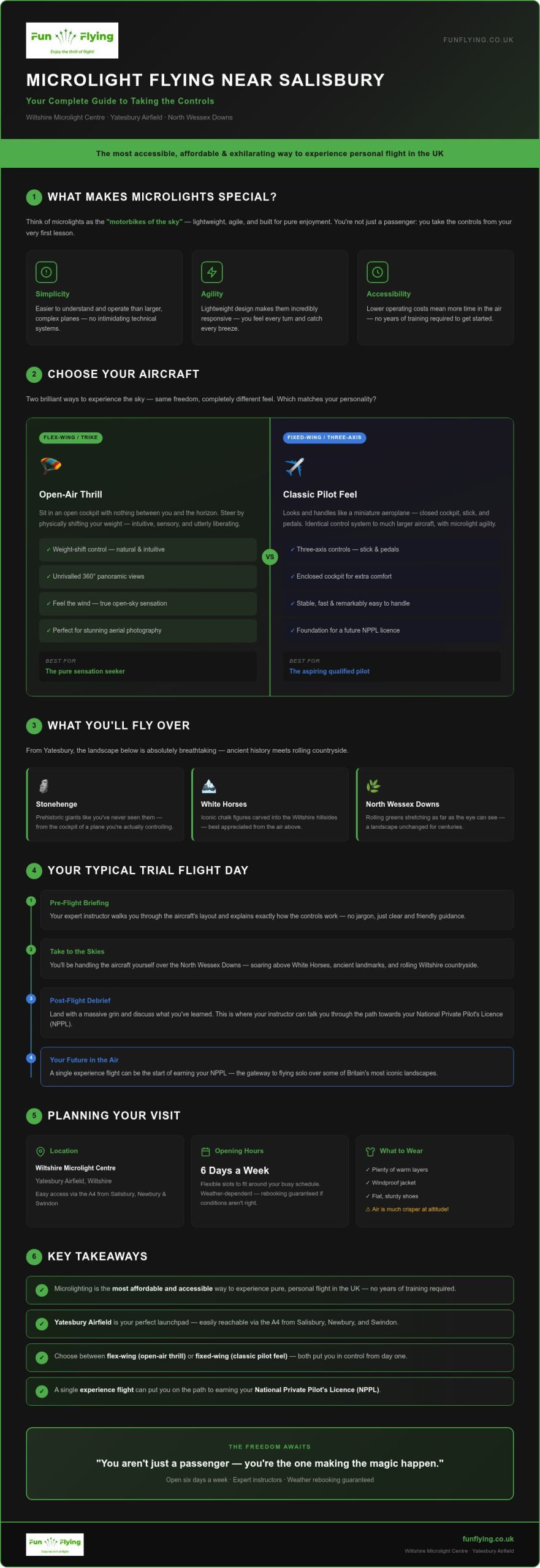
Microlight Flying Near Salisbury: Your Guide to Ancient Skies

Microlight Flying Near Salisbury: Your Guide to Ancient Skies

Have you ever wondered what the prehistoric giants of Stonehenge look like from the cockpit of a light aircraft you’re actually controlling yourself? Most people assume that taking to the skies is a privilege reserved for elite pilots or those with years of technical training. It’s natural to feel a bit nervous about the heights or worry that you’ve left it too late to start a new adventure. That’s why microlight flying near Salisbury is such a game-changer for anyone craving a bit of magic.

We understand the pull of wanting to soar over the historic landmarks of Wiltshire and Newbury, and we’re here to prove that you don’t need a lifetime of experience to do it. This guide will show you how accessible, safe, and exhilarating hands-on flight can be. We’ll break down the different types of aircraft, what it really costs to get started, and why you’ll be taking the controls much sooner than you ever imagined. Get ready to swap the ground for the clouds and discover a true sense of freedom.

Key Takeaways

  • Discover why microlighting is the most affordable and accessible way to experience the pure joy of personal flight in the UK.
  • Find out how to reach our Yatesbury base and explore the most scenic routes for microlight flying near Salisbury.
  • Compare fixed-wing and flex-wing aircraft to decide which flying style best suits your own sense of adventure.
  • See how a single experience flight can put you on the path to earning your National Private Pilot’s Licence.

Discovering Microlight Flying Near Salisbury and Newbury

Imagine the rush of cool air as you climb above the rolling greens of the North Wessex Downs. It’s just you, a professional instructor, and a landscape that hasn’t changed for centuries. Choosing microlight flying near Salisbury isn’t just about the view; it’s about the visceral connection to the sky. Microlighting is widely considered the most accessible and affordable way to experience personal flight in the UK. Unlike traditional aviation, which can feel exclusive or overly technical, this is about pure joy.

Our base at the Wiltshire Microlight Centre in Yatesbury serves as the perfect launchpad for microlight flying near Salisbury and the surrounding countryside. We’re positioned right in the heart of aviation history, offering a unique perspective on the ancient landmarks that define the Salisbury and Newbury region. Whether you’re looking for a one-off thrill or want to learn to fly properly, our expert team is here to guide you six days a week. You’ll take control from your very first lesson.

What Exactly is a Microlight?

If you’re curious about what is microlight flying, think of these machines as the “motorbikes of the sky.” They are lightweight, high-performance aircraft designed for agility and simplicity. While traditional heavy aircraft rely on complex systems and enclosed cabins, microlights prioritise the pilot’s experience and autonomy. They offer a sense of freedom that’s hard to find in a standard cockpit.

  • Simplicity: They’re easier to understand and operate than larger, complex planes.
  • Agility: Their lightweight nature makes them incredibly responsive to your touch.
  • Accessibility: Lower operating costs mean more time in the air for you.

You’ll feel every turn and catch every breeze. It’s a tactile experience that removes the barriers between you and the horizon. You aren’t just a passenger; you’re the one making the magic happen.

Choosing Your Adventure: Fixed-Wing vs Flex-Wing Microlights

Deciding to try microlight flying near Salisbury is the easy part. The real question is: which aircraft will you choose? At our Yatesbury base, we offer two distinct ways to experience the sky. Both options put you in the pilot’s seat from day one, but the “feel” of the flight is completely different. You won’t just be sitting there watching the scenery; you’ll be feeling the aircraft respond to your every move as you take control of the air. At the Wiltshire Microlight Centre, we’ll help you decide which machine matches your personality before you even leave the ground.

The Flex-Wing Experience

Imagine sitting in an open-air cockpit with nothing between you and the horizon. This is the “trike” or flex-wing microlight. You steer using weight-shift control, which means you physically move a bar to tilt the wing. It’s an incredibly intuitive, sensory experience that feels like riding a motorbike in three dimensions. Because there’s no fuselage surrounding you, the views of the North Wessex Downs are unrivalled. It’s the perfect choice if you want to feel the wind on your face and capture stunning photos of the historic landscape below without any glass in the way.

The Fixed-Wing (Three-Axis) Advantage

If you prefer a more traditional aviation feel, the fixed-wing microlight is for you. These look and handle like miniature aeroplanes, complete with a closed cockpit, stick, and pedals. This “three-axis” control system is identical to what you’d find in much larger aircraft. It’s a fantastic option for those who want to eventually work towards a microlight pilot licence UK through NPPL microlight training. You get the comfort of a cabin without losing that signature microlight agility. It’s stable, fast, and remarkably easy to handle once you’re in the air. If you’re looking to build a foundation for a future in flying, this is where your journey begins.

Planning Your Visit to the Wiltshire Microlight Centre at Yatesbury

Finding us is a breeze. Nestled at the historic Yatesbury airfield, the Wiltshire Microlight Centre is perfectly positioned for those seeking microlight flying near Salisbury. Whether you’re travelling from Salisbury, Newbury, or Swindon, the A4 provides easy access and a lovely drive through the countryside. We’re open six days a week, making it simple to find a slot that fits your busy life.

Getting ready for your flight is all about comfort. Even when it feels balmy on the ground, the air is much crisper once we’ve climbed a few thousand feet. We suggest wearing plenty of layers and a sensible windproof jacket to keep the chill at bay. Flat, sturdy shoes are essential for safety and ease. We always keep a sharp eye on the weather. If the wind or rain makes microlight flying near Salisbury unsuitable on your chosen date, we’ll get you rebooked for the next clear day. Your safety is our priority.

Why not bring your friends or family along for the day? Yatesbury offers fantastic vantage points where your loved ones can watch the take-offs and landings. It’s a brilliant way for them to share in your sense of achievement as you return to earth with a massive grin.

A Typical Trial Flight Itinerary

If you’re visiting the region from London and want to pair your flight with a luxury ground-based exploration of Wiltshire’s historic landmarks, Timescape Tours offers private driver-guided day trips that provide a comfortable and insightful way to see the sights before or after taking to the skies.

Your experience starts with a thorough pre-flight briefing from one of our expert instructors. We’ll walk you through the aircraft’s layout and explain exactly how the controls work. Once you’re comfortable, it’s time to take to the skies. You’ll soon be handling the aircraft yourself, perhaps soaring over the iconic White Horses that carve into the Wiltshire hillsides. Every flight ends with a debrief to discuss what you’ve learned. These precious flying hours are officially recorded, giving you a head start if you choose to go for your full licence.

Start your aviation adventure at Yatesbury

Microlight Flying Near Salisbury: Your Guide to Ancient Skies

From Experience Flight to Pilot’s Licence: Your Journey Starts Here

What starts as a single hour of microlight flying near Salisbury often ignites a passion that lasts a lifetime. You land, your heart is racing, and you realise you don’t want the adventure to end. The path from that first “wow” moment to earning your National Private Pilot’s Licence (NPPL) is more straightforward than you might think. Much like the structured path to excellence found at the Flinn Taekwondo Academy, we’ve designed our training to be inclusive and accessible, ensuring that age or previous experience never stand in your way. The journey is broken down into manageable steps, from handling the aircraft to your first solo flight. Each milestone builds your confidence whilst keeping the focus on the pure thrill of being airborne. Our flexible schedules mean you can book lessons six days a week, fitting your training around your job and family life without feeling rushed.

Mastering the theory is just as rewarding as the flying itself. Enrolling in NPPL microlight training UK is an essential part of becoming a safe, confident pilot. We take the mystery out of technical subjects like meteorology and navigation. Instead of dry lectures, we focus on practical knowledge that makes complex ideas feel simple and fun. You’ll learn how to read the weather like a pro and plot courses across the country with ease. It’s about giving you the tools to fly with total peace of mind and autonomy.

The Freedom of the Skies

Imagine the possibilities once you have your licence. You could be flying yourself to different airfields across the UK just for lunch. It’s a level of freedom that few people ever experience. You’ll also become part of the vibrant, supportive community at the Wiltshire Microlight Centre. We aren’t just a school; we’re a hub for enthusiasts who love to share stories and tips. If you’ve been searching for the best microlight flying near Salisbury, you’ve found your new home in the clouds. Whether you’re 18 or 80, the feeling of liberation as you leave the runway is exactly the same. The sky is waiting. Are you ready to claim it?

Ready to Claim Your Place in the Skies?

The dream of flight is no longer something you have to watch from the ground. Whether you’re drawn to the open-air thrill of a flex-wing trike or the classic feel of a fixed-wing aircraft, the horizon is wide open. You’ve seen how accessible microlight flying near Salisbury can be, offering a perspective on Wiltshire’s history that most people will never get to experience. It’s about more than just a hobby; it’s about the autonomy and achievement of navigating the clouds yourself.

At our BMAA Registered School, we pride ourselves on making aviation inclusive for everyone. With expert Ex-RAF instruction available, you’re in the safest possible hands as you take control from your very first lesson. There’s no better time to swap the ordinary for the extraordinary and start building your own story in the air.

Book your first microlight lesson at the Wiltshire Microlight Centre today!

The North Wessex Downs are waiting for you. We can’t wait to see you at Yatesbury and help you take that first, exhilarating step into a much bigger world.

Frequently Asked Questions

Is microlight flying near Salisbury safe for beginners?

Microlight flying near Salisbury is incredibly safe and designed specifically with beginners in mind. Every flight is conducted by a professional instructor who prioritises your security and comfort above all else. Our aircraft are maintained to the strict standards required by the BMAA. You’ll receive a full safety briefing before you even touch the controls, ensuring you feel confident and ready to enjoy the thrill of the open sky.

What is the minimum age for a microlight flying experience in Wiltshire?

Young aviation enthusiasts can start their journey early as there’s no strict upper age limit for a trial flight. Whilst children as young as 14 can have their flying hours count toward a licence, most centres require participants to be at least 14 years old for an experience flight. It’s always best to check with our team at Yatesbury regarding height and weight requirements to ensure everyone has a fantastic time.

How much does it cost to start microlight pilot training?

Microlighting is widely recognised as the most cost-effective way to get into the pilot’s seat. The total investment for your training depends on whether you choose fixed-wing or flex-wing aircraft and how frequently you fly. Because these machines are lighter and more fuel-efficient than traditional planes, the hourly rates are significantly lower. We recommend chatting with our instructors to understand the requirements for your specific goals and aviation dreams.

Do I need a medical certificate to fly a microlight in the UK?

You don’t necessarily need a complex medical exam to start microlight flying near Salisbury. For a National Private Pilot’s Licence (NPPL), most students can simply complete a medical self-declaration. This makes the sport far more accessible than traditional ways of getting into the air. If you can drive a car to the airfield, you’re likely fit enough to take the controls. Always check the latest CAA guidelines for any health conditions.

Can I take photos during my microlight experience flight?

Absolutely, and we highly encourage it! The views over the Wiltshire countryside and ancient landmarks are simply spectacular. If you’re in a flex-wing aircraft, you’ll have an unobstructed, open-air perspective that’s perfect for photography. Just make sure your camera or phone is securely attached to you with a sturdy lanyard. You won’t want to miss capturing the moment you soar above the iconic White Horses from your unique vantage point. If you’re based further north in the county and want to explore your options, our comprehensive guide to flying lessons near Chippenham covers everything you need to know about getting started at our Yatesbury centre.

Marce Colucci

Article by

Marce Colucci

Love to fly, and more importantly, love teaching others to fly.

Microlight Flying Age Requirements: When Can You Start Your Aviation Journey?

Microlight Flying Age Requirements: When Can You Start Your Aviation Journey?

What if the only thing standing between you and the pilot’s seat isn’t a mountain of technical jargon, but simply knowing the right time to start? It’s natural to feel a bit lost amongst the microlight flying age requirements in the UK, wondering if you’re too young to begin or too old to keep going. You might think aviation is reserved for a specific age group or those with Olympic-level fitness, but the reality is far more welcoming and inclusive than you might imagine.

If you can drive a car, you can likely pilot a plane. We’re here to clear the air and provide a simple, encouraging path to your first flight. This guide breaks down the essential legal milestones, from logging your very first hours at 14 to flying solo at 16. We’ll also explain the straightforward medical self-declaration process that removes the stress of complex check-ups. You’ll walk away with a clear timeline for earning your licence and the confidence to take control of an aircraft from your very first lesson.

Key Takeaways

  • Master the three essential legal milestones for UK pilots, including the minimum ages for logging hours, flying solo, and holding a full licence.
  • Clear up any confusion regarding microlight flying age requirements and discover how teenagers and seniors alike can safely enjoy the skies.
  • Simplify your medical journey with the Pilot Medical Declaration (PMD) system, which typically mirrors the health standards required to drive a car.
  • Start your aviation adventure with a hands-on approach that puts you in the pilot’s seat from your very first lesson at Fun Flying Aviation Ltd.

The Joy of Flight: Is Microlighting Right for You?

Imagine looking down at the rolling greens of the Wiltshire countryside, the wind whispering past as you bank into a gentle turn. This isn’t a dream reserved for the elite; it’s the daily reality of microlighting. Often described as The Joy of Flight: Is Microlighting Right for You?, this sport is the most accessible way to join the aviation community in the UK. Forget the outdated image of hang gliders with engines. Today’s microlights are sleek, high-performance machines that offer a truly modern flying experience. A microlight is a two-seater aircraft with a maximum take-off mass of 450kg or 600kg. Checking the microlight flying age requirements is often the very first step for many aspiring pilots eager to start their journey.

Because these aircraft are lighter and more efficient, the barriers to entry are much lower. This includes everything from the physical handling of the plane to the flexible microlight flying age requirements. Whether you’re a teenager looking for a head start or someone enjoying retirement, this is aviation built for everyone. It’s about freedom, autonomy, and the pure thrill of the sky without the complexity of heavy commercial jets. If you’ve ever wondered is microlight flying safe before committing to lessons, you’ll be reassured to know that modern aircraft and rigorous regulations make it one of the most accessible and well-regulated forms of aviation available.

Of course, for those who do hope to eventually pilot those larger aircraft, professional institutions like Flight School USA can provide the necessary training and career-focused programmes to transition into the commercial sector.

Why Microlighting is the Favourite Choice for New Pilots

Why pick this over a traditional PPL? Cost is a huge factor. Training is significantly more affordable, making the dream of a pilot’s licence a reality rather than a distant wish. It’s also incredibly hands-on. You aren’t just a passenger; you feel every thermal and movement of the air. At Fun Flying Aviation Ltd, we believe in getting you hands-on from day one. You’ll take control and feel the aircraft respond to your touch. This visceral connection to flight is exactly why so many students choose this path to the clouds. If you’re just starting out, our comprehensive guide to microlight flying for beginners walks you through everything you need to know before your first lesson.

Understanding the microlight flying age requirements doesn’t have to be a headache of regulatory jargon. In the UK, the Civil Aviation Authority (CAA) has established clear milestones that turn your aviation dreams into a structured reality. While these lower limits are strictly enforced for safety, they’re designed to be inclusive. Whether you’re a parent looking to give your child an unforgettable start in life or a retiree finally pursuing a lifelong passion, these microlight flying age requirements are your roadmap to the clouds.

The Flight Path: 14, 16, and 17

  • Age 14: This is the magic number where it all begins. From your fourteenth birthday, you can legally start logging flight training hours with a professional instructor. It’s the ultimate gift for a young adventurer. Every single minute you spend in the air counts towards your final licence requirements.
  • Age 16: This is the milestone every pilot holds dear. At sixteen, you’re legally allowed to fly solo. Imagine the incredible boost in confidence that comes from commanding an aircraft entirely on your own before you’re even old enough to drive a car on the road.
  • Age 17: Once you hit seventeen, you can officially be issued your National Private Pilot Licence (NPPL) for microlights. You’ve transitioned from a student to a fully qualified pilot, ready to explore the skies at your leisure.

What about the other end of the spectrum? One of the most liberating aspects of microlighting is that there’s no upper age limit. As long as you meet the medical standards, you can keep flying well into your later years. If you’re ready to start ticking off these milestones, you can begin your training journey today and join a community that celebrates freedom at every age.

Microlight Flying Age Requirements: When Can You Start Your Aviation Journey?

Beyond Birthdays: Medical and Physical Requirements

Think you need the physical stamina of a fighter pilot to take to the skies? Think again. One of the greatest joys of this sport is how inclusive it truly is. While understanding the microlight flying age requirements is vital for your timeline, your medical fitness is much simpler than you might expect. The general rule of thumb is heartening: if you are fit enough to drive a car, you are almost certainly fit enough to fly a microlight. For a deeper look at the safety standards and regulations that protect every pilot in the air, our full guide on whether microlight flying is safe and what you need to know before taking off covers everything in detail.

The Pilot Medical Declaration (PMD)

The UK has modernised aviation health standards through the Pilot Medical Declaration (PMD) system. Instead of expensive, intimidating clinical exams, you simply complete an online self-declaration on the CAA website. It’s a straightforward process that aligns with the DVLA Group 1 (Car) Licence standards. You’ll only need to consult your GP if you have specific pre-existing conditions, such as certain heart or neurological issues. This accessibility is why so many people find microlighting the perfect way to embrace the freedom of flight without the red tape, often supported by health awareness resources from First Medical Training Ltd.

Mobility and Weight Considerations

Beyond the paperwork, there are a few practicalities to keep in mind. You’ll need enough mobility to climb into the cockpit, which is a bit like getting into a low-slung sports car. Weight also plays a role because every aircraft has a maximum capacity. For popular models like the C42, the pilot weight limit is usually around 110kg. We always recommend getting your medical declaration sorted early in your training journey. It’s one less thing to think about as you approach your first solo flight. Don’t let the years hold you back; we regularly see aviators soaring over Wiltshire well into their 80s, proving that passion for the sky has no expiry date.

Book your trial flight today

Learning to Fly in the Heart of Wiltshire

Choosing a dedicated centre like Yatesbury offers more than just professional instruction. You’ll be training in a vibrant aviation community where the atmosphere is as welcoming as the views are spectacular. Imagine soaring past the iconic Cherhill White Horse or looking out over the rolling hills of the West Country. These landmarks become your classroom markers as you master the art of flight. Because we offer training six days a week, you can easily balance your progress with a busy school or work schedule. Our instructors are experts at tailoring lessons to your individual pace, ensuring you feel confident and supported every step of the way.

A trial flight is the absolute best way to begin. It allows you to meet the team, see our modern aircraft up close, and confirm that you meet the physical and microlight flying age requirements before committing to a full course. There is no substitute for the feeling of the wheels leaving the grass and the world shrinking beneath you. If you’ve ever looked up and wondered what it’s like to be in control, now is the time to find out. The sky is waiting, and your journey to becoming a pilot starts with a single, thrilling takeoff.

Book your introductory flying lesson today

Your Path to the Pilot’s Seat Starts Now

The dream of flight is far closer than you think. By understanding the microlight flying age requirements, you’ve already cleared the first hurdle toward your National Private Pilot’s Licence. Whether you’re a young student eager to start your logbook or an enthusiast finally finding time in retirement, the path to the clouds is clear and inclusive. Remember that the medical standards are straightforward; if you’re fit to drive, you’re likely fit to fly. With expert instruction at the Wiltshire Microlight Centre and a flexible training schedule available six days a week, there’s nothing stopping you from reaching for the horizon.

Start your aviation journey with a trial flight at Fun Flying

You’ll take control of the aircraft on your very first lesson, turning that long-held dream into a hands-on reality. The air above Yatesbury is waiting for you. It’s time to stop looking up and start looking down from your own cockpit. We can’t wait to see you in the skies.

Frequently Asked Questions

What is the minimum age to start microlight flying lessons in the UK?

You can start your aviation journey on your 14th birthday. This is the earliest age at which you can legally begin logging flight training hours with a professional instructor. Understanding these microlight flying age requirements is the first step for any young adventurer. Every minute you spend in the air from this age counts towards the total time required for your final licence, giving you a massive head start.

Is there an upper age limit for becoming a microlight pilot?

There is absolutely no upper age limit for microlight pilots in the UK. As long as you meet the medical requirements and feel physically capable of climbing into the cockpit, you can keep flying. We regularly train students in their 60s, 70s, and even 80s. Age really is just a number when you’re chasing the freedom of the Wiltshire skies.

Can a 14-year-old go solo in a microlight?

No, the minimum age to fly solo is 16 years old. While you can start learning and logging hours at 14, you must wait until your 16th birthday to take the controls alone. This milestone is a huge achievement for any young pilot. It’s the moment they truly feel in command, having mastered the skills needed to navigate the aircraft without an instructor.

Do I need a formal medical exam to fly a microlight?

You don’t usually need a formal clinical exam. Most pilots simply complete an online Pilot Medical Declaration (PMD) via the CAA website. This system is based on the same health standards as a UK driving licence. It’s designed to make microlight flying age requirements and medical entries as accessible as possible, removing the need for expensive appointments for those who want to take to the air.

How many hours of training do I need before I can get my licence?

The legal minimum for an unrestricted licence is 25 hours of total flying time. This must include at least 10 hours of solo flight. However, most students take a bit longer to reach the required standard. On average, pilots complete their training in about 40 to 58 hours. Your individual pace, the weather, and how often you can fly will all play a role in your timeline. For a full breakdown of what to expect from your first lesson through to your licence, our complete beginner’s guide to microlight flying provides a clear and practical roadmap for new pilots.

Marce Colucci

Article by

Marce Colucci

Love to fly, and more importantly, love teaching others to fly.

Microlight Flying Near Swindon: Wiltshire Skies Guide

Microlight Flying Near Swindon: Wiltshire Skies Guide

Have you ever looked up at the Wiltshire clouds and wondered what it feels like to actually hold the controls of an aircraft? It’s easy to assume that aviation is a hobby reserved for the elite or those with a natural gift for complex physics. You might worry that you aren’t the “right type” of person to fly, or that the technical jargon will be far too overwhelming. We understand those nerves, but the reality is much more welcoming. The truth is that microlight flying near Swindon is one of the most accessible and exhilarating ways to experience true freedom.

Whether you’re looking for a one-off thrill or dreaming of earning your own wings, the process is simpler than you think. This guide will walk you through the friendly world of local aviation, explain the straightforward path to your pilot licence, and show you how to book a hands-on experience flight at the historic Yatesbury field. It’s time to stop watching from the ground and start your own adventure.

Key Takeaways

  • Discover why microlighting is the most accessible form of flight, offering bird’s-eye views of the North Wessex Downs and Wiltshire’s iconic White Horses.
  • Learn about the “hands-on” philosophy that puts you in the pilot’s seat for microlight flying near Swindon from your very first lesson.
  • Understand the clear, step-by-step path from your first trial flight to earning your National Private Pilot’s Licence (NPPL).
  • Get practical tips on reaching the historic Yatesbury field and what to wear to stay comfortable whilst soaring through the Wiltshire skies.

Why Microlight Flying Near Swindon is the Ultimate Adventure

Forget the heavy metal and closed-in cabins of commercial jets. If you want to feel the air and truly understand the sky, microlighting is the most accessible and pure form of flying you can find. A microlight is a lightweight, 2-seat aircraft that offers unparalleled views and agility. It’s about as close as you can get to having wings of your own. Because the historic airfield at Yatesbury is only a 20 to 25 minute drive from the centre of town, microlight flying near Swindon has become the go-to choice for local thrill-seekers. You don’t need a massive budget or years of study to get started in microlight aviation. You just need a bit of curiosity and a free afternoon.

The Magic of the Wiltshire Landscape

Imagine soaring over the rolling green waves of the Vale of Pewsey whilst the wind hums past your headset. From the cockpit, the ancient history of our county unfolds like a giant, living map. You’ll see the mysterious, Neolithic mound of Silbury Hill and the striking chalk outlines of the White Horses carved into the hillsides. It’s a perspective very few people ever experience. The North Wessex Downs look completely different from a few thousand feet up, revealing patterns in the landscape that are invisible from the ground.

If you’ve ever wanted to learn to fly, there really is no better classroom than the sky above Wiltshire. This isn’t just about getting from A to B. It’s about the sheer joy of movement and the liberation of leaving the earth behind. Microlight flying near Swindon offers a unique blend of high-energy excitement and peaceful reflection. It’s an adventure that stays with you long after you’ve landed back at Yatesbury field.

Choosing the Right Flying School: The Fun Flying Aviation Ltd Difference

Choosing the right school for microlight flying near Swindon is about finding a community that shares your passion. At Fun Flying Aviation Ltd, our philosophy is simple. We believe you should be a pilot, not just a passenger, from your very first minute in the air. This isn’t a passive sightseeing tour; it’s the beginning of your personal aviation journey. We want you to feel the weight of the aircraft and the response of the wind immediately.

We offer two distinct ways to experience the sky. You can choose the sporty 3-axis microlight, which handles like a traditional aeroplane with a cockpit, stick, and rudder. It’s perfect for those who want a familiar, enclosed feel. Alternatively, you might prefer the raw, open-air thrill of a flex-wing trike, where you control the wing directly with a base bar. Both aircraft are incredibly agile and offer a unique flavour of freedom that you won’t find in larger planes.

Hands-On from Your First Lesson

We don’t believe in making you wait. Your instructor will guide you through the essential safety checks and then, once we’re in the air, you’ll hear those magic words: “You have control.” Taking the stick for the first time is an electric moment. You’ll feel the aircraft respond to your every move, teaching you more in ten minutes than a textbook ever could. If you’re ready to start, check out our Hands-on Flying Lessons: Take Control from Day One to see how we make the dream of flight a reality. It’s the most direct way to get a taste of microlight flying near Swindon.

From Trial Flight to Pilot’s Licence: Your Journey

Getting your wings isn’t some distant pipe dream reserved for the super-rich. It’s a structured, achievable path. Microlight flying near Swindon offers a clear route from being a ground-based observer to a fully qualified pilot. Your journey begins with a simple choice to step outside your comfort zone and experience the sky in its most raw, exciting form. It’s about turning a “one day” dream into a “day one” reality.

  • Step 1: Book an introductory experience flight to feel the “magic” for yourself. This is your chance to take the controls and see if the pilot’s seat feels like home.
  • Step 2: Start structured training for your NPPL (National Private Pilot’s Licence). You’ll work closely with a professional instructor to master take-offs, landings, and everything in between.
  • Step 3: Complete ground school to master navigation, meteorology, and air law. These sessions turn you into a knowledgeable aviator who understands the science behind the art of flight whilst gaining the confidence to plan your own adventures.
  • Step 4: Pass your GST (General Skills Test) and claim your wings. This is the proud moment when your instructor steps aside and you become the commander of your own aircraft.

Affordable and Flexible Training

One of the best parts about this hobby is that it doesn’t have to break the bank. In fact, microlighting is the cheapest way to learn to fly in the UK. We also understand that many of our pilots are balancing demanding roles in Swindon. Our flexible flying lessons allow you to progress at a speed that suits your lifestyle. Microlight flying near Swindon is about fitting adventure into your schedule. You can fly as often as your budget and time allow. For a transparent, detailed breakdown of what to expect to spend from your first lesson to your final skills test, our guide to microlight pilot training cost covers everything you need to budget confidently for 2026.

Book your first lesson and take the controls

Microlight Flying Near Swindon: Wiltshire Skies Guide

Preparing for Your First Flight at Yatesbury

It’s completely normal to feel a mix of nerves and excitement. In fact, we’d be surprised if you didn’t! Our instructors are seasoned experts who prioritise safety above everything else. They are fantastic at putting newcomers at ease. They’ll talk you through every step of the pre-flight check, ensuring you feel confident before we even start the engine. Imagine the sheer sense of achievement you’ll feel when you land that aircraft for the first time. It’s a massive boost of confidence that stays with you long after you’ve unbuckled your seatbelt and stepped back onto the grass.

How to Book Your Experience

Booking your first adventure is just as simple as the flight itself. Our experience flight vouchers are a fantastic way to start your journey, and they make an unforgettable gift for a loved one who has always dreamed of the sky. We operate six days a week, year-round, weather permitting, amongst the stunning Wiltshire hills. Whether it’s a crisp winter morning or a golden summer evening, the views from the cockpit are always spectacular. If you’ve been waiting for the right moment to try microlight flying near Swindon, this is it. Come and join our friendly community at Yatesbury and see the world from a whole new perspective.

Take the Stick and Claim Your Wings

The dream of flight is much closer than you think. By choosing microlight flying near Swindon, you’re opting for a hobby that combines pure freedom with professional training. We’ve shown how you can go from beginner to earning your pilot’s licence at the historic Yatesbury Field, all whilst balancing your life with our flexible six-day-a-week schedule. Our friendly instructors guide you through every take-off with a hands-on approach that puts you in control from the start. You don’t need to be an expert; you just need the desire to see the world differently.

Start your aviation journey today: Book your microlight lesson here

Don’t let the fear of the unknown hold you back any longer. The Wiltshire skies are waiting, and the view from the cockpit is better than any description can capture. It’s time to stop looking up and start looking down. We can’t wait to see you on the airfield for your first adventure.

Frequently Asked Questions

How much does it cost to start microlight flying near Swindon?

Microlighting is widely considered the most cost-effective entry point into aviation. Whilst we don’t list specific lesson prices here, you’ll find that training for a microlight licence is significantly more affordable than traditional light aircraft training. For a full, honest breakdown of what to expect, see our dedicated guide to microlight pilot training cost in 2026, which covers everything from lesson fees to your final skills test. It’s an accessible way to begin your journey without the massive overheads of larger flight schools. You can pay as you go, making it easy to manage your budget.

Do I need any previous experience to book a trial flight?

You don’t need any prior aviation experience to book a trial flight. Our instructors are here to guide you from square one, explaining everything in plain English. Most of our students start with zero knowledge and take the controls during their very first session. It’s all about having a go and seeing if you enjoy the unique sensation of flight in a supportive environment.

What is the difference between a flex-wing and a fixed-wing microlight?

The main difference lies in how you control the aircraft and the feel of the flight. A fixed-wing microlight looks and handles like a conventional small aeroplane with a closed cockpit and stick controls. A flex-wing trike features an open cockpit and is controlled by moving a base bar to shift your weight. Both are fantastic options for microlight flying near Swindon, depending on your preference.

Is there an age limit for learning to fly a microlight in the UK?

There is no upper age limit for learning to fly, provided you are fit enough to drive a car. In the UK, legal requirements allow you to start logging flight hours from the age of 14 and fly solo from 16. We welcome enthusiasts of all ages at Yatesbury. It’s never too late to start your aviation journey and enjoy the freedom of the Wiltshire skies.

How long does it take to get a microlight pilot licence?

The time it takes depends entirely on your availability and the weather. A minimum number of flight hours are required by law to earn your licence, though most students take a bit longer to feel fully confident. Because we operate six days a week for microlight flying near Swindon, you can choose to fast-track your training or spread your lessons out over several months to suit your lifestyle.

Marce Colucci

Article by

Marce Colucci

Love to fly, and more importantly, love teaching others to fly.

Microlight Flying near Marlborough: The Rise of Recreational Aviation at Yatesbury

Microlight Flying near Marlborough: The Rise of Recreational Aviation at Yatesbury

What if the key to unlocking the clouds wasn’t a million-pound bank balance or a degree in aeronautical engineering, but a short, scenic drive to the heart of Wiltshire? Many people look up and assume that microlight flying near Marlborough, or indeed anywhere in the region, is an elite hobby reserved for those with endless time and a love for dense, technical jargon. This often creates the impression that the thrill of flight is out of reach for residents of Swindon, Bristol, Newbury, Reading, Basingstoke, Andover, Bournemouth, or Portsmouth. It’s perfectly natural to feel that the cockpit is a world away from your daily routine, especially when life is already packed with professional commitments.

You aren’t alone in wanting that sense of total liberation without the traditional barriers of entry. Pure freedom. At Fun Flying Aviation Ltd, we promise to show you exactly why Yatesbury has become the premier hub for adventure seekers in 2026, offering a warm community that prioritises the pure joy of the experience. We’ll dive into the straightforward path to earning your National Private Pilot’s Licence, explain how modern aircraft have made flying simpler than ever, and reveal how you can feel the rush of taking the controls during your very first flight.

Key Takeaways

  • Experience the perfect blend of high-tech engineering and pure freedom as you discover how recreational aviation has become the ultimate accessible adventure for Wiltshire locals.
  • Explore why the stunning landscapes of the North Wessex Downs and the Vale of Pewsey make Yatesbury the absolute best location for microlight flying near Marlborough.
  • Learn the clear, simple path to obtaining your National Private Pilot’s Licence (NPPL) and how our hands-on training philosophy puts you in the pilot’s seat from day one.
  • Find out what to expect during your first visit to the Wiltshire Microlight Centre, from the friendly pre-flight briefing to the incredible rush of your first take-off.

In 2026, the skies over Wiltshire look different. Microlight flying near Marlborough has evolved into a sophisticated blend of high-tech engineering and pure, unadulterated freedom. Forget the old-fashioned image of fragile machines; today’s aircraft are sleek, robust, and incredibly efficient. A microlight is a lightweight aircraft that prioritises fun and efficiency. This technological leap has sparked a massive shift amongst Wiltshire locals. Instead of enduring the stress of traditional travel, adventure seekers are embracing the “slow-adventure” trend. It’s about the sensory rush of an open cockpit and the ability to explore your own backyard from 2,000 feet.

This “slow-adventure” movement rejects the frantic pace of modern life. It’s about trading a cramped airline seat for the autonomy of your own wings. Imagine soaring over the prehistoric landscape of Avebury whilst the sun dips below the horizon. That’s the reality for a growing number of local pilots. This isn’t just a modern hobby. It’s a continuation of a legendary legacy. The history of aviation at Yatesbury provides a professional, grounded foundation for every new pilot. You’re joining a community that respects its roots whilst looking firmly toward the future of recreational flight.

Breaking the ‘Elite’ Stigma

Many Marlborough and Swindon residents previously assumed that the cockpit was off-limits to everyone except the ultra-wealthy. That barrier has vanished. Modern microlights now offer the performance of traditional light aircraft at a fraction of the cost. This makes flying a realistic, weekly hobby rather than a once-in-a-lifetime dream. You can learn to fly in a welcoming environment where the focus is on your progress and enjoyment. It’s accessible. It’s thrilling. Most importantly, it’s right on your doorstep. If you’re based further west, you can also discover how microlight flying near Bristol offers the same accessible path to the skies from a different corner of the region.

Why Yatesbury is the Ultimate Hub for Microlight Flying Yatesbury

Just a short, scenic drive from the heart of Marlborough, Yatesbury Airfield sits on the edge of a geographical masterpiece. It’s the “Yatesbury Factor” that truly sets this spot apart. The unique way the North Wessex Downs and the Vale of Pewsey interact creates some of the most stable and inviting flying conditions in the South West. For anyone considering microlight flying near Marlborough, this isn’t just a convenient local strip. It’s a premier aviation centre where the elevation provides immediate, unrestricted access to some of England’s most iconic vistas.

Imagine the incredible sensation as you bank into a gentle turn at 2,000 feet. Below you, the Cherhill White Horse stands out in brilliant chalky relief against the deep emerald green of the downs. It’s this visceral perspective that makes this specific type of aviation exceptionally popular with those who want to reclaim their sense of wonder. You aren’t merely moving through the air; you’re becoming part of the living landscape.

A Bird’s Eye View of Ancient Wiltshire

Taking off from Yatesbury provides a front-row seat to thousands of years of history. From your vantage point, you can spot several legendary landmarks that look entirely different from above:

  • The Avebury Stone Circle: See the full scale and intricate layout of this Neolithic marvel.
  • Silbury Hill: Appreciate the sheer geometry of Europe’s tallest prehistoric mound.
  • The Kennet and Avon Canal: Trace the winding silver ribbon as it cuts through the Vale.

Crucially, the lack of complex, restricted airspace around Marlborough makes it the perfect training ground for newcomers. You can learn in a calm environment without the pressure of heavy commercial traffic. If you’re ready to swap the pavement for the clouds, you can begin your journey into the skies with a team that knows these downs better than anyone.

Aviation for Everyone: The Path to Your Pilot’s Licence

Forget the myth that you need to be a “maths genius” or a physics professor to master the skies. The modern path to becoming a pilot is built on practical skill and genuine passion. Microlight flying near Marlborough has become the go-to choice for locals because the training is designed to fit into a busy life, not take it over. Your journey begins with a trial flight, but we don’t just treat you as a passenger. We use a hands-on philosophy that puts you in control from the very first lesson. Feeling the aircraft respond to your touch is the quickest way to build real confidence and a sense of total autonomy.

Moving from that first rush to a National Private Pilot’s Licence (NPPL) is a structured adventure that makes microlight flying near Marlborough a sustainable lifestyle. You’ll need a minimum of 25 hours of flight training, which includes at least 10 hours of solo flight. Because we operate six days a week at Yatesbury, you can organise your lessons around your work and family commitments. It’s about progress at your own pace, supported by instructors who are as excited about your first solo as you are whilst providing the professional guidance you need. If you’re curious about the theory side, our guide to microlight ground school breaks down how we make the five required exams simple and accessible.

The Rise of SSDR and Nanolight Flying

The UK flying scene is currently being revolutionised by Single Seat De-Regulated (SSDR) aircraft. These machines offer incredible performance without the heavy administrative burden or high costs usually associated with traditional aviation. For those who want the ultimate in portability and affordability, nanolights are a game-changer. They allow you to keep your wings and enjoy the freedom of the Wiltshire downs for a fraction of the usual price. It’s a simpler way to fly that prioritises your autonomy and the pure joy of being airborne. You’ll find a growing community of enthusiasts at Yatesbury who are already embracing this minimalist approach to the clouds.

Take the first step toward your pilot's licence today

Microlight Flying near Marlborough: The Rise of Recreational Aviation at Yatesbury

Your First Flight at the Wiltshire Microlight Centre

Walking into our centre at Yatesbury feels less like entering a formal school and more like joining a club of old friends. Every student is a peer here. We’ve built an atmosphere at Fun Flying Aviation Ltd that is grounded in professional reliability whilst remaining infectious in its enthusiasm. Imagine the smell of the fresh grass, the crisp morning air, and the quiet confidence of your instructor beside you. This isn’t a distant, corporate experience; it’s a personal, warm introduction to a new way of living. We prioritise the joy of the flight from the moment you arrive at the hangar.

What can you expect on your very first visit? You’ll start with a thorough pre-flight briefing where we’ll explain the controls and the plan for the session with zero confusing jargon. Then, the real magic happens. The exhilaration of the take-off, the moment the wheels leave the turf, and the sudden, breathtaking expansion of the Wiltshire horizon are feelings you’ll never forget. It is pure, unadulterated freedom. To see what’s possible for your schedule, you can begin your journey here and check our current training slots.

Beyond the Trial Flight

The adventure doesn’t stop once you’ve landed. We’re here for the long haul. Whether you eventually need licence revalidations or specialised conversion training, our team provides the same hands-on, friendly guidance that defined your first hour. Microlight flying near Marlborough is as much about the people as it is the planes. You’re joining a vibrant community of adventurers who meet for coffee, share flight stories, and explore the South West together. For those looking to share this passion with someone special, our flying lesson gift Wiltshire vouchers make an unforgettable present that puts the recipient right in the cockpit. For those who enjoy reading about the history of the skies in their spare time, you can check out Military History Books for an excellent range of aviation literature. Our pilots often organise group fly-outs to other local airfields, making every weekend a potential new discovery. It’s a lifestyle of total liberation and shared passion.

Book your introductory flying lesson today and take control of your own adventure.

Ready to Claim Your Wings?
The dream of flight is no longer a distant aspiration reserved for a select few. Microlight flying near Marlborough has transformed into a vibrant, modern hobby that fits perfectly into a busy Wiltshire lifestyle. You've seen how the unique geography of Yatesbury offers a world-class training ground and how our hands-on philosophy puts you in the cockpit from day one. It's about reclaiming your sense of wonder whilst joining a community that values freedom and adventure above all else.
With professional CAA-qualified instructors and operations running six days a week, your progress is always our priority. Being based at the historic Yatesbury airfield means you're learning in a location steeped in heritage, supported by Fun Flying Aviation Ltd, a team that lives and breathes aviation. The barriers are gone; the only thing left is for you to take that first step into the sky.
Start your aviation journey today with Fun Flying Aviation Ltd

The clouds are waiting, and the view from 2,000 feet is even better than you imagine. We look forward to seeing you on the airfield.

Frequently Asked Questions

Is microlight flying near Marlborough safe for beginners?

Yes, it is incredibly safe for beginners because our aircraft are maintained to strict standards and our instructors are CAA-qualified professionals. Microlight flying near Marlborough benefits from the open, quiet airspace around Yatesbury, which removes the stress of busy commercial traffic. We prioritise a culture of safety whilst ensuring you feel the thrill of the experience. It’s about building confidence through expert guidance and modern, reliable engineering.

How much does it cost to get a microlight pilot licence in the UK?

Obtaining your National Private Pilot’s Licence (NPPL) involves paying for flight instruction, ground school exams, and a final skills test. Whilst we don’t list specific costs here, you’ll need a minimum of 25 hours of flight time to qualify. Most students find it’s far more affordable than traditional light aircraft training. This cost-effectiveness is one reason why microlight flying near Marlborough has become such a popular local hobby for adventure seekers.

Can I really take control of the aircraft on my very first lesson at Yatesbury?

Absolutely, you’ll be encouraged to take the controls from your very first trial flight. Our hands-on philosophy means you aren’t just a passenger; you’re an active participant in the cockpit. Under the watchful eye of your instructor, you’ll experience how the aircraft responds to your movements. This immediate involvement is vital for building the coordination and confidence needed to eventually fly solo and claim your own wings over the Wiltshire downs.

What is the difference between a flex-wing and a fixed-wing microlight?

The main difference lies in how the aircraft is controlled and its physical structure. A flex-wing microlight uses a weight-shift system with a triangular control bar, often feeling like a motorcycle in the sky. A fixed-wing microlight looks and handles like a conventional small aeroplane with a stick or yoke. Both types offer incredible freedom, but fixed-wing models are currently the most popular choice for new students at the Wiltshire Microlight Centre.

Do I need a medical certificate to fly a microlight in the UK?

You don’t usually need a complex aviation medical from a specialist doctor for an NPPL. Instead, most pilots can fly based on a simple medical self-declaration that matches the DVLA Group 1 driving standards. This makes the entry process much simpler and more accessible than other forms of aviation. As long as you’re fit to drive a car, you’re likely fit to begin your training in the skies over Yatesbury today.

Marce Colucci

Article by

Marce Colucci

Love to fly, and more importantly, love teaching others to fly.

How Many Hours for a Microlight Licence? Path to the Skies

How Many Hours for a Microlight Licence? Path to the Skies

What if you could swap your morning commute for a sunrise flight above the clouds in less time than it takes to master a new language? Most people assume that becoming a pilot is a lifelong pursuit reserved for those with endless spare time. It’s completely natural to feel a bit overwhelmed by technical jargon or worry about how many hours to get microlight license status whilst balancing a busy career. You want a clear path to the cockpit without the confusion of conflicting regulations.

We’re here to clear the air and show you the exact flight times and study milestones needed to earn your wings. Whether you’re aiming for the 15-hour restricted route or the full 25-hour unrestricted National Private Pilot’s Licence, we’ve got you covered. You’ll discover the specific training requirements, the social side of ground school, and how our flexible approach at the Wiltshire Microlight Centre makes your dream of flight a practical, exhilarating reality. From medical self-declarations to taking control of the aircraft on day one, this is your roadmap to the skies.

Key Takeaways

  • Discover exactly how many hours to get microlight license, including the breakdown of dual instruction and solo flight time for a full NPPL.
  • Explore how the restricted licence option can get you airborne in just 15 hours, offering a faster route to local flying freedom.
  • Learn why ground school is a social highlight of the process, helping you master the five essential theory exams amongst a supportive community.
  • Find out how booking regular lessons and maintaining momentum can help you reach your goals faster whilst keeping your new skills sharp.
  • See why taking the controls from your very first hour ensures your journey to becoming a pilot is hands-on and exhilarating from the start.

Imagine the feeling of finally pulling back the stick and seeing the ground fall away. For many, the big question is exactly how many hours to get microlight license certification. In the UK, the National Private Pilot’s Licence (NPPL) sets a legal minimum of 25 flight hours. This standard ensures you’re safe and skilled within the world of Ultralight aviation, which has evolved from simple frames into sophisticated, high-performance machines. Whilst 25 is the legal baseline, your journey is bespoke. It’s about mastery, not just ticking boxes. Most pilots find that their actual time in the air depends on how often they fly and the British weather.

  • 15 Hours Dual Instruction: Learning the ropes directly with an expert instructor.
  • 10 Hours Solo Flight: Proving you have the confidence to handle the aircraft alone.

Dual Instruction vs Solo Flight

Dual instruction is where you build your core hands-on confidence. At Fun Flying Aviation Ltd, you’ll be learning to fly by taking control from your very first lesson. Your instructor will guide you through turns, stalls, and landings until the aircraft feels like an extension of yourself. Then comes the magic moment: your first solo circuit. It is a short, exhilarating hop around the airfield that you will never forget. Our instructors only sign you off when your landings are consistently safe and your confidence is sky-high. This transition from student to solo pilot is the ultimate milestone in your aviation adventure.

Navigating the Cross-Country Milestone

Once you’ve mastered the local area, it’s time to explore. You’ll learn to read the Wiltshire landscape from 2,000 feet, spotting landmarks amongst the rolling hills and ancient sites. The syllabus requires two qualifying cross-country flights of at least 40 nautical miles. You’ll also complete a larger 100nm flight with two landings at different airfields away from your home base. It’s a fantastic way to visit new spots near Bristol or Swindon whilst perfecting your navigation skills. These hours prove you can plan a route, communicate with air traffic control, and land safely in unfamiliar territory. If you’re dreaming of soaring over prehistoric landmarks, discover what microlight flying near Salisbury has to offer, including breathtaking views of Stonehenge from your own cockpit.

Full vs Restricted Licence: Can You Qualify in 15 Hours?

Did you know there’s a shortcut to the skies? If you’re eager to get airborne but find the full syllabus a bit daunting, the restricted licence might be your perfect match. When researching how many hours to get microlight license status, you’ll find that the UK Civil Aviation Authority NPPL regulations allow for a restricted rating with just 15 hours of flight training. It’s the fastest way to transition from an admirer of the clouds to a pilot in command.

Is the Restricted Licence Right for You?

This option is perfect for recreational pilots who love exploring their local Wiltshire patch. It’s about the immediate joy of flight without the pressure of long-distance navigation. However, there are a few boundaries to keep in mind. You’ll be restricted to flying within 8 nautical miles of your home airfield, and you won’t be able to carry passengers just yet. Weather limits are also slightly stricter to ensure you stay safe whilst building your experience. Many of our students at Yatesbury start here to get their wings quickly, whilst others prefer to go straight for the full 25-hour licence to enjoy total freedom from day one.

The Upgrade Path to Total Freedom

The best part about the restricted licence is that it isn’t a dead end. It’s a stepping stone. You can easily upgrade to a full NPPL whenever you feel ready by simply completing the remaining 10 hours of the syllabus. This includes those exciting cross-country flights we mentioned earlier. Once you’ve clocked the extra time and gained your full licence, you can then look at adding passenger-carrying ratings. This allows you to share the magic of flight with friends and family. If you’re looking for the complete roadmap, check out our guide on how to become a microlight pilot to see how these hours fit into your long-term goals. Understanding how many hours to get microlight license qualifications is just the start of your journey. Why not book a trial flight to see which path suits your lifestyle best?

Ground School: The Hours Spent Off the Aircraft

Mastering the theory is just as exciting as the physical flight training. You aren’t just memorising facts; you’re learning why the wind behaves the way it does and how to keep yourself safe amongst other pilots. When people ask how many hours to get microlight license status, they often forget that ground school hours are just as vital as air time. These sessions are flexible and designed to fit your life, making the study part of the adventure rather than a chore. Preparing for the General Skills Test (GST) is the final hurdle, but with the right support, it’s a rewarding experience that proves you’re ready to command the skies.

Demystifying the Five Exams

Meteorology becomes your best friend for planning a perfect day over the Wiltshire hills. You’ll learn to spot the difference between a bumpy afternoon and a smooth evening flight. Air Law is made simple too, giving you the confidence to stay safe and legal in UK skies. It’s about knowing who has right of way and where you can explore. These five multiple-choice exams cover everything from Human Factors to the Principles of Flight. For a deeper look at what to expect, read our guide on Mastering the Sky: Microlight Ground School.

The Radio Practical and Oral Exam

Learning the ‘language of the air’ is a huge confidence booster. You’ll master the radio skills needed to talk to air traffic control, making you feel like a true professional from your first call. The oral exam is just a friendly chat with your examiner to prove your knowledge before you head up for your final flight test. Our Yatesbury team supports you through every study hour, ensuring you feel ready and relaxed. We believe ground school should be a fun, social part of the process where you can share tips with fellow students.

How Many Hours for a Microlight Licence? Path to the Skies

Factors That Influence Your Personal Timeline

Whilst the legal minimum is a fantastic target, your personal journey to the cockpit is unique. When you’re planning how many hours to get microlight license status, it’s helpful to look at the averages. Most students find they need between 35 and 45 hours of flight time to feel truly exam-ready and confident. This isn’t because the training is difficult. It’s because aviation is about building muscle memory and sharp instincts. Your previous adventures, like paragliding or even flying high-end drones, can give you a head start, but nothing beats actual time in the pilot’s seat. Your aptitude and how quickly you pick up the “feel” of the aircraft will play a huge role in your timeline.

Beating the British Weather

Weather is the biggest variable for any UK pilot. Flexibility is your secret weapon here. At our Yatesbury base, we’ve seen every kind of sky, and we’ve learned how to keep the dream alive even when the clouds roll in. Booking intensive blocks during the brighter summer months is a brilliant way to make massive leaps in progress. On those pesky non-flying days, you can still move forward by diving into your ground school books or socialising with the supportive community at the Wiltshire Microlight Centre. We make sure that even when the aircraft are in the hangar, your learning never stops.

Momentum: The Secret to Fewer Hours

Flying twice a week is far more efficient than once a month. Why? Because you won’t spend the first twenty minutes of every lesson relearning what you did last time. Momentum is the secret to finishing in fewer total hours. We specialise in flexible schedules to suit busy lifestyles, so you can balance your career with the thrill of the skies. If you’re based in the north of the county, our flying lessons near Chippenham offer a convenient and accessible way to maintain that all-important training rhythm. It’s about making your training a consistent part of your week. When you maintain that rhythm, the technicalities become second nature, and you’ll find yourself reaching for the solo milestones much sooner than you expected. This is about more than just a number; it’s about the quality of every minute you spend in the air.

Take Control of Your Dreams

Earning your wings is closer than you think. Whether you choose the 15-hour restricted route for local fun or the full 25-hour National Private Pilot’s Licence for total freedom, the roadmap is clear. You’ve seen that whilst the law sets the minimum, your personal journey depends on momentum and the supportive community you choose. Understanding how many hours to get microlight license status is the first step toward a life of adventure. At the Wiltshire Microlight Centre, we pride ourselves on flexible training tailored to your lifestyle. Our professional instructors ensure you take control of the aircraft from day one, making every minute in the air count toward your goal.

Imagine the feeling of looking down at the rolling hills of Yatesbury from your own cockpit. The confusion about different licences is gone, and the path to becoming a pilot is wide open. It’s time to stop dreaming and start flying. For those inspired by the idea of exploring Wiltshire’s iconic landscape from above, our guide to microlight flying near Salisbury and its ancient skies is the perfect next read.

The sky is waiting for you. We can’t wait to see you at the airfield and help you start this incredible new chapter.

Frequently Asked Questions

Can I count hours from a trial flight towards my microlight licence?

What is the minimum age to start counting flight hours in the UK?

You can begin logging official flying hours toward your goal from the age of 14. Whilst you must wait until you are 16 to fly solo and 17 to actually hold the licence, starting early allows you to build incredible muscle memory. It is a fantastic way for young enthusiasts to develop discipline and a unique skill set before they even learn to drive a car.

Do I need a medical certificate before I start my training hours?

You don’t need a medical certificate to begin your initial dual instruction hours with an instructor. However, you must complete a Pilot Medical Declaration via the CAA portal before you are allowed to fly solo. This is a straightforward online process based on the same health standards as a standard UK driving licence, making it accessible for the vast majority of people.

How many hours of ground school will I typically need?

There is no fixed legal minimum for ground school, but most students find that 40 to 50 hours of study is the sweet spot for mastering the theory. This time is spread across the five multiple-choice exams and happens alongside your flying. When considering how many hours to get microlight license status, these study hours are a fun, social part of the process amongst your fellow pilots at Yatesbury.

Can I transfer hours from a PPL or other aircraft types?

Yes, you can often credit previous flying experience from other pilot licences towards your microlight rating. If you already hold a PPL for aeroplanes or helicopters, you might only need a short course of conversion training to get up to speed. This can significantly reduce how many hours to get microlight license qualifications you need to log, allowing you to transition into the world of microlighting much faster.

Marce Colucci

Article by

Marce Colucci

Love to fly, and more importantly, love teaching others to fly.

Verified by ExactMetrics