
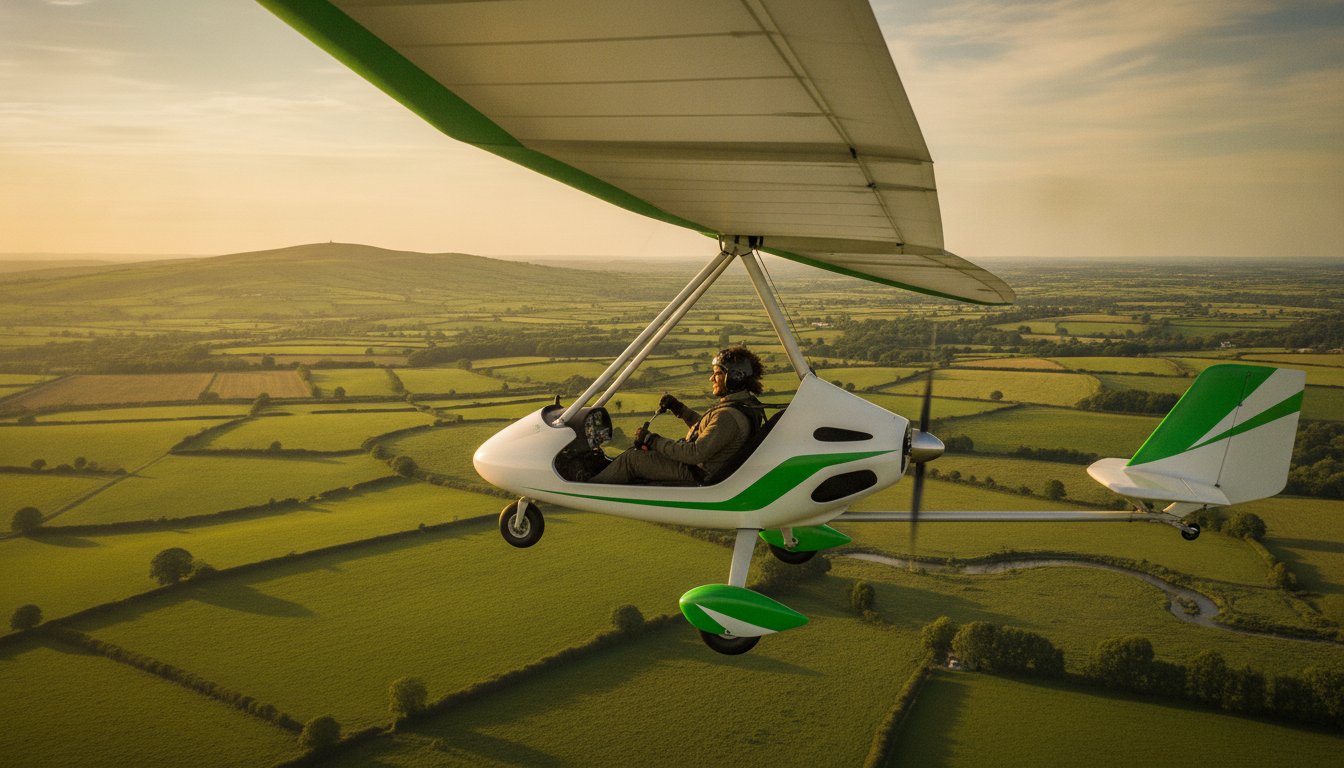
Imagine sitting in a cockpit, the patchwork fields of the Wiltshire countryside stretching out beneath you as you bank gently towards the horizon. You aren’t just a passenger; you’re the one in control. If you’ve ever looked up and wondered how to become a microlight pilot, you’ve likely felt that it’s a dream reserved for the elite or those with endless free time. It’s easy to feel overwhelmed by talk of complex medicals, expensive PPL licences, and years of study. You might even worry that your busy work week simply won’t allow for flight lessons.
We understand that feeling, but the sky is far more accessible than you think. This guide shows you exactly how to claim your freedom. You’ll discover the step-by-step journey to earning your microlight pilot licence and flying solo for the first time. We will break down the 2026 NPPL requirements, explain the simple medical declaration process, and show you how to fit training into a busy lifestyle. Your aerial adventure starts right here.
Key Takeaways
- Understand why the National Private Pilot’s Licence (NPPL) is the favourite choice for recreational flyers who want more freedom and lower costs.
- Discover exactly how to become a microlight pilot through a simple five-step journey that takes you from total beginner to a qualified pilot.
- Demystify the medical and ground school requirements, including how a simple self-declaration often replaces complex doctor visits.
- Learn why taking the controls from your very first flight is the best way to build confidence and start your aerial adventure today.
Understanding the NPPL: Your Ticket to the Skies
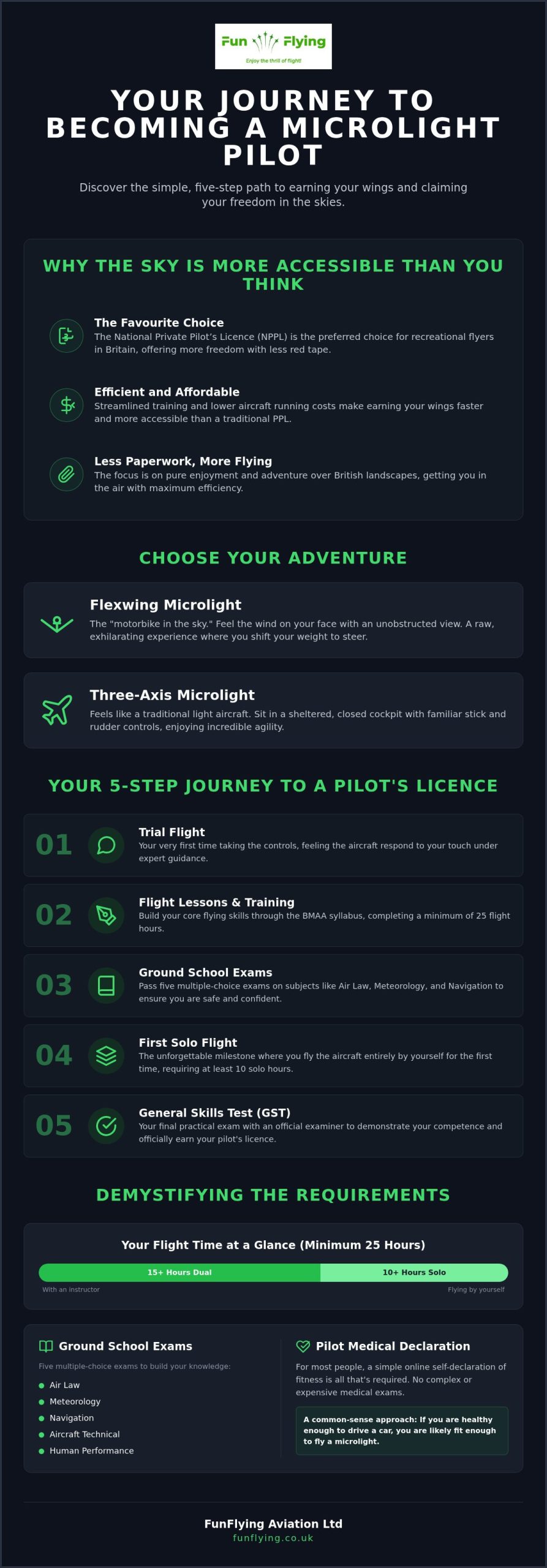
To start your journey, you’ll need to understand the National Private Pilot Licence (NPPL) with a Microlight Class Rating. It’s the gold standard for recreational flyers in Britain. Why? Because it cuts through the complex red tape often associated with international commercial licences. While the NPPL is a UK-specific qualification, it’s the absolute favourite choice for those seeking pure adventure over our stunning local landscapes. Learning how to become a microlight pilot is about efficiency and enjoyment; you get to spend more time in the air and less time buried in paperwork.
Flexwing vs Three-Axis: Which Path is Yours?
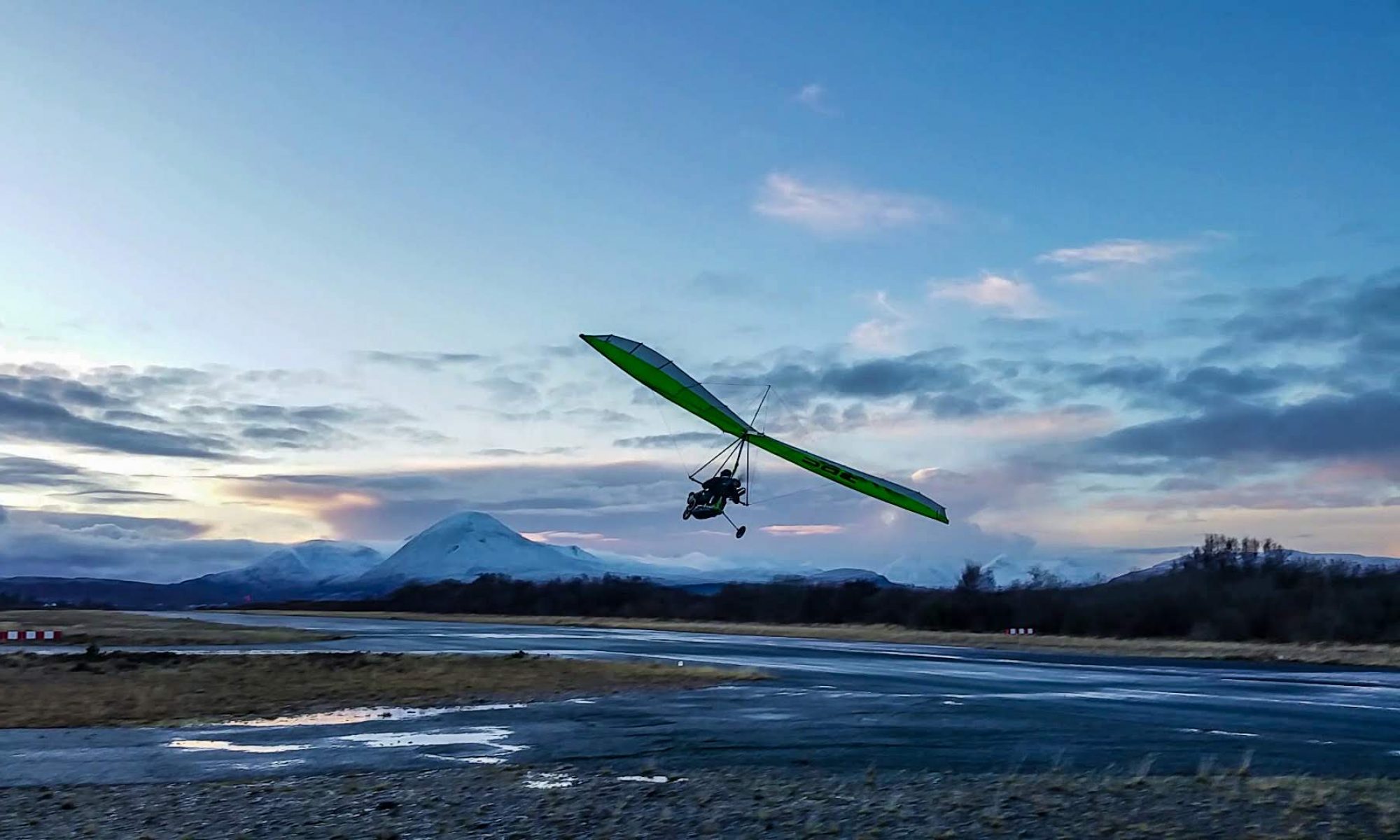
You have two distinct ways to experience flight. A flexwing microlight feels like a “motorbike in the sky.” You’re out in the elements, shifting your weight to steer, with the wind on your face and an unobstructed view of the world below. It’s raw and exhilarating. Alternatively, a three-axis microlight looks and feels like a traditional light aircraft. You sit in a closed cockpit with a stick and pedals. It’s perfect if you prefer a more familiar, sheltered environment while still enjoying incredible agility. Imagine yourself in the pilot’s seat; do you want the open air or the classic cockpit feel?
Why Microlighting is the Most Accessible Way to Fly
Choosing this path is the most efficient way to earn your wings. Because the training requirements are more streamlined than a traditional PPL, you can achieve your goal much faster. It’s about finding the best value for your time and investment. If you’re looking for affordable microlight lessons UK, you’ll find that the lower running costs of these modern aircraft make pilot training a reality for almost anyone. You don’t need a massive budget; you just need the passion to look up and say, “I want to be there.” Discovering how to become a microlight pilot is your first step to total freedom.
The 5 Steps to Becoming a Microlight Pilot
Learning how to become a microlight pilot is a structured adventure. It starts with a hands-on trial flight and moves through these five key milestones:
- Trial Flight: Your first time taking the controls and feeling the aircraft respond.
- Flight Lessons: Building core skills through the official BMAA syllabus.
- Ground School: Passing five multiple-choice exams, including Air Law and Meteorology.
- First Solo: The legendary moment you fly the aircraft entirely by yourself.
- General Skills Test: Your final practical check with an examiner to earn your wings.
This progression ensures you’re never overwhelmed. Each step builds on the last, turning you from a curious observer into a competent aviator ready to explore the British skies.
The Training Syllabus: What You’ll Actually Do
The microlight pilot training programme follows a clear path. Following the UK Civil Aviation Authority NPPL requirements, you’ll complete at least 25 flight hours, including 10 hours of solo time. You’ll master manoeuvres like steep turns and engine-off drills. These drills ensure you can land safely in any situation. It’s about building total confidence in your aircraft.
Your First Solo Flight: A Rite of Passage
Your first solo is a milestone you’ll never forget. Imagine the cockpit feeling lighter and the cabin falling silent as you realise you’re the only person on board. It’s pure exhilaration. Your instructor only sends you up when they are 100% certain you’re ready. If you’re eager to feel that freedom and want to learn how to become a microlight pilot, start your journey today.
Ground School and the Pilot Medical Declaration
Many people worry about the “school” part of learning how to become a microlight pilot. Don’t be. It’s not like going back to secondary school. There are five exams to tackle: Air Law, Meteorology, Navigation, Aircraft Technical, and Human Performance. They’re all multiple-choice. Their purpose is to keep you safe and confident in the air, not to catch you out with trick questions. You’ll often find students chatting about navigation over a coffee in the clubhouse, turning study into a social event. Mastering the microlight ground school UK syllabus is simply about gaining the tools to enjoy your freedom responsibly.
The Pilot Medical Declaration (PMD): No Doctor Required?
One of the biggest reliefs for new pilots is the Pilot Medical Declaration. Unlike commercial pilots who face rigorous, expensive clinical exams, most recreational flyers can simply self-declare their fitness online. If you’re healthy enough to drive a car, you’re likely fit enough to fly a microlight. The PMD is a modern, common-sense approach to recreational aviation safety that removes the anxiety of a formal medical. This means you can focus on the fun parts of how to become a microlight pilot without worrying about clinical appointments.
Fitting Ground School into Your Life
You don’t need to quit your job to earn your wings. With flexible flying lessons UK, you can study at your own pace. Most students mix home study with expert guidance from their instructor during rainy days at the airfield. It’s about making the journey work for you, not the other way around. You can fit your ground school around your existing schedule, ensuring your path to the cockpit is as stress-free as possible.
Starting Your Journey at Wiltshire Microlight Centre
Your journey begins at Yatesbury, where the atmosphere is as inspiring as the views over the Wiltshire Downs. We don’t believe in making you wait. Our ‘FunFlying’ philosophy ensures you take the controls from your very first lesson. You aren’t just watching an instructor; you’re actively flying. It’s the most exhilarating way to discover how to become a microlight pilot. From the moment the wheels leave the grass, you’ll feel the autonomy and thrill that only recreational aviation provides.
Training in the South West is a sensory feast. You’ll navigate over world-famous landmarks like the ancient stone circles of Avebury and the striking Cherhill White Horse. These sights turn every training session into a genuine adventure. It’s a far cry from a cold, institutional classroom. Here, the sky is your playground, and every flight builds your confidence whilst offering a perspective of Britain that few ever get to see.
Why Yatesbury is the Perfect Classroom
A great school is built on its community. At the Wiltshire Microlight Centre, you’ll find a warm, welcoming clubhouse filled with pilots who share your passion. We ditch the formal hierarchy for a friendly, peer-to-peer approach. You’re amongst friends who want to see you succeed. Whether you’re sharing a post-flight coffee or discussing the day’s weather, you’re part of a vibrant group that celebrates every milestone you reach.
Ready for Take-off? Your Next Steps
The roadmap to the skies is clear. Start with an introductory trial flight to see if you’ve got the ‘flying bug’. Once you’re hooked, you’ll move through your training syllabus toward your NPPL licence. For those looking to plan their journey, our microlight pilot training cost guide provides all the details you need for budgeting. Understanding how to become a microlight pilot is the first step toward a lifetime of freedom. Book your first flight today and claim your place in the sky.
Take Your Seat in the Cockpit
The sky is no longer a distant dream reserved for the elite. You now know exactly how to become a microlight pilot, from that first thrilling trial flight to the moment you earn your NPPL. By choosing the Wiltshire Microlight Centre, you’re joining a welcoming community that prioritises hands-on experience and flexible training. You’ll take control from your very first lesson, guided by expert instructors at our historic Yatesbury Airfield. With operations running six days a week, fitting your new passion around a busy work schedule is simpler than you ever imagined.
The patchwork fields and ancient landmarks of the South West are waiting for you. It’s time to stop looking up and start looking down from your own cockpit. Whether you want to fly solo for the first time or explore the UK from the air, your adventure begins with a single decision.
The freedom of the British skies is just one flight away. We can’t wait to see you on the runway and help you claim your wings.
Frequently Asked Questions
Do I need any previous experience to start microlight training?
You don’t need any prior aviation experience to begin your journey. Many of our students from Swindon and Bristol arrive with zero flying hours; we simply start from the very beginning. Our “FunFlying” approach means you take the controls during your first lesson under expert guidance. We’ll teach you everything you need to know about how to become a microlight pilot, building your confidence at a pace that feels natural for you.
How much does it typically cost to get a microlight licence in the UK?
The total cost of earning your licence depends on how quickly you progress through the syllabus. Whilst specific fees vary across the country, industry estimates suggest a typical budget between £6,000 and £10,000 for the full qualification. This includes your flight hours, ground school, and exams. We recommend checking our detailed pricing guide to understand the best ways to manage your training investment whilst learning at our historic Yatesbury centre.
What is the minimum age to start learning to fly a microlight?
You can begin your flight training as early as 14 years old. It is a fantastic way for young enthusiasts in Reading or Basingstoke to build discipline and technical skills. Whilst you can start lessons early, you must be at least 16 to fly solo and 17 to hold the NPPL licence itself. There is no upper age limit; as long as you can make a medical declaration, you are clear for take-off.
How long does each flying lesson usually last?
Most training lessons involve about 60 minutes of actual flight time. We find this duration is the “sweet spot” for learning without becoming mentally fatigued. When you include the pre-flight briefing and the post-flight debrief, you should allow around two hours at the airfield. This structure helps students from Portsmouth or Bournemouth maximise their learning whilst enjoying the social atmosphere of our friendly pilot community at Yatesbury airfield.
Can I fly a microlight abroad with an NPPL licence?
The NPPL is specifically a UK licence and isn’t automatically recognised internationally. However, many pilots find that certain European countries allow NPPL holders to fly within their borders with prior permission. If your dream is to fly across the Channel, we can discuss the specific requirements for your chosen destination. It’s a great goal to have once you’ve mastered how to become a microlight pilot and explored the British skies.