
What if the only thing standing between you and the open sky wasn’t a lack of courage, but a confusing spreadsheet? It’s a common hurdle. Many aspiring pilots feel held back by the mystery surrounding the microlight pilot training cost, fearing that hidden landing fees or unexpected fuel surcharges will ground their dreams before they’ve even begun. We understand that anxiety. You want to know exactly what you’re signing up for without the dense jargon or the ‘add-on’ surprises that often haunt the aviation world.
We’re here to clear the air and show you that the cockpit is well within your reach. This guide provides a transparent, honest breakdown of budgeting for your licence in 2026, from your first lesson at the controls to the final skills test. You’ll learn the difference between permit types, how many hours it really takes to qualify, and how to save money through efficient, structured training. Imagine the freedom of soaring over the British countryside; let’s build the financial flight plan to get you there.
Key Takeaways
- Discover why the NPPL is the clever choice for recreational pilots, offering the same thrill of flight with much lower fuel and maintenance costs than traditional planes.
- Get a clear breakdown of the microlight pilot training cost and see how ‘pay as you learn’ options let you manage your budget at your own pace.
- Plan for success by mapping out essential extras like ground school exams and pilot gear, ensuring your journey to the sky is completely surprise-free.
- Learn how simple habits like regular flying and ‘chair flying’ can sharpen your skills faster and save you a significant amount on your total training bill.
Investing in Your Freedom: Why Microlight Training Offers the Best Value in Aviation
Imagine waking up on a crisp Saturday morning, checking the wind, and deciding to fly to the coast for lunch. This isn’t just a dream for the elite; it’s the daily reality for those who hold a National Private Pilot’s Licence (NPPL). For recreational flyers in the UK, the NPPL is the gold standard for accessibility and pure, unadulterated enjoyment. When you look at the microlight pilot training cost, you aren’t just paying for a certificate. You’re investing in a ticket to a vibrant community and a lifetime of weekend adventures.
Modern microlight and ultralight aircraft are marvels of engineering. They’re incredibly fuel-efficient, often running on regular unleaded petrol rather than expensive aviation fuel. Simpler regulations and lower maintenance needs mean these aircraft are much cheaper to operate than traditional Group A planes. At FunFlying, we focus on providing immediate value. You’ll learn to fly by taking the controls in your very first lesson, ensuring every penny of your budget goes toward building hands-on experience from day one.
NPPL vs. PPL: The Financial Breakdown
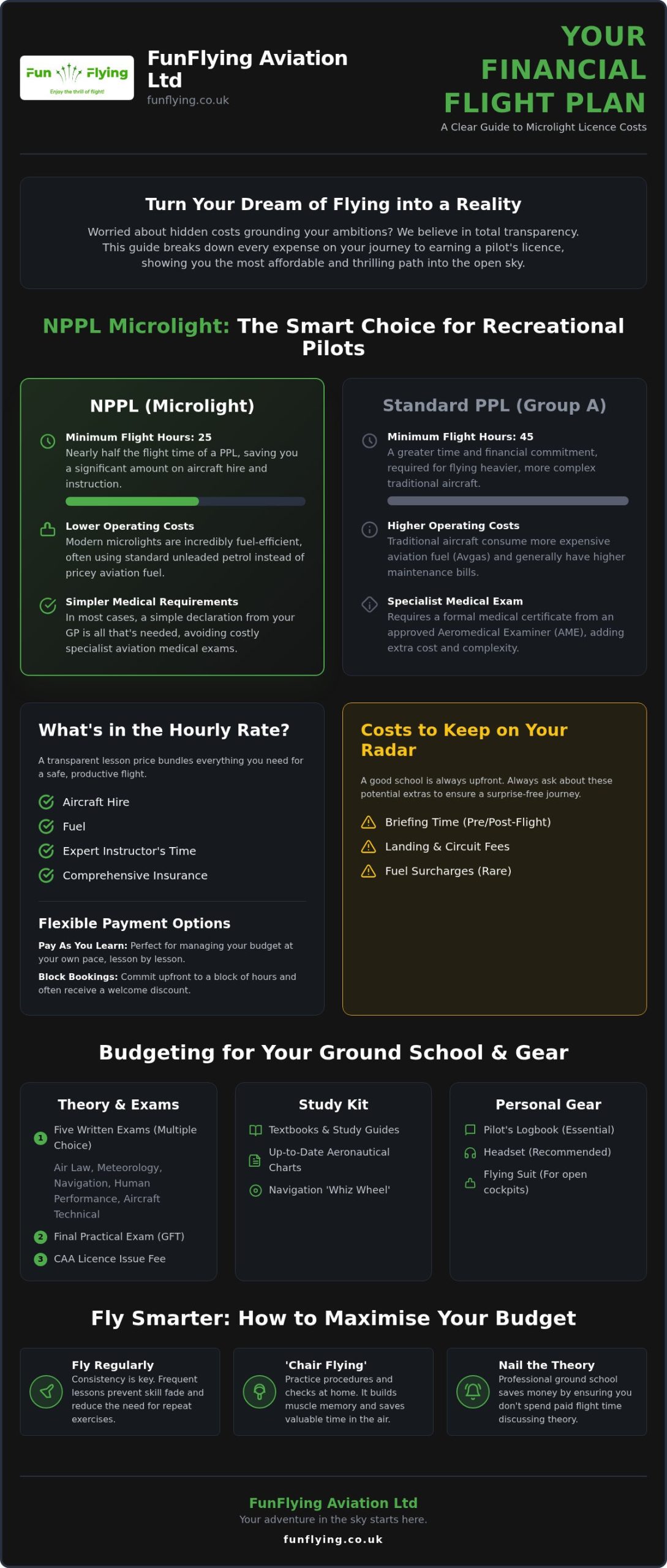
The most significant saving is found in the training requirements. A standard PPL requires a minimum of 45 flight hours, but you can earn an NPPL for microlights in just 25 hours. That’s nearly half the time spent paying for aircraft hire. Medical costs are also much lower; you can often use a simple GP declaration rather than paying for specialist aviation doctor fees. Whether you choose a restricted rating for local hops or an unrestricted rating for touring, the total microlight pilot training cost remains the most budget-friendly path into the sky.
The Hourly Rate Explained: What is Included in Your Flying Lessons?
When you see a price for a flying lesson, you might wonder exactly what that covers. Is it just the time the engine is running? Not quite. A transparent microlight pilot training cost typically bundles several vital elements into one figure. You’re paying for the aircraft hire, the fuel that powers your ascent, the instructor’s years of expertise, and comprehensive insurance. It’s a complete package designed to keep you safe and focused on the joy of flight.
You generally have two ways to manage your budget. The ‘pay as you learn’ model is fantastic for flexibility, allowing you to fund your hobby lesson by lesson. Alternatively, many students choose block-booking packages. These often provide a tidy discount in exchange for upfront commitment. You should also consider the type of aircraft you’ll be piloting. Fixed-wing microlights, which look like traditional aeroplanes, sometimes carry a slightly higher hourly rate than flex-wing (weight-shift) models due to their more complex systems. To see how this fits your plan, you can learn to fly at FunFlying and explore our current Yatesbury rates.
Hidden Costs to Watch Out For
Transparency is key to a stress-free journey. Some schools might charge extra for ‘briefing time’. This is the essential pre-flight chat where you discuss the lesson goals and safety procedures. Always ask if this is included in the hourly rate or billed separately. You should also look out for landing fees or circuit fees. Think of these as a small ‘toll’ for using the airfield’s runway. Whilst fuel surcharges can occasionally appear if global oil prices spike, a good school will always keep you informed of these shifts before you take off.
Essential Extras: Budgeting for Ground School, Exams, and Equipment
Becoming a pilot isn’t just about stick and rudder skills; you’ve also got to master the theory of the sky. To earn your licence, you must pass five multiple-choice exams: Air Law, Human Performance, Meteorology, Navigation, and Aircraft Technical. Budgeting for these fees is a vital part of the overall microlight pilot training cost. You’ll also need some physical kit for your studies, including up-to-date aeronautical charts, textbooks, and a mechanical navigation computer, often called a ‘whiz wheel’. While it looks like a vintage tool, it’s essential for calculating wind drift and fuel burn during your cross-country flights.
Gearing Up: Personal Pilot Equipment
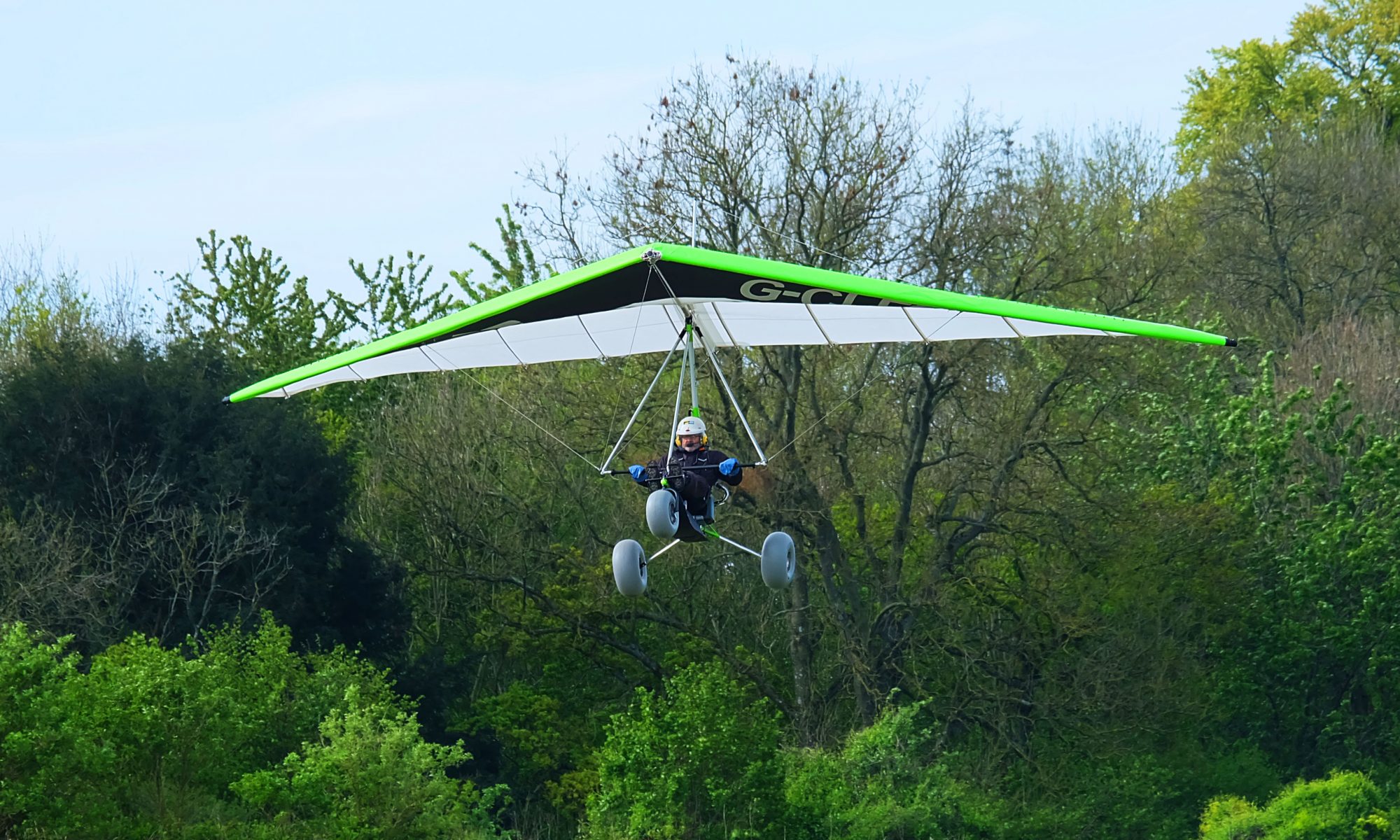
You don’t need to buy every piece of equipment at once. Start with a logbook to record your progress from your very first flight. Whilst schools provide headsets for your lessons, many students prefer to buy their own for comfort and better noise reduction once they’re fully committed to their training. If you’re flying an open-cockpit flex-wing, a warm flying suit and sturdy gloves are essential for staying comfortable at altitude. A great tip for saving money is to check club noticeboards or local pilot networks for high-quality second-hand gear.
Maximising Your Budget: How to Earn Your Wings Efficiently
The secret to keeping your microlight pilot training cost low isn’t just finding a competitive rate; it’s about making every minute in the air count. We call this the ‘Consistency Rule’. If you fly once a week, your muscle memory stays sharp. Leave it once a month, and you’ll spend the first half of your next lesson relearning what you’ve already covered. This ‘skill fade’ is the biggest hidden drain on any student’s budget.
You can also master the cockpit from your own sofa. ‘Chair flying’ involves sitting in a quiet space and mentally rehearsing your checks and procedures. It’s a free way to ensure that when you’re actually in the sky, you aren’t wasting expensive airborne minutes trying to remember your downwind checks. For those balancing a career, exploring Flexible Flying Lessons UK strategies can help you maintain momentum. Looking ahead, qualifying opens the door to SSDR (Single Seat De-Regulated) aircraft, which provide some of the most affordable microlight lessons UK pilots can find for solo adventures.
Why Yatesbury is the Smart Choice for Wiltshire Pilots
Training at the Wiltshire Microlight Centre in Yatesbury provides a focused, professional environment. It’s more than just a school; it’s a community. At FunFlying, our friendly, club-like atmosphere means you’ll learn as much from chatting with fellow pilots as you do during your flight time. This peer support makes the process less daunting and helps you qualify more efficiently. If you’re ready to start, book an introductory flying lesson for a low-cost taster of the freedom that awaits.
Your Clear Path to the Cockpit Starts Now
You’ve seen that the microlight pilot training cost doesn’t have to be a barrier to your aviation dreams. By choosing the NPPL route, staying consistent with your weekly lessons, and utilising ground school effectively, you can manage your budget with total confidence. It’s about making a smart, transparent investment in your personal freedom and opening up a world of weekend adventures that most people only ever see from the ground.
At FunFlying, our professional instructors at Yatesbury are ready to guide you through every step of the process. Much like the specialist tuition offered by SAMZ Automatic Driving School for those on the road, we operate a flexible six-day-a-week schedule to fit around your busy life, and we bring infectious enthusiasm to every single lesson. You aren’t just another student in a logbook; you’re a future pilot joining a vibrant community that loves the sky as much as you do. The view from the top is waiting for you.
Let’s get you airborne and turn that dream of flight into your new favourite reality. We can’t wait to see you at the airfield.
Frequently Asked Questions
What is the total average cost to get a microlight licence in the UK in 2026?
A realistic budget to obtain your NPPL for microlights usually falls between £6,000 and £8,000. This total includes your flight training, ground exams, and essential pilot gear. Whilst the legal minimum is 25 hours, most students realistically require 35 to 40 hours to reach the standard. Budgeting for this range ensures your microlight pilot training cost is transparent and achievable from the very start.
Do I have to pay for the whole microlight pilot training course upfront?
No, you aren’t required to pay for the whole course upfront. We love the flexibility of the ‘pay as you learn’ model, which allows you to fund your lessons one at a time. It’s a fantastic way to progress at your own pace without a large initial outlay. If you do want to save, you can often find discounts by purchasing block-booking packages for ten hours.
How much do the microlight ground exams cost and can I self-study?
Individual exam fees are approximately £35 to £39 per subject. You can certainly choose to self-study with the right textbooks and navigation tools to keep your budget lean. However, many students find that attending professional ground school is a brilliant investment. It often simplifies the most technical subjects, helping you pass your exams first time and potentially reducing your total time spent in the cockpit.
Are there extra ‘membership fees’ to join a flying school like FunFlying?
Many flying schools and airfields do require an annual membership fee to help maintain the runways and clubhouse facilities. These fees vary depending on the location, so it’s always a good idea to ask for a full breakdown of any club charges before you begin. At Yatesbury, you’ll find a welcoming environment where these costs contribute to a supportive community that cheers you on throughout your training.
Can I save money on microlight training if I already have some flying experience?
You can certainly save money if you have previous flying experience. Your instructor will evaluate your existing skills and may be able to credit some of your previous flight time toward your licence requirements. This structured approach ensures you aren’t paying to relearn basics you already master. It is a highly efficient way to reduce your total microlight pilot training cost whilst focusing on the unique handling of microlights.