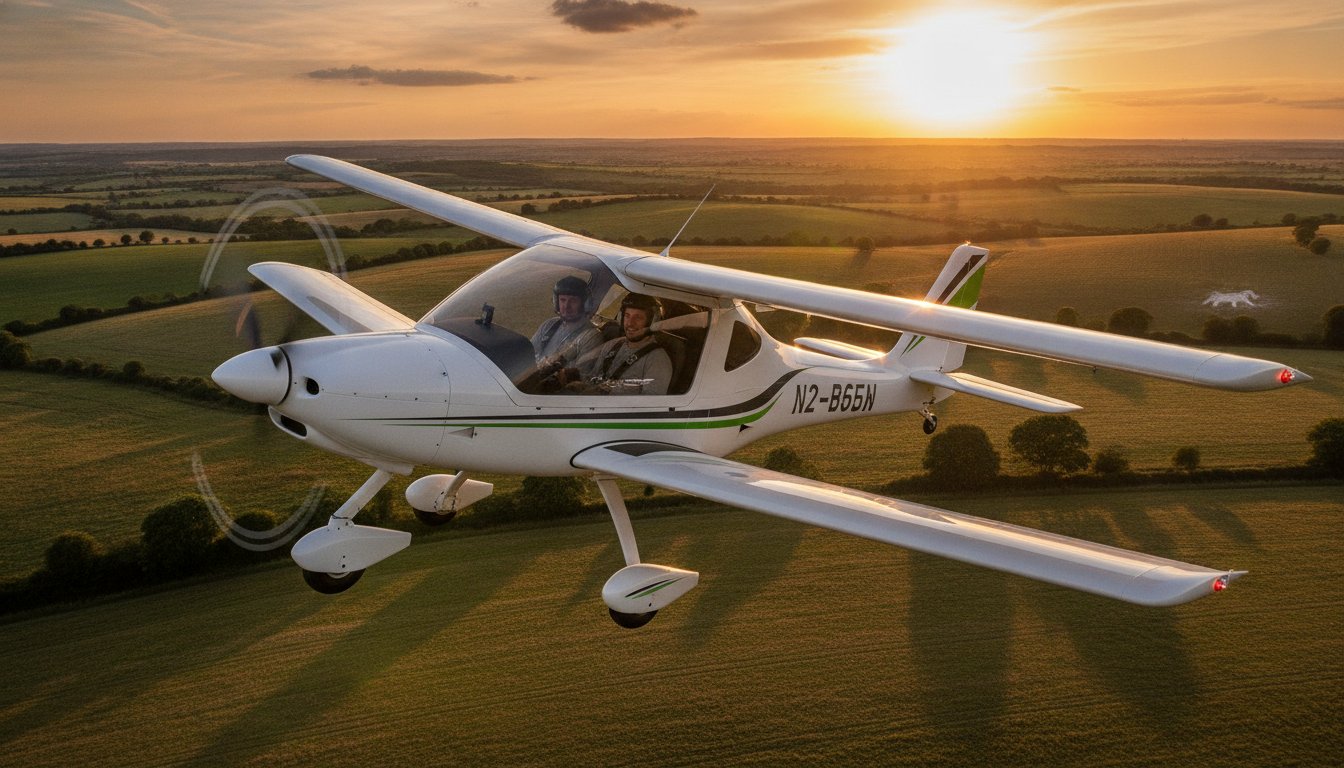
What if you could experience the pure, unadulterated thrill of the British countryside from 2,000 feet for less than the price of a second-hand hatchback? Most aspiring pilots assume that taking to the skies is a pursuit reserved for the ultra-wealthy or those aiming for a career in the airlines. It’s completely natural to feel overwhelmed by the staggering costs and the mountain of jargon that usually accompanies traditional flight training. When weighing up microlight vs PPL training, it’s easy to worry about making the wrong investment or getting stuck behind intimidating medical requirements.
You’re about to discover that becoming a pilot is far more accessible and exhilarating than you’ve been led to believe. This article uncovers the real-world differences in cost, freedom, and that unmistakable sense of joy you only get from being in control. You’ll see why these modern, high-performance machines are a genuine, safe path to the clouds. We will compare the financial commitment, the training hours required, and the sheer fun factor to help you decide which licence will get you airborne the fastest.
Key Takeaways
- Discover how a Microlight licence offers a significantly more affordable and faster route to the cockpit without sacrificing the thrill of flight.
- Learn the critical differences in microlight vs PPL training to determine which licence matches your personal flying goals and budget.
- Understand the “hands-on” advantage of microlighting, where you take control of a modern, high-performance aircraft from your very first lesson.
- Identify the simple steps to start your journey, from booking a trial flight to joining a vibrant aviation community at the Wiltshire Microlight Centre.
The Pilot’s Dilemma: Choosing Your Path to the Skies
Imagine the sheer liberation of soaring over the Wiltshire Downs with the world at your feet. It’s the ultimate escape. But for many, that dream hits a wall when faced with the complexity of Pilot licensing in the United Kingdom. You’re likely standing at a crossroads. Deciding between microlight vs PPL training shouldn’t feel like a chore. Do you choose the traditional Private Pilot Licence (PPL) or the National Private Pilot Licence (NPPL) for Microlights?
The right path depends entirely on your ultimate goal. If you’re dreaming of a career in the airlines, the PPL is your foundation. But if you’re looking for weekend adventures and pure flying joy, the microlight path is often the smarter choice. Today’s microlights are high-tech, agile aircraft that challenge every old stereotype. They aren’t just lightweight alternatives. They are high-performance machines designed for absolute fun.
The Dream of Flight vs. The Reality of Choice
Connecting your aspiration for freedom with the practicalities of UK aviation doesn’t have to be daunting. For recreational flyers, lighter almost always means more fun. These aircraft offer a seat of the pants experience that heavier planes simply can’t match. When comparing microlight vs PPL training, the lighter option often wins on agility and accessibility. It’s about stripping away the corporate feel of aviation and getting back to the soul of flying.
A Brief Look at the PPL and NPPL(M)
The PPL is the Gold Standard for those wanting to fly larger aircraft across international borders. It’s a rigorous, comprehensive route. In contrast, the NPPL(M) is tailored specifically for the recreational pilot. It’s the fastest way to learn to fly whilst keeping your budget under control. Both paths lead to the same sky. The journey just feels different. One is a professional qualification; the other is your passport to pure, unadulterated freedom.
Understanding the Difference: PPL vs. Microlight Licences
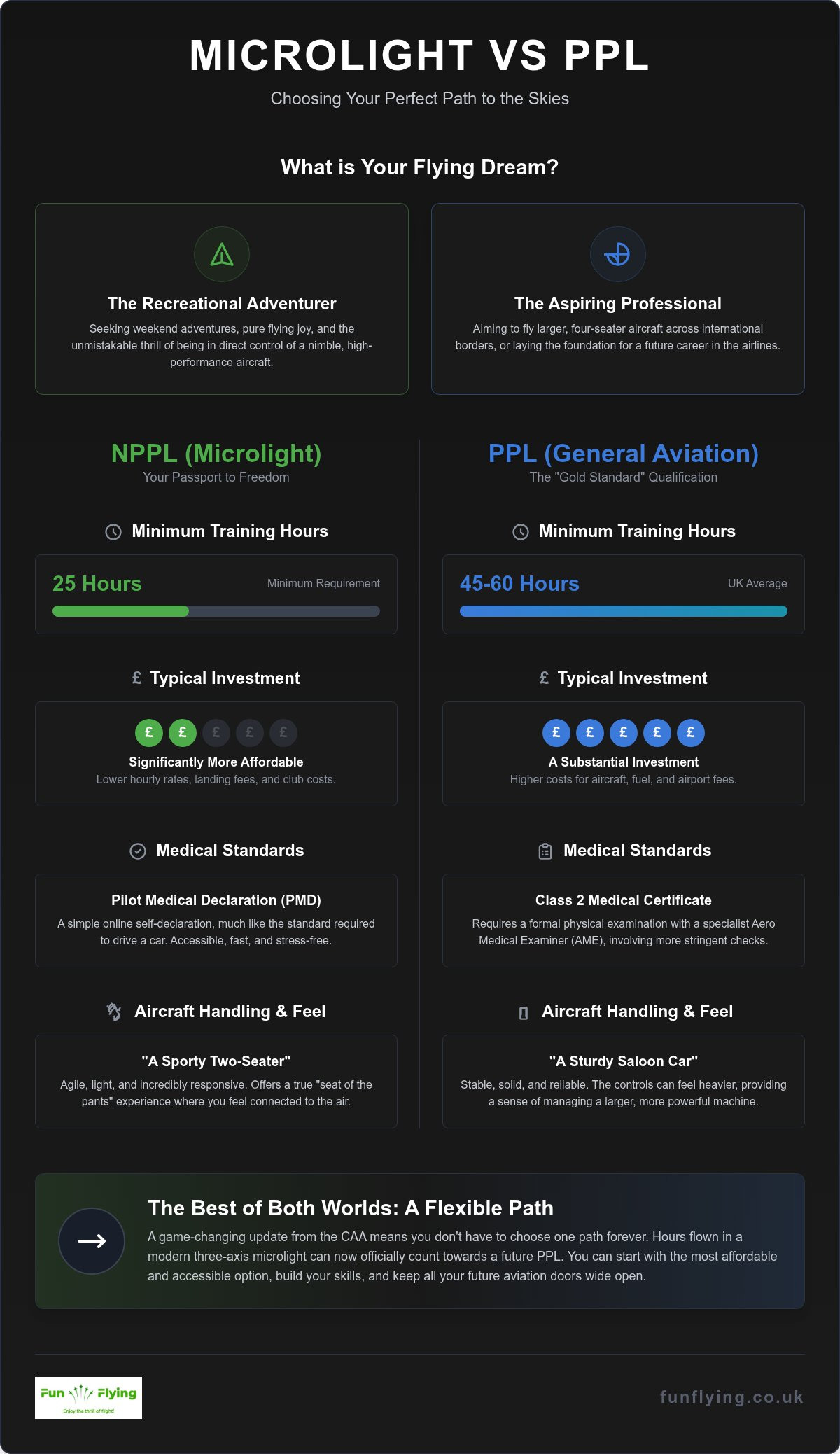
Choosing between microlight vs PPL training often comes down to what you want to see when you look out of the cockpit window. The PPL is frequently called the “Gold Standard.” It’s designed for those who want to fly larger, four-seater aircraft or eventually earn a living in the clouds. In contrast, the NPPL (Microlight) is built specifically for the recreational pilot. It’s all about maximum fun for your budget. While a traditional Cessna feels like a sturdy “heavy” car, a modern microlight is more like a sporty two-seater convertible. It’s agile, responsive, and incredibly rewarding to fly. For a deeper look at the official definitions, you can check the UK Civil Aviation Authority licence guide.
Training Requirements and Hour Thresholds
The legal minimum for a PPL is 45 hours, though the national average shows most UK students take between 55 and 60 hours to finish. For an unrestricted microlight licence, the minimum is just 25 hours. That’s a huge difference in both time and financial commitment. A game-changing update from the CAA now allows hours flown in a three-axis microlight to count towards a future PPL. This means you don’t have to choose one path forever; you can start with the most affordable option and build your skills from there.
Medical Standards and Accessibility
Accessibility is another massive win for the microlight path. Most people can fly with a simple Pilot Medical Declaration (PMD). It’s a straightforward online self-declaration that matches the standards required to drive a car. Compare this to the formal Class 2 medical required for a PPL, which involves a visit to a specialist Aero Medical Examiner (AME). If you have minor health considerations, the NPPL is often the more inclusive choice. It removes the stress of medical bureaucracy so you can focus on the sky. If you’re ready to see how simple the process can be, you can learn to fly with a team that prioritises your progress and enjoyment.
The Real-World Reality: Costs, Hours, and Handling
When you finally step onto the airfield, the differences between microlight vs PPL training become tangible. A traditional Cessna often feels like driving a sturdy saloon car; it’s stable but can feel heavy on the controls. In contrast, a modern microlight offers a “seat of the pants” experience that is hard to beat. It’s light, incredibly responsive, and provides a direct connection to the air around you. You aren’t just managing a machine. You are part of it. You’ll quickly learn that a microlight doesn’t just fly; it dances through the sky. Don’t believe the myth that these aircraft only fly in perfect calm. Modern designs handle typical British breezes with surprising grace and agility.
Budgeting for Your Wings
Your flying budget simply goes further at a microlight school. Beyond the lower hourly rates for the aircraft itself, you’ll often find that landing fees and club memberships are far more wallet-friendly than those at larger commercial airports. These smaller overheads mean you can afford to fly more often. It makes the hobby sustainable for years of adventure rather than a one-off achievement. You’ll find the atmosphere at these centres is usually more relaxed and geared towards the hobbyist. If you’re based in the south of England and searching for microlight flying near Basingstoke, a short trip to the Wiltshire countryside could offer you the ideal combination of expert instruction and stunning scenery.
The Learning Curve: Is One Easier than the Other?
While both paths require dedication, the complexity of the systems differs. PPL students often spend significant time mastering complex avionics and navigation equipment. Microlight training prioritises the pure mechanics of flight. It’s about looking out of the window and feeling the aircraft rather than staring at a digital screen. This accessibility extends to the classroom too. The microlight ground school UK syllabus is designed to be practical and focused on the essentials of safe, recreational flying. Similarly, for those looking to master unmanned flight, AINautics University offers specialised drone education and UAS training programmes.
The Joy of Low and Slow
Imagine drifting over the iconic White Horse or the ancient, mysterious stones of Avebury. In a microlight, you aren’t tucked away behind a small, high-set window. The visibility is far superior to traditional aircraft, making it the perfect platform for sightseeing. You get to experience the British countryside in stunning high definition. It’s “low and slow” flying at its absolute finest. For those seeking total independence, SSDR pilot training UK offers a path to single-seat freedom, allowing you to fly without the regulatory weight of larger machines.
Ready to Switch? Conversion and Flexibility
Already hold a pilot’s licence? You aren’t alone in looking for something more responsive and affordable. We specialise in microlight conversion training UK, helping seasoned flyers transition their skills to these agile, modern aircraft. At FunFlying Aviation, we pride ourselves on an inclusive atmosphere where every student is treated as a future pilot. The choice between microlight vs PPL training doesn’t have to be a one-way street. Your next step is simple. Book a trial flight today and feel that unmistakable “seat of the pants” magic for yourself.
Your Passport to the British Skies
The debate of microlight vs PPL training isn’t about which licence is “better” but which one fits your life and your dreams. If you want a professional career, the PPL is waiting. But if you want the freedom of the Wiltshire Downs, the agility of a modern sports aircraft, and a budget that lets you fly every weekend, the microlight path is unbeatable. You’ve seen how the NPPL(M) offers a faster, more accessible route to the clouds whilst keeping the thrill of flight at its core.
Our expert instructors with years of experience are ready to guide you through every bank and climb. With stunning Wiltshire flight paths as your classroom and flexible training scheduled around your lifestyle, there’s never been a better time to start. You could be in control of a high-performance machine sooner than you think.
The sky is calling. It’s time to stop dreaming and start flying.
Frequently Asked Questions
Do microlight flying hours count towards a full PPL licence in 2026?
Yes, hours flown in a modern three-axis microlight can now be credited toward your PPL(A) requirements. This regulatory shift makes the choice of microlight vs PPL training even more flexible for those who might want to upgrade later. It is a fantastic way to build your confidence and stick-and-rudder skills whilst keeping your initial costs manageable. You get the same sky, just at a fraction of the investment.
Is a microlight licence easier to get than a PPL?
It is certainly faster and more accessible. With a shorter minimum hour requirement than the PPL, you can reach your goal much sooner. The syllabus is focused on the essentials of recreational flight, stripping away the complex commercial procedures you won’t need for weekend adventures. Whilst the flying skills required are just as real, the path to your licence feels much more streamlined and achievable for those with busy lifestyles.
What are the medical requirements for a microlight pilot in the UK?
Most pilots can fly using a simple online Pilot Medical Declaration. This is a self-declaration process that generally matches the health standards required for a UK driving licence. You won’t need to visit a specialist doctor unless you have specific pre-existing conditions. It’s one of the biggest reasons people choose microlight vs PPL training, as it removes the stress and expense of formal aero-medical examinations for recreational flyers.
Can I carry passengers with a microlight licence?
Absolutely, you can share the magic of flight with a friend or family member once you hold your unrestricted licence. Most modern microlights are designed as comfortable two-seaters, perfect for taking a passenger on a scenic tour of the Wiltshire countryside. There is nothing quite like the look on a loved one’s face when you show them the world from a completely different perspective for the very first time.
How much cheaper is it to learn to fly a microlight compared to a PPL?
Choosing the microlight route can save you thousands of pounds over the course of your training. Because the aircraft are more efficient and the hour requirements are significantly lower, the total investment is often less than half of what you would expect for a traditional PPL. You will also find that ongoing costs like fuel and landing fees are much lighter on the wallet, making your new hobby sustainable for the long term. Once you have earned your wings, be sure to stay current with the latest microlight licence revalidation UK requirements to ensure your rating remains valid and your flying adventures continue uninterrupted.