What if the only thing standing between you and the pilot’s seat isn’t a mountain of technical jargon, but simply knowing the right time to start? It’s natural to feel a bit lost amongst the microlight flying age requirements in the UK, wondering if you’re too young to begin or too old to keep going. You might think aviation is reserved for a specific age group or those with Olympic-level fitness, but the reality is far more welcoming and inclusive than you might imagine.
If you can drive a car, you can likely pilot a plane. We’re here to clear the air and provide a simple, encouraging path to your first flight. This guide breaks down the essential legal milestones, from logging your very first hours at 14 to flying solo at 16. We’ll also explain the straightforward medical self-declaration process that removes the stress of complex check-ups. You’ll walk away with a clear timeline for earning your licence and the confidence to take control of an aircraft from your very first lesson.
Key Takeaways
- Master the three essential legal milestones for UK pilots, including the minimum ages for logging hours, flying solo, and holding a full licence.
- Clear up any confusion regarding microlight flying age requirements and discover how teenagers and seniors alike can safely enjoy the skies.
- Simplify your medical journey with the Pilot Medical Declaration (PMD) system, which typically mirrors the health standards required to drive a car.
- Start your aviation adventure with a hands-on approach that puts you in the pilot’s seat from your very first lesson at Fun Flying Aviation Ltd.
The Joy of Flight: Is Microlighting Right for You?
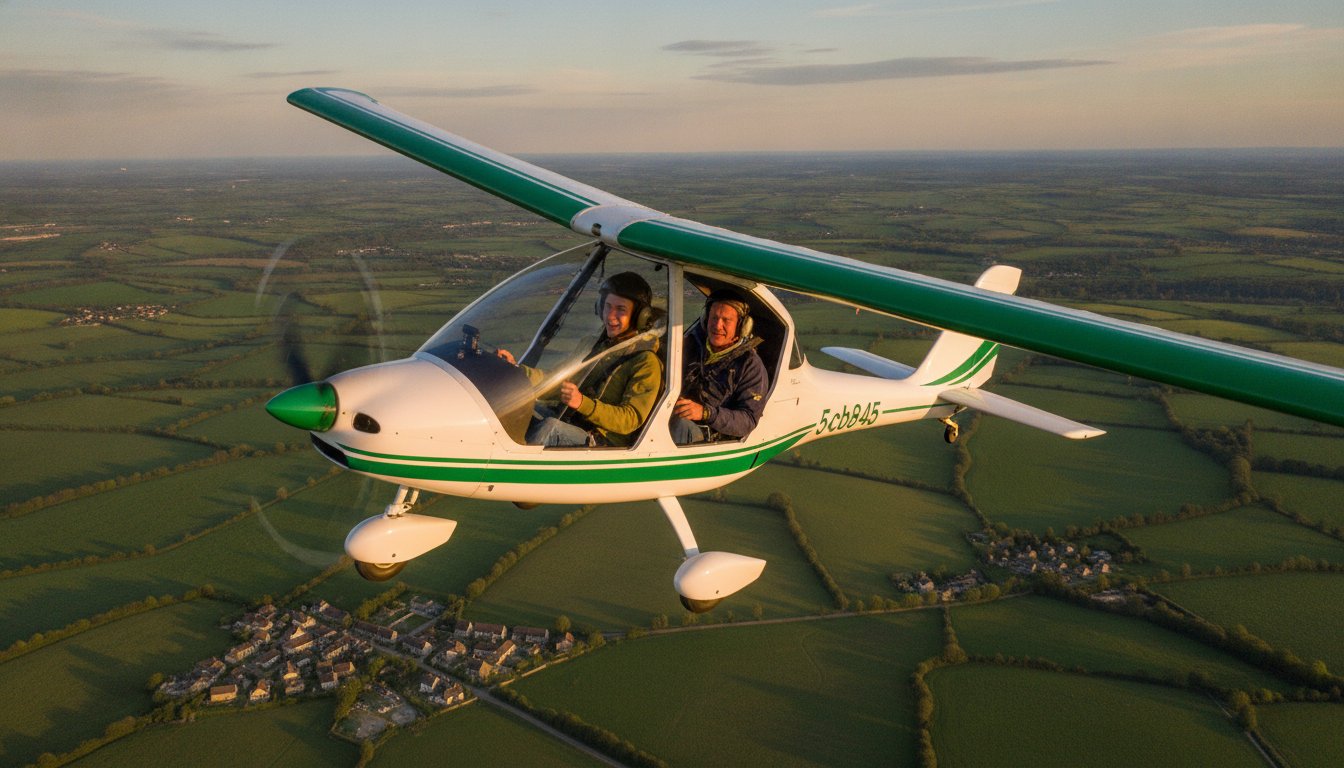
Imagine looking down at the rolling greens of the Wiltshire countryside, the wind whispering past as you bank into a gentle turn. This isn’t a dream reserved for the elite; it’s the daily reality of microlighting. Often described as The Joy of Flight: Is Microlighting Right for You?, this sport is the most accessible way to join the aviation community in the UK. Forget the outdated image of hang gliders with engines. Today’s microlights are sleek, high-performance machines that offer a truly modern flying experience. A microlight is a two-seater aircraft with a maximum take-off mass of 450kg or 600kg. Checking the microlight flying age requirements is often the very first step for many aspiring pilots eager to start their journey.
Because these aircraft are lighter and more efficient, the barriers to entry are much lower. This includes everything from the physical handling of the plane to the flexible microlight flying age requirements. Whether you’re a teenager looking for a head start or someone enjoying retirement, this is aviation built for everyone. It’s about freedom, autonomy, and the pure thrill of the sky without the complexity of heavy commercial jets. If you’ve ever wondered is microlight flying safe before committing to lessons, you’ll be reassured to know that modern aircraft and rigorous regulations make it one of the most accessible and well-regulated forms of aviation available.
Of course, for those who do hope to eventually pilot those larger aircraft, professional institutions like Flight School USA can provide the necessary training and career-focused programmes to transition into the commercial sector.
Why Microlighting is the Favourite Choice for New Pilots
Why pick this over a traditional PPL? Cost is a huge factor. Training is significantly more affordable, making the dream of a pilot’s licence a reality rather than a distant wish. It’s also incredibly hands-on. You aren’t just a passenger; you feel every thermal and movement of the air. At Fun Flying Aviation Ltd, we believe in getting you hands-on from day one. You’ll take control and feel the aircraft respond to your touch. This visceral connection to flight is exactly why so many students choose this path to the clouds. If you’re just starting out, our comprehensive guide to microlight flying for beginners walks you through everything you need to know before your first lesson.
Navigating the Legal Age Milestones for UK Pilots
Understanding the microlight flying age requirements doesn’t have to be a headache of regulatory jargon. In the UK, the Civil Aviation Authority (CAA) has established clear milestones that turn your aviation dreams into a structured reality. While these lower limits are strictly enforced for safety, they’re designed to be inclusive. Whether you’re a parent looking to give your child an unforgettable start in life or a retiree finally pursuing a lifelong passion, these microlight flying age requirements are your roadmap to the clouds.
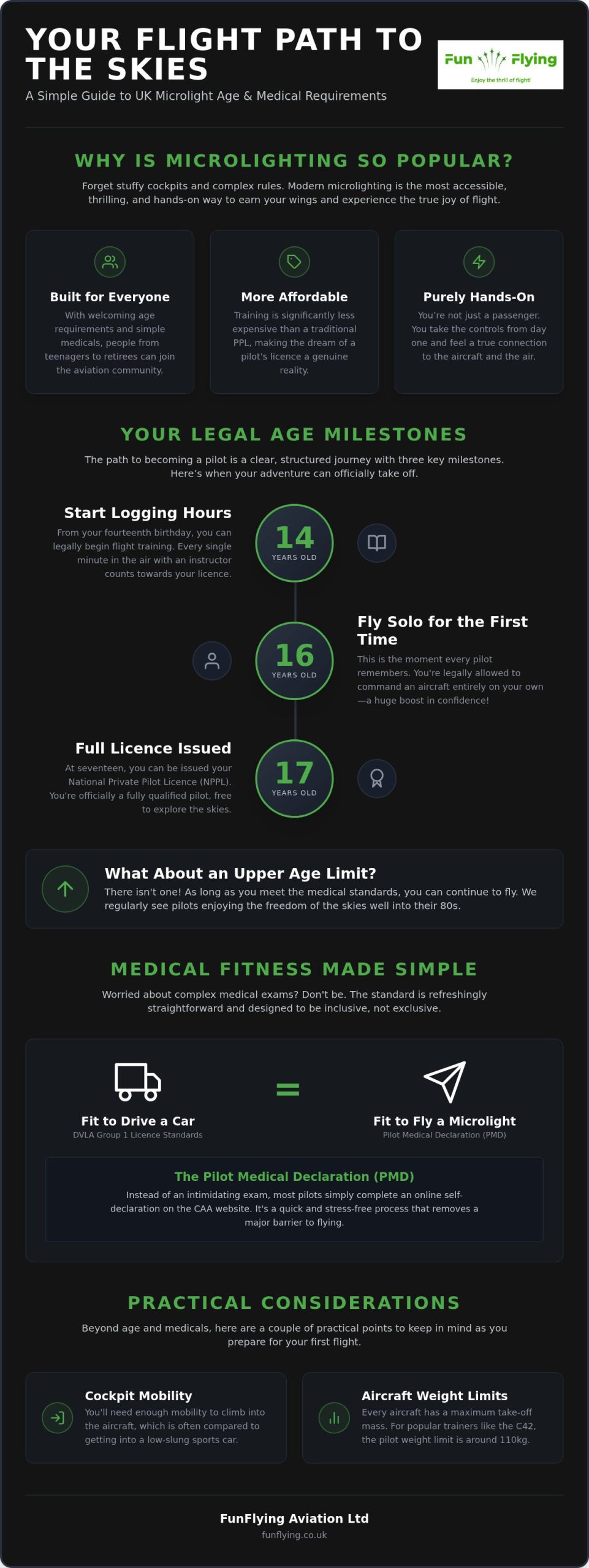
The Flight Path: 14, 16, and 17
- Age 14: This is the magic number where it all begins. From your fourteenth birthday, you can legally start logging flight training hours with a professional instructor. It’s the ultimate gift for a young adventurer. Every single minute you spend in the air counts towards your final licence requirements.
- Age 16: This is the milestone every pilot holds dear. At sixteen, you’re legally allowed to fly solo. Imagine the incredible boost in confidence that comes from commanding an aircraft entirely on your own before you’re even old enough to drive a car on the road.
- Age 17: Once you hit seventeen, you can officially be issued your National Private Pilot Licence (NPPL) for microlights. You’ve transitioned from a student to a fully qualified pilot, ready to explore the skies at your leisure.
What about the other end of the spectrum? One of the most liberating aspects of microlighting is that there’s no upper age limit. As long as you meet the medical standards, you can keep flying well into your later years. If you’re ready to start ticking off these milestones, you can begin your training journey today and join a community that celebrates freedom at every age.
Beyond Birthdays: Medical and Physical Requirements
Think you need the physical stamina of a fighter pilot to take to the skies? Think again. One of the greatest joys of this sport is how inclusive it truly is. While understanding the microlight flying age requirements is vital for your timeline, your medical fitness is much simpler than you might expect. The general rule of thumb is heartening: if you are fit enough to drive a car, you are almost certainly fit enough to fly a microlight. For a deeper look at the safety standards and regulations that protect every pilot in the air, our full guide on whether microlight flying is safe and what you need to know before taking off covers everything in detail.
The Pilot Medical Declaration (PMD)
The UK has modernised aviation health standards through the Pilot Medical Declaration (PMD) system. Instead of expensive, intimidating clinical exams, you simply complete an online self-declaration on the CAA website. It’s a straightforward process that aligns with the DVLA Group 1 (Car) Licence standards. You’ll only need to consult your GP if you have specific pre-existing conditions, such as certain heart or neurological issues. This accessibility is why so many people find microlighting the perfect way to embrace the freedom of flight without the red tape, often supported by health awareness resources from First Medical Training Ltd.
Mobility and Weight Considerations
Beyond the paperwork, there are a few practicalities to keep in mind. You’ll need enough mobility to climb into the cockpit, which is a bit like getting into a low-slung sports car. Weight also plays a role because every aircraft has a maximum capacity. For popular models like the C42, the pilot weight limit is usually around 110kg. We always recommend getting your medical declaration sorted early in your training journey. It’s one less thing to think about as you approach your first solo flight. Don’t let the years hold you back; we regularly see aviators soaring over Wiltshire well into their 80s, proving that passion for the sky has no expiry date.
Learning to Fly in the Heart of Wiltshire
Choosing a dedicated centre like Yatesbury offers more than just professional instruction. You’ll be training in a vibrant aviation community where the atmosphere is as welcoming as the views are spectacular. Imagine soaring past the iconic Cherhill White Horse or looking out over the rolling hills of the West Country. These landmarks become your classroom markers as you master the art of flight. Because we offer training six days a week, you can easily balance your progress with a busy school or work schedule. Our instructors are experts at tailoring lessons to your individual pace, ensuring you feel confident and supported every step of the way.
A trial flight is the absolute best way to begin. It allows you to meet the team, see our modern aircraft up close, and confirm that you meet the physical and microlight flying age requirements before committing to a full course. There is no substitute for the feeling of the wheels leaving the grass and the world shrinking beneath you. If you’ve ever looked up and wondered what it’s like to be in control, now is the time to find out. The sky is waiting, and your journey to becoming a pilot starts with a single, thrilling takeoff.
Your Path to the Pilot’s Seat Starts Now
The dream of flight is far closer than you think. By understanding the microlight flying age requirements, you’ve already cleared the first hurdle toward your National Private Pilot’s Licence. Whether you’re a young student eager to start your logbook or an enthusiast finally finding time in retirement, the path to the clouds is clear and inclusive. Remember that the medical standards are straightforward; if you’re fit to drive, you’re likely fit to fly. With expert instruction at the Wiltshire Microlight Centre and a flexible training schedule available six days a week, there’s nothing stopping you from reaching for the horizon.
You’ll take control of the aircraft on your very first lesson, turning that long-held dream into a hands-on reality. The air above Yatesbury is waiting for you. It’s time to stop looking up and start looking down from your own cockpit. We can’t wait to see you in the skies.
Frequently Asked Questions
What is the minimum age to start microlight flying lessons in the UK?
You can start your aviation journey on your 14th birthday. This is the earliest age at which you can legally begin logging flight training hours with a professional instructor. Understanding these microlight flying age requirements is the first step for any young adventurer. Every minute you spend in the air from this age counts towards the total time required for your final licence, giving you a massive head start.
Is there an upper age limit for becoming a microlight pilot?
There is absolutely no upper age limit for microlight pilots in the UK. As long as you meet the medical requirements and feel physically capable of climbing into the cockpit, you can keep flying. We regularly train students in their 60s, 70s, and even 80s. Age really is just a number when you’re chasing the freedom of the Wiltshire skies.
Can a 14-year-old go solo in a microlight?
No, the minimum age to fly solo is 16 years old. While you can start learning and logging hours at 14, you must wait until your 16th birthday to take the controls alone. This milestone is a huge achievement for any young pilot. It’s the moment they truly feel in command, having mastered the skills needed to navigate the aircraft without an instructor.
Do I need a formal medical exam to fly a microlight?
You don’t usually need a formal clinical exam. Most pilots simply complete an online Pilot Medical Declaration (PMD) via the CAA website. This system is based on the same health standards as a UK driving licence. It’s designed to make microlight flying age requirements and medical entries as accessible as possible, removing the need for expensive appointments for those who want to take to the air.
How many hours of training do I need before I can get my licence?
The legal minimum for an unrestricted licence is 25 hours of total flying time. This must include at least 10 hours of solo flight. However, most students take a bit longer to reach the required standard. On average, pilots complete their training in about 40 to 58 hours. Your individual pace, the weather, and how often you can fly will all play a role in your timeline. For a full breakdown of what to expect from your first lesson through to your licence, our complete beginner’s guide to microlight flying provides a clear and practical roadmap for new pilots.