
What if the dream of soaring over the rolling Wiltshire countryside wasn’t reserved for the elite or the incredibly wealthy? It’s easy to assume that NPPL microlight training UK is a bank-breaking endeavour reserved for the young, but that couldn’t be further from the truth. If you’ve ever felt overwhelmed by technical jargon or worried that you’re too old to learn, you aren’t alone. We know exactly how it feels to want that sense of total freedom whilst feeling held back by the unknown.
We’re here to show you that getting your wings is the most accessible and exciting adventure you’ll ever take. Our expert breakdown of the NPPL syllabus and training at Yatesbury provides the clarity you need to move forward with confidence. You’ll discover that getting airborne is simpler and more joyful than you ever imagined. In this guide, we’ll walk you through the costs, explain the difference between aircraft types, and provide a clear, step-by-step roadmap to earning your licence. It’s time to stop watching from the ground and start your journey in the sky.
Key Takeaways
- Understand exactly what the NPPL licence allows you to fly and why it’s the most efficient route to becoming a pilot.
- Follow our detailed roadmap of the training syllabus, showing you how to progress from your first lesson to flying solo.
- Compare the “motorbike in the sky” experience of a flexwing with the comfort of a three-axis aircraft to find your perfect NPPL microlight training UK.
- Discover why our “take control from day one” approach at Yatesbury makes learning to fly an inclusive and high-energy adventure for everyone.
What is the NPPL Microlight Licence and Why Choose It?
Imagine the wind in your face and the world shrinking beneath you as you climb into the blue. The National Private Pilot Licence (NPPL) is your golden ticket to the clouds. It’s a UK-specific qualification designed for recreational pilots who want to fly for the sheer love of it. When you begin your NPPL microlight training UK, you’re choosing a path that prioritises adventure over bureaucracy. Adventure awaits.
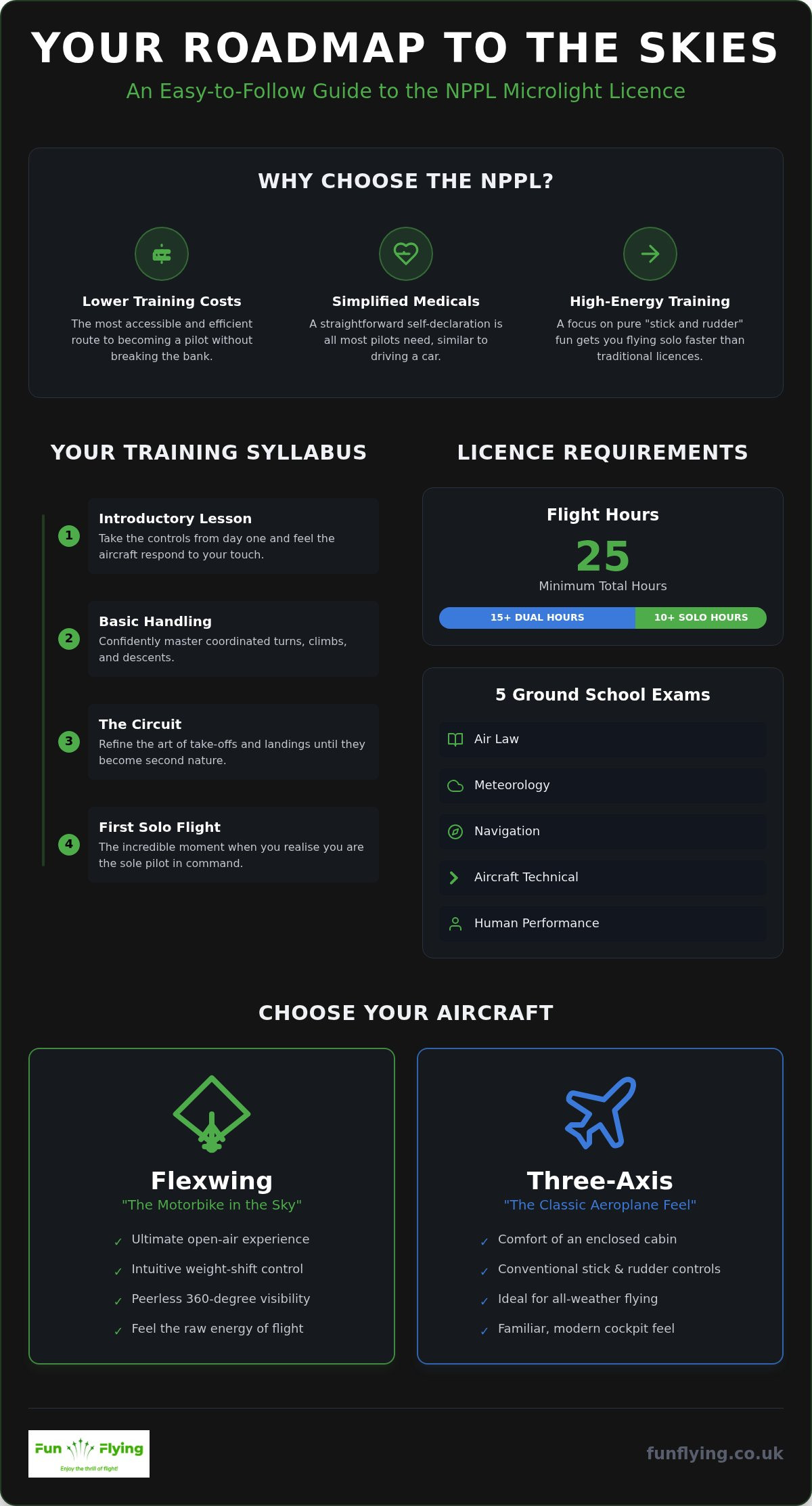
With a Microlight Class Rating, you can pilot aircraft with a maximum take-off weight of up to 600kg. This covers modern, high-performance machines that make learning to fly such a rewarding experience. It is the favourite choice for weekend adventurers because it cuts through the complexity of a standard PPL. Whilst a PPL involves more rigorous training often suited for heavier aircraft, the NPPL focuses on pure “stick and rudder” flying fun. You’ll benefit from:
- Lower training costs compared to traditional light aircraft.
- Simplified medical requirements that keep you in the pilot’s seat.
- A high-energy training environment that gets you airborne faster.
The Freedom of Recreational Aviation
At Fun Flying Aviation Ltd, we see how this licence transforms hobbyists into pilots. Once you have your licence, the UK’s skies are yours to explore. You’ll enjoy an incredible sense of autonomy, hopping between grass strips or visiting historic airfields. One of the biggest reliefs for many is the medical process. Instead of a rigorous clinical exam, most pilots can simply complete a medical self-declaration online. It’s a straightforward way to prove you’re fit to fly, similar to the standards for driving a car.
Is the NPPL Internationally Recognised?
Whilst this is a UK-specific licence, it doesn’t mean you’re grounded at the border. Many European countries accept the NPPL with some simple paperwork, allowing for cross-channel adventures. Essentially, the NPPL stands as the most accessible entry point for UK aviators in 2026 who want to experience the thrill of flight without the fuss. It’s the ultimate roadmap for those who want to own the sky.
The NPPL Microlight Training Syllabus: Your Roadmap to the Skies
Your journey with NPPL microlight training UK begins the moment you step onto the historic airfield at Yatesbury. From day one, we believe in a hands-on approach. You won’t just be watching; you’ll be flying. It starts with an introductory lesson where you take the controls and feel the aircraft respond. Next, you’ll master basic handling; things like coordinated turns, climbs, and descents. Once you’re comfortable, you’ll move to “the circuit.” This is where you refine the art of take-offs and landings until they become second nature. Finally, there’s the solo; that incredible, heart-pounding moment when you realise you’re the only one in the cockpit.
Flight Hour Requirements and the GFT
To earn your licence, you must meet the UK Civil Aviation Authority NPPL requirements. This includes a minimum of 25 hours of flight instruction, with at least 10 hours spent flying solo. Wondering how many hours for a microlight licence it takes on average? Whilst 25 is the legal minimum, many students find they need a few more hours to feel fully prepared for the General Flying Test (GFT), which is your final practical assessment with an examiner.
Mastering the Ground School Exams
You’ll also need to pass five multiple-choice exams. These cover Air Law, Meteorology, Navigation, Technical knowledge, and Human Performance. Don’t let the word “exams” put you off. Our Ultimate Guide to Microlight Ground School explains how we keep these sessions engaging and practical. We want you to understand the “why” behind the rules, making you a safer, more confident pilot. If you’re eager to get started, you can book your first lesson today and experience the thrill for yourself.
Choosing Your Aircraft: Flexwing vs Three-Axis Training
Deciding which aircraft to learn in is one of the most exciting parts of starting your NPPL microlight training UK. It’s like choosing between a rugged motorbike and a nimble sports car. Both offer incredible performance, but the sensations are worlds apart. At Fun Flying Aviation Ltd, we ensure you’re hands-on from the first minute, giving you total control of your adventure regardless of the airframe you choose.
Flexwing: The Ultimate Open-Air Experience
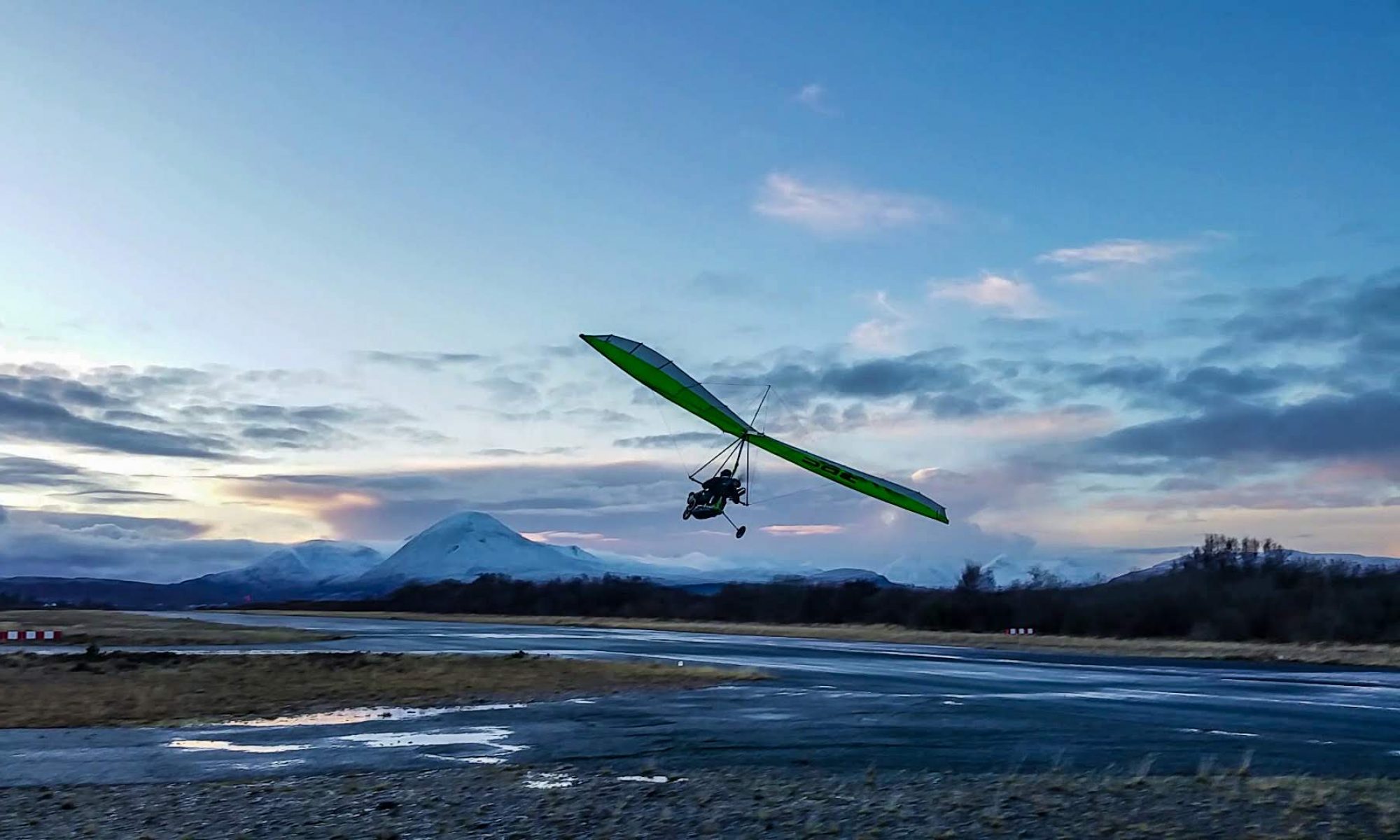
If you crave a visceral connection with the sky, the flexwing is for you. These aircraft use a weight-shift system where you control the flight by moving a bar to shift the trike unit below the wing. It feels incredibly intuitive. Because there’s no traditional cockpit enclosure, the visibility whilst soaring over the Wiltshire countryside is absolutely peerless. It’s the favourite choice for NPPL microlight training UK students who want to feel the wind and the raw energy of flight.
Three-Axis: The Classic Aeroplane Feel
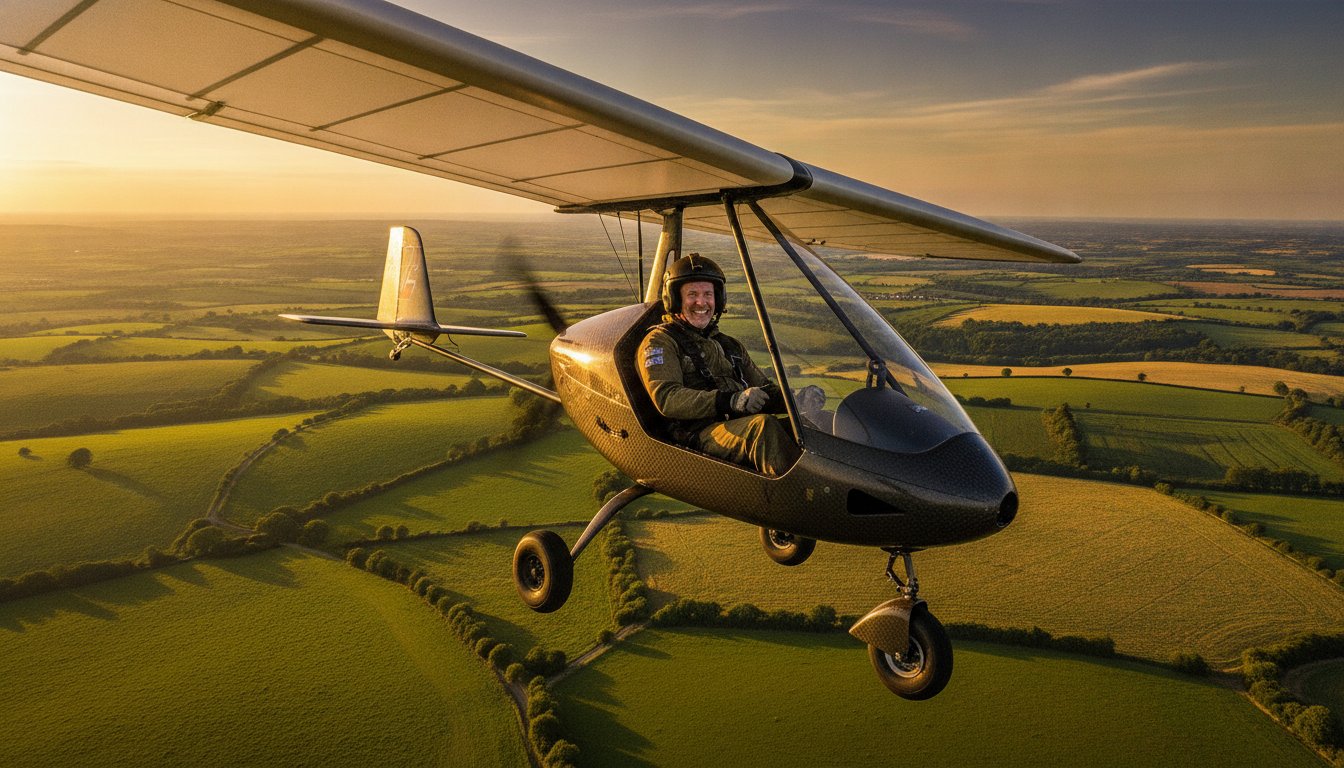
For those who prefer a traditional feel, three-axis microlights are perfect. These handle like conventional light aircraft, using a stick and rudder pedals to control your movement through the air. They offer the comfort of an enclosed cabin, making them a great choice for all-weather flying or for students who eventually want to progress to heavier aeroplanes. You’ll still get that high-energy performance, but within a familiar, reassuring environment that feels like a modern cockpit.
Can’t decide? Don’t worry. Many pilots start on one type and later use our conversion training to master the other. The skills you learn are highly transferable, and the joy of flight remains the same. It’s all about finding the aircraft that matches your personal sense of adventure and your long-term flying goals.
Why Train at the Wiltshire Microlight Centre in Yatesbury?
Choosing the right school is just as vital as choosing the right aircraft. At Fun Flying Aviation Ltd, we offer more than just lessons; we provide a vibrant aviation community. Whether you’re travelling from Swindon, Bristol, or further afield, our historic airfield provides the perfect, high-energy backdrop for your NPPL microlight training UK. We don’t believe in making you wait on the sidelines. Our “take control from day one” philosophy ensures you’re handling the aircraft and feeling the thrill of flight from your very first session.
We understand that life is busy. That’s why we operate six days a week, providing the flexible scheduling needed to fit your training around a demanding professional life. It’s a friendly, club-like environment where learning is inclusive and encouraging. You’ll find a welcoming space where the joy of the experience is always the top priority, making every visit to the airfield feel like a mini-adventure amongst friends.
Perfect Flying Conditions in the Heart of Wiltshire
The views from our centre are truly spectacular, offering a sense of liberation you won’t find anywhere else. You’ll often find yourself soaring over iconic landmarks like the vast expanses of Salisbury Plain or the majestic Cherhill White Horse. Our Wiltshire Microlight Centre Guide dives deeper into why this historic location is the premier choice for aviators across the region.
Start Your Journey with a Trial Flight
The best way to begin your adventure is to learn to fly with Fun Flying Aviation Ltd by booking an introductory trial flight. This is a bold first step and becomes your first official entry in your pilot logbook. Crucially, every trial flight counts towards your total NPPL hour requirements, making that first take-off a practical leap towards your licence. It’s time to stop dreaming about the sky and start owning it.
Your Journey to the Clouds Starts Here
You’ve seen that the path to becoming a pilot is more attainable than you ever dreamed. Whether you choose the open-air thrill of a flexwing or the classic feel of a three-axis aircraft; your journey is about finding true freedom. We’ve explored how NPPL microlight training UK offers a streamlined, cost-effective route to the skies without the complexity of traditional licences. It’s a world where the horizon is your only limit.
At Yatesbury, our expert instructors are ready to guide you six days a week. You’ll take control from your very first lesson, turning that long-held aspiration into a practical skill. There’s no better time to swap the view from the ground for the perspective from the cockpit. We take pride in making aviation inclusive, high-energy, and accessible to everyone who has ever looked up and wondered what it feels like to fly.
We can’t wait to see you at the airfield and help you earn your wings. Your greatest adventure is just one take-off away!
Frequently Asked Questions
Do I need a medical to start NPPL microlight training?
You don’t usually need a formal medical exam to begin your NPPL microlight training UK. Most of our students from Swindon and Bristol simply complete an online declaration with the CAA. It’s a straightforward self-assessment of your fitness to fly. This matches the standards required for a standard driving licence. This inclusive approach makes starting your aviation adventure easier than ever. Focus on the joy of the flight!
What is the minimum age to get a microlight licence in the UK?
You can begin your journey at almost any age. Just ensure you can safely reach the controls! Legal milestones still apply. You must be 14 to start logging flight hours and 16 before your first solo flight. To be issued your full licence, you’ll need to be at least 17 years old. It’s a fantastic way for young adventurers in Wiltshire to gain unique skills early in life.
How much does NPPL microlight training typically cost?
Obtaining your licence is a significant investment in your future freedom. Your budget covers flight instruction, ground school exams, and essential equipment. The final amount depends on your individual learning pace. It also varies between flexwing and three-axis aircraft training. We offer flexible scheduling six days a week to help you manage your training. It’s the most cost-effective way to experience the liberation of being a pilot in the UK.
Can I fly a microlight at night or in clouds with an NPPL?
The NPPL is specifically for recreational flying under Visual Flight Rules. You’ll fly during daylight hours whilst staying clear of clouds. Maintaining a clear view of the ground is essential. It’s all about enjoying the spectacular Wiltshire scenery in perfect conditions. If you’re looking for the pure experience of seeing Salisbury Plain from above, this licence provides the autonomy and adventure you’re after.
How long does it take to complete the NPPL training on average?
The legal minimum requirement is 25 hours of flight time. However, most students find they need more to feel truly confident. On average, pilots complete their NPPL microlight training UK in about 57 hours. Your personal timeline depends on how frequently you visit us at Yatesbury. Regular lessons keep your skills sharp. We’ll help you move quickly from a student to a fully qualified pilot.