
What if learning to fly could fit around your life, rather than demanding a big commitment before you’ve even taken the controls? If you’re considering pay as you go flying lessons Wiltshire, it’s natural to wonder what a first flight involves, how training fits around other commitments and whether an introductory experience can lead to a licence.
At Fun Flying Aviation Ltd in Yatesbury, friendly, hands-on instruction starts from your first lesson. Flexible flight schedules and ground school form part of a structured microlight training journey. A trial or experience flight gives you a taste of flying, while ongoing lessons help you build skills towards your learning goals.
In this guide, you’ll find out what to expect as a beginner, how flying and ground school work together, and what to consider when planning lessons around your goals. Whether you’re curious about the view from the cockpit or ready to work towards a microlight licence, you can start from Yatesbury and take it one step at a time.
Key Takeaways
- Shape your learning plan around your goals, availability and budget, and check what each lesson or flight includes.
- Combine practical flying with ground school to develop both your flying skills and supporting knowledge.
- Choose a trial or experience flight for an introduction, or structured tuition if you want to work towards a microlight licence.
- Explore pay as you go flying lessons Wiltshire with Fun Flying Aviation Ltd in Yatesbury, a local base for learners from nearby towns and cities.
Pay-as-you-go flying lessons in Wiltshire: what should you expect?
If you’re interested in flying but not ready to plan a long-term commitment, start by deciding what you want from your first visit. The phrase “pay as you go” can refer to learning at a flexible pace, but it doesn’t describe a particular training format. At FunFlying Aviation Ltd, flexible flight schedules make it possible to explore microlight flying and consider your next step as you go.
Flexible flight training gives you room to explore flying around your goals and commitments. The useful distinction is between trying a flight and beginning structured tuition. A trial or experience flight is an introduction. Training is designed to develop your skills and knowledge over time.
Is a trial flight the same as a flying lesson?
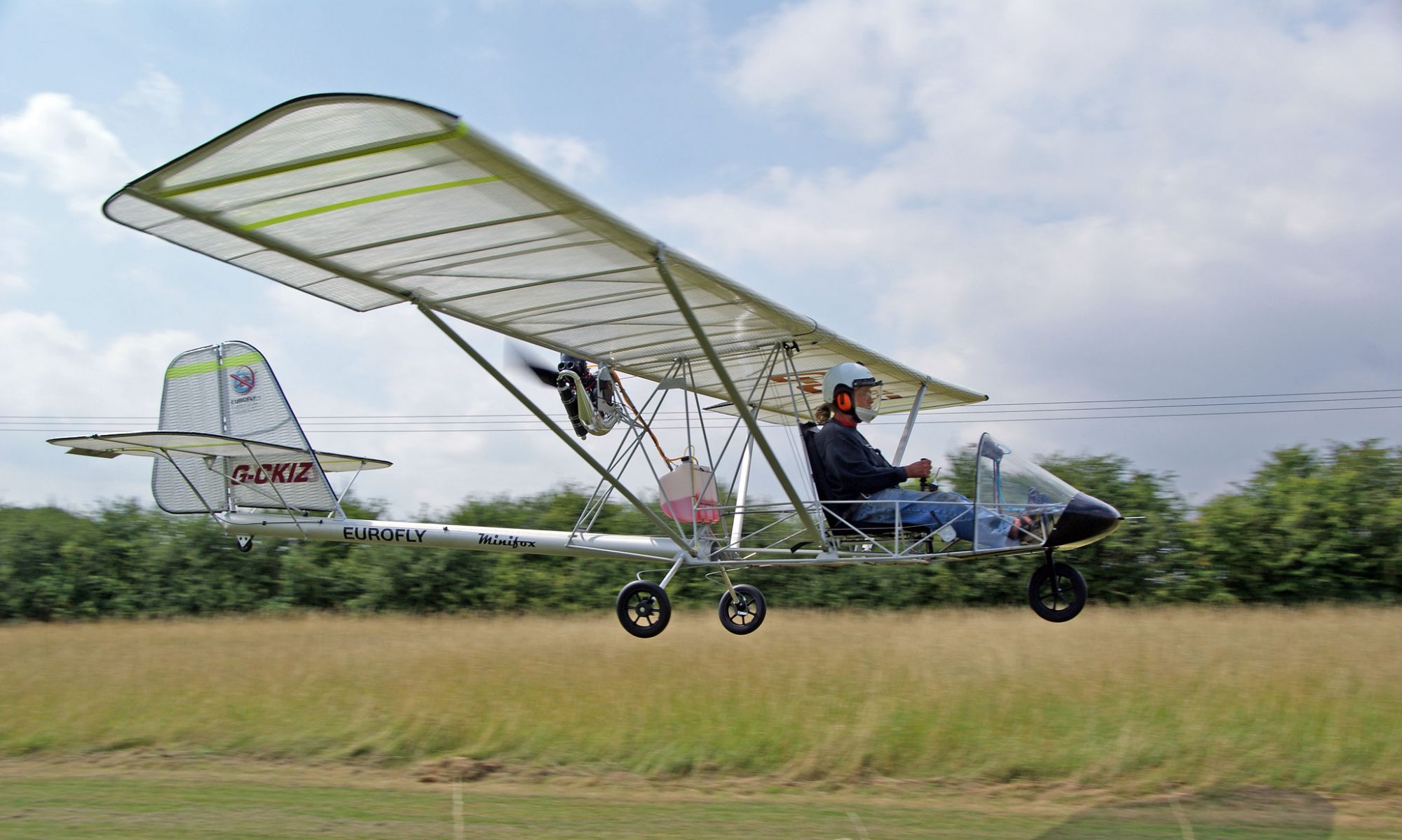
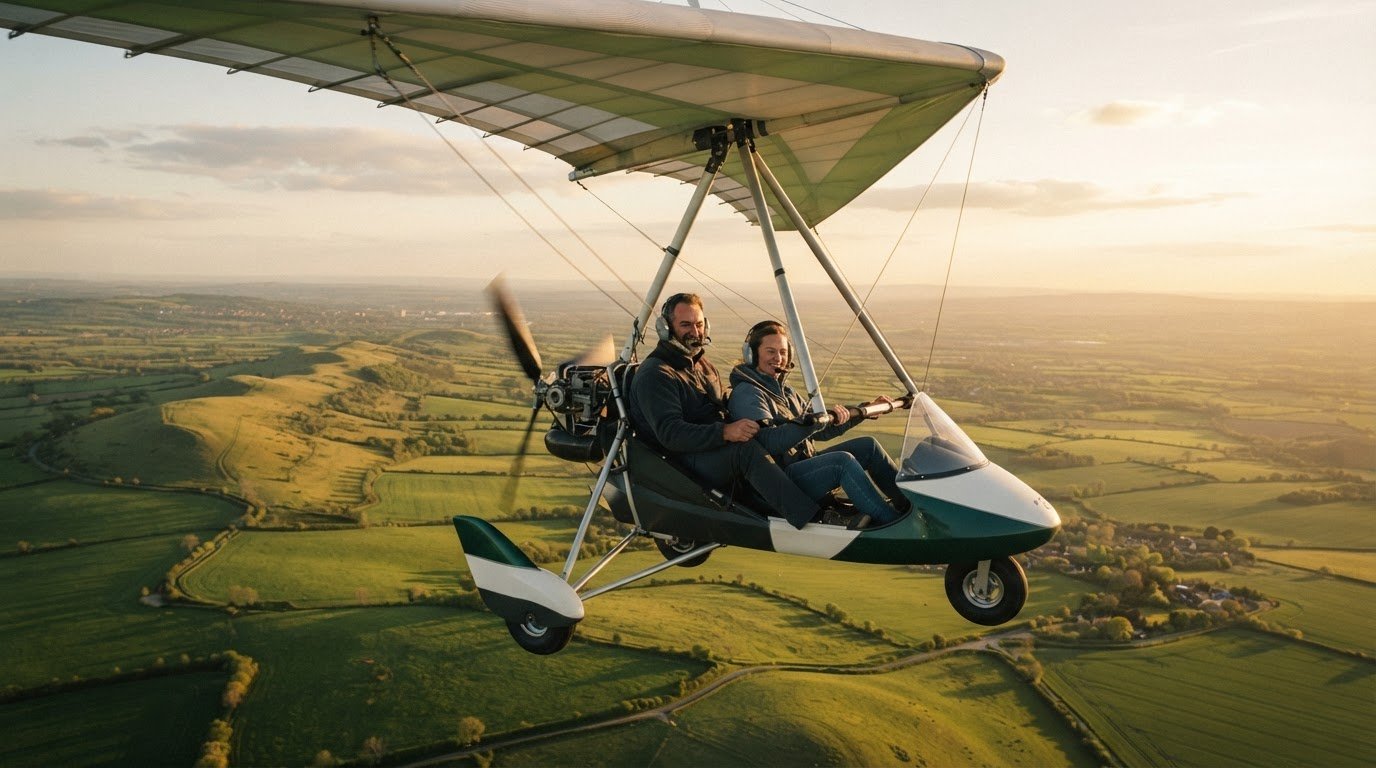
Not quite. A trial flight lets you experience being in the air and, under professional supervision, take the controls of a microlight. It’s an introduction to the wider field of ultralight aviation, rather than a substitute for structured training. At FunFlying Aviation Ltd, learners take control from their first lesson as part of a friendly, hands-on approach. If you enjoy the experience, you can consider continuing with lessons. One flight is a starting point, not a guarantee of a licence or a particular training outcome.
Why learners value flexibility
Work patterns, family plans and travel can make a fixed routine difficult. Flexible scheduling can help you fit flying around real life, while instructor-led practice gives you the chance to become more comfortable with the aircraft and the skills involved. FunFlying Aviation Ltd offers flexible schedules and structured microlight training for learners who want to continue. You can begin with an introductory flight and decide what you’d like to do next.
How microlight lessons and ground school build your flying skills
A structured microlight course makes each flight part of a wider learning journey. At FunFlying Aviation Ltd, practical tuition is instructor-led and hands-on, so you learn through guided participation rather than simply observing. Your instructor helps you understand what you’re practising and identify what to focus on next.
Practical instruction helps you develop flying skills in the air, while ground school supports your understanding of the knowledge behind them. Together, they connect what you experience in the aircraft with the broader learning involved in pilot training.
What happens during hands-on instruction?
You take control under professional supervision from your first lesson. Your instructor guides you and explains what’s happening in clear, beginner-friendly language. As you gain experience, feedback helps you recognise what’s becoming familiar, where you can improve and what your next learning goals might be. Each flight contributes to a structured course, rather than promising a particular result from one session. That makes ongoing pay as you go flying lessons Wiltshire a practical option for learners who want to build their skills over time.
Where does ground school fit?
Ground school is the theory side of your flying education. It supports practical instruction by helping you build knowledge and understand the decisions involved in learning to fly. FunFlying Aviation Ltd combines ground school with structured microlight tuition, so your learning includes both classroom sessions and time in the aircraft. The microlight learn-to-fly pathway explains how these elements fit together in a broader course.
How to plan flexible flying lessons around your goals and budget
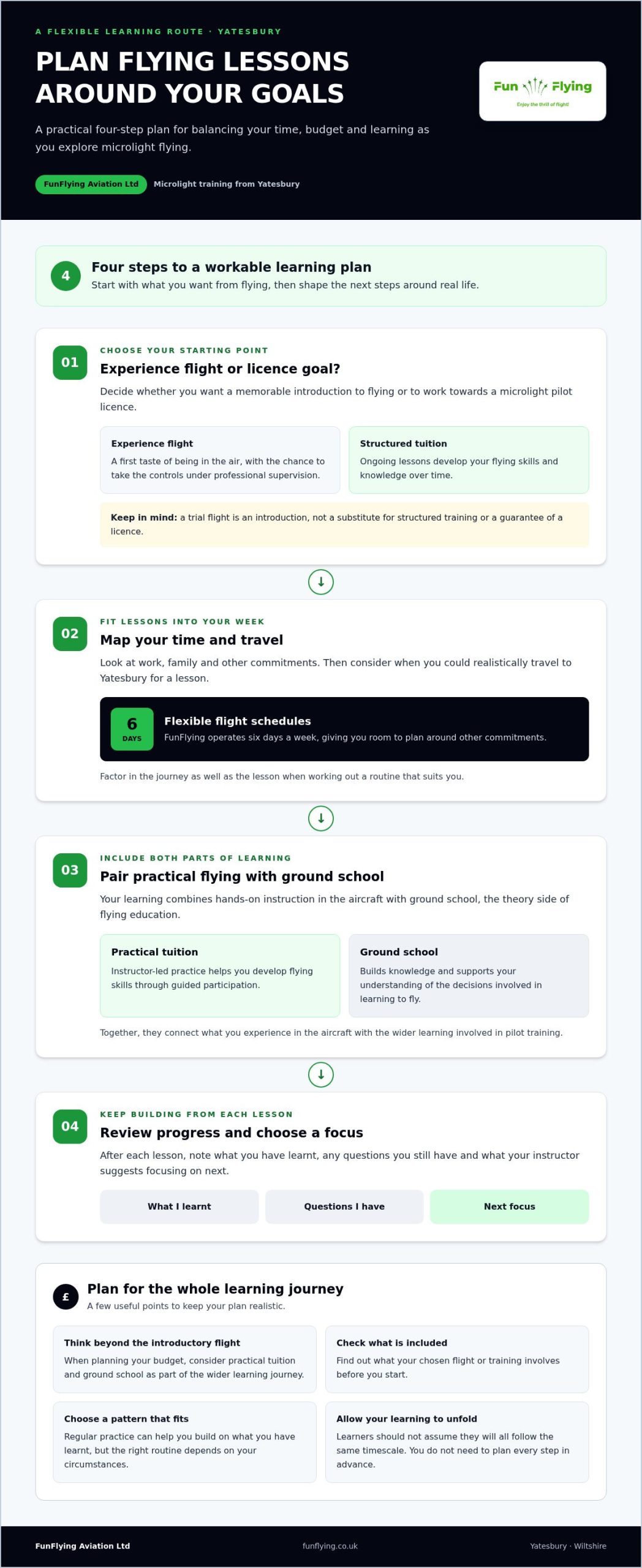
A little planning can help you make each lesson count without trying to predict exactly how long training will take. Start with what you want from flying, then make a realistic plan around your time, budget and learning progress.
- Set your goal. Are you looking for a memorable experience flight, or do you want to work towards a microlight pilot licence? Knowing the difference helps you choose a useful first step.
- Map your availability. Look at work, family and other commitments, then identify when you could realistically travel to Yatesbury for lessons.
- Make room for the theory. Include ground school in your plan. It supports the knowledge side of learning alongside practical flying.
- Review your progress. After each lesson, note what you’ve learnt, any questions you still have and what your instructor suggests focusing on next.
When planning your budget, consider the wider learning journey, including practical tuition and ground school, rather than treating an introductory flight as the full cost of pilot training. Before you start, find out what your chosen flight or training involves. You don’t need to plan every step in advance, and learners shouldn’t assume they will all follow the same timescale.
Match lesson planning to your real-life schedule
FunFlying offers flexible flight schedules and operates six days a week, giving learners room to plan around busy lives. If you’re travelling to Yatesbury, factor in the journey as well as the lesson when choosing a workable routine. Regular practice can help you build on what you’ve learnt, but the right pattern is one that fits your circumstances.
Keep the learning goal in view
Between lessons, jot down your instructor’s feedback, questions and next steps so you can return with a clear focus. If licence training is your aim, explore the microlight pilot-training guide to see how structured tuition can support your goal.
Start your Wiltshire flying lessons at Yatesbury
FunFlying Aviation Ltd provides microlight training from the Wiltshire Microlight Centre in Yatesbury. It’s a Wiltshire base for learners who want to explore flying through friendly, hands-on instruction, whether they’re curious about an introductory flight or considering structured pilot training. Flexible flight schedules and operations six days a week can help you plan around other commitments.
What makes Yatesbury a practical starting point?
Yatesbury gives you a clear base for your flying lessons. If you’re travelling from Swindon, Bristol, Newbury, Reading, Basingstoke, Andover, Bournemouth or Portsmouth, include the journey to the Wiltshire Microlight Centre in your planning, along with time for your lesson and any ground school. Check your route before setting off and allow your schedule to work with the trip, rather than relying on assumed journey times. Knowing where you’ll be learning makes it easier to picture how lessons could fit into everyday life.
Take the next step towards learning to fly
If you’re excited by the idea of taking control with an instructor beside you, microlight tuition is a welcoming way to begin. Start with a trial or experience flight, then decide whether you’d like to build on it through ongoing training. The microlight training pathway gives you an overview of the learning route. As you gain experience, practical instruction helps you focus on each next step.
Your next chapter could begin in the air
With pay as you go flying lessons Wiltshire, you don’t have to know exactly where your interest will lead before you begin. Let your first experience answer the questions that matter to you: how it feels to take the controls, what you’d like to learn next and whether flying deserves a bigger place in your plans.
Then take it one decision at a time. You might want the thrill of a flight, or you may feel ready to explore a longer learning journey. Either way, you can move forward with a clearer sense of what suits you, without needing every step mapped out in advance.
Your view of the sky could soon be very different. Start with curiosity, explore the training pathway and take your first step towards flying.
Frequently Asked Questions
How much do pay-as-you-go flying lessons in Wiltshire cost?
The total cost depends on the tuition arrangement and how your training develops. For pay as you go flying lessons Wiltshire, use FunFlying’s learn-to-fly information to review the training route. A trial or experience flight is an introduction, not the total cost of progressing through longer-term training.
How many lessons does it take to earn a microlight pilot licence?
There isn’t a reliable lesson count to promise, because progress depends on the learner and how their training develops. Rather than planning around an assumed timetable, focus on building skills steadily and discussing your progress with your instructor. After a lesson, note which parts feel more familiar and what you’d like to ask about next. Your instructor can help you identify useful learning goals as you go.
Can I try a flying lesson before committing to longer-term training?
Yes. FunFlying offers introductory trial and experience flights, so you can get a feel for flying under professional supervision before deciding whether to pursue ongoing tuition. Treat the first flight as a way to explore your interest, not as a promise of a particular training result. If you decide you’d like to continue, structured microlight tuition and ground school are part of the wider learning journey.
Are microlight flying lessons suitable if I have never flown before?
Yes, you can explore flying without previous experience. FunFlying’s instructors take a friendly, hands-on approach, with learners taking control under professional supervision from their first lesson. Your instructor can explain what you’re doing in clear, accessible language, so you can focus on the experience rather than arriving with technical knowledge. It’s a welcoming way to find out whether you’d like to learn more.