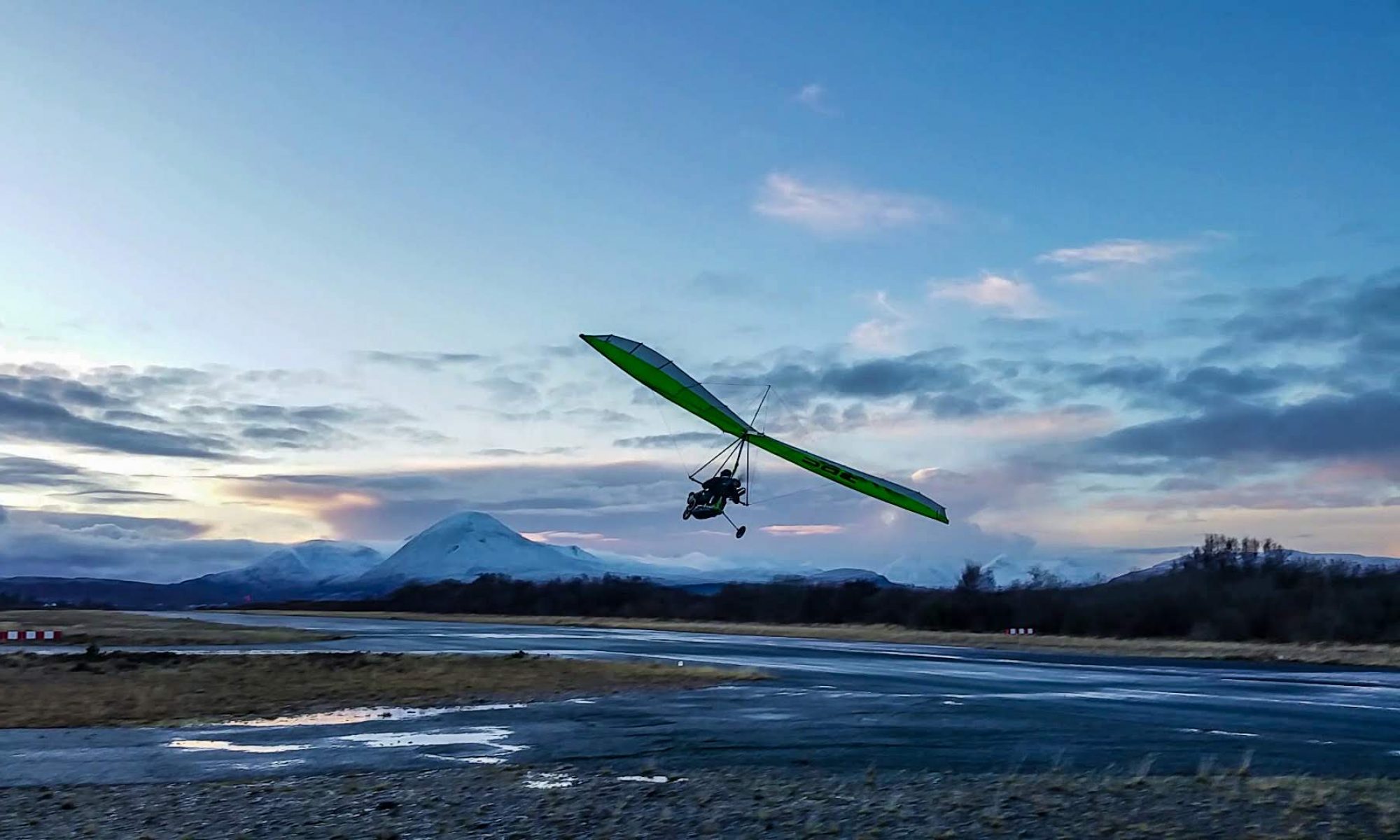

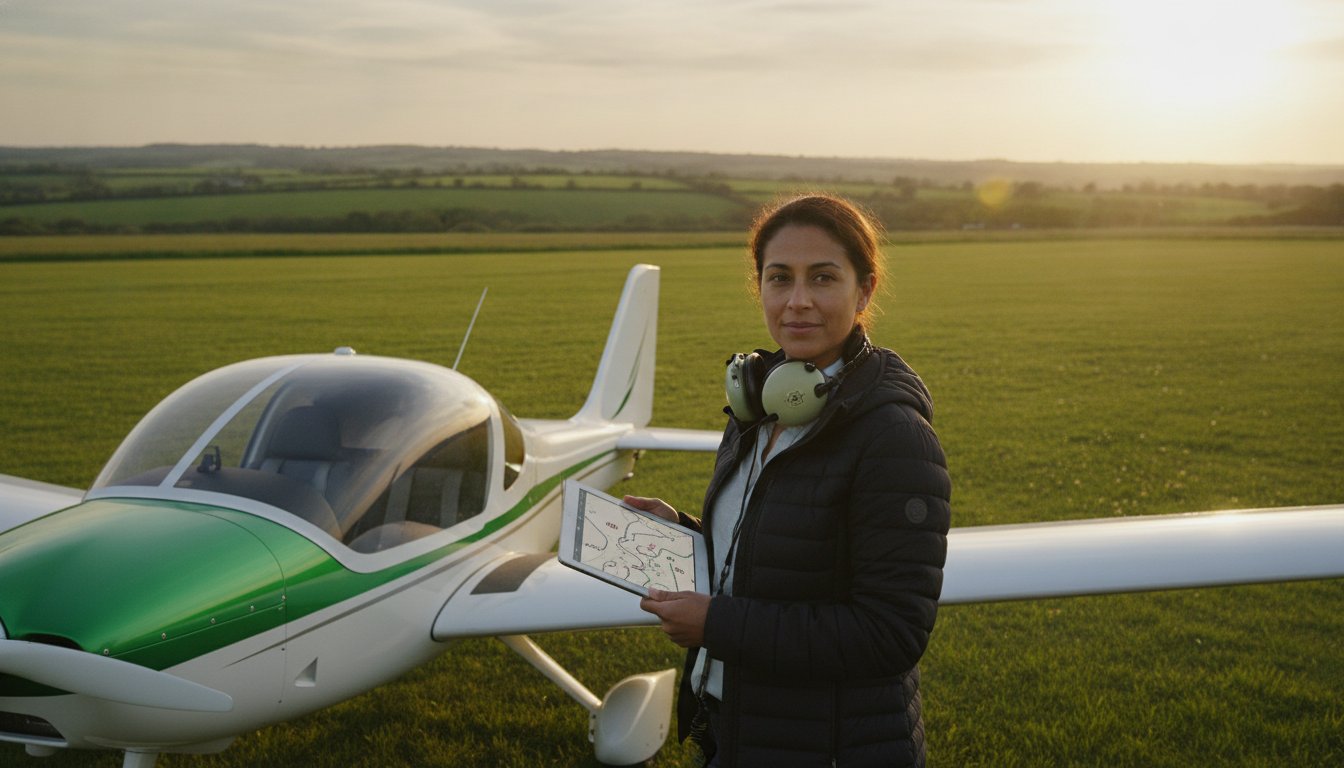
Imagine the sensation of lifting off from the grass strip at Yatesbury, the ground falling away as you take control of a microlight for the first time. It’s a moment of pure, unadulterated freedom. But what if the only thing keeping you grounded isn’t the British weather, but a stack of daunting textbooks? For many, the prospect of microlight ground school UK feels like a high-altitude hurdle. You want to be in the cockpit, not stuck at a desk worrying about complex navigation or technical jargon.
We understand that the fear of failing exams or finding time between busy work shifts can make your pilot’s licence feel out of reach. It’s a common worry; whilst the NPPL(M) is much more accessible than a traditional PPL, the theory still requires a steady hand and a clear head. This guide is your flight plan to success. We’ll demystify the five core exam subjects and explain the 2026 CAA regulatory shifts so you can study with total confidence. From syllabus secrets to time-saving study tips, you’re about to discover how to turn those technical manuals into your ticket to the clouds.
Key Takeaways
- Understand why theory training is the foundation of your safety and confidence in the cockpit, turning you from a passenger into a pilot.
- Get a clear breakdown of the five core NPPL(M) subjects, including how to master Air Law and unpredictable British Meteorology.
- Discover how the multiple-choice exams work and why professional microlight ground school UK tuition makes passing a stress-free process.
- Compare the flexibility of online study platforms with the social, hands-on benefits of learning in person at our Yatesbury centre.
- Learn how to build a structured study plan that fits around your busy work schedule, ensuring you’re ready to take control from day one.
Table of Contents
-
Choosing Your Study Method: Online Courses vs. Flight School Tuition
-
Elevate Your Training at FunFlying: Ground School with a View
What is Microlight Ground School and Why is it Essential?
Think of microlight ground school UK as the moment you stop being a passenger and start becoming a pilot. It isn’t just about passing exams to tick a box. It’s the mental toolkit that ensures every time you pull back on that bar, you know exactly what the aircraft is doing and why. Whilst the physical act of flying is a sensory thrill, ground school provides the logic that keeps that thrill safe. It’s where you learn to read the sky, understand the invisible forces of lift, and navigate the complex motorway of the British airwaves.
Many students worry that they need to be a mathematical genius to handle the theory. Let’s put that myth to rest right now. You don’t need a degree in physics to fly a microlight. The syllabus is designed for practical, real-world application. If you can handle basic arithmetic and have a passion for aviation, you have everything you need to succeed. At FunFlying Aviation Ltd, we believe in "taking control from lesson one," and that philosophy applies to the classroom too. By studying your theory alongside your flight lessons, the abstract concepts you read about in the morning become the physical sensations you feel in the afternoon.
The Legal Requirement for the NPPL(M)
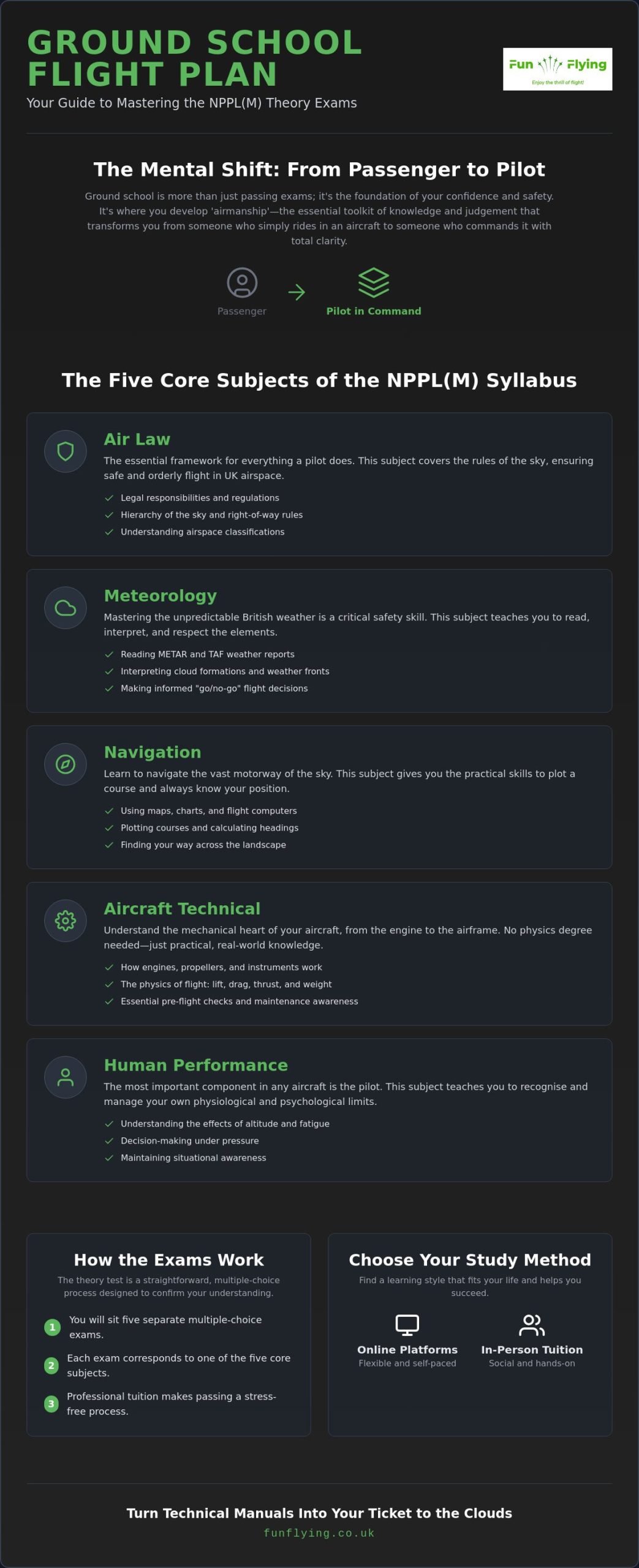
To fly a microlight in the UK, you need a National Private Pilot Licence with a Microlight Class Rating, commonly known as the NPPL(M). This licence is overseen by the Civil Aviation Authority (CAA), but much of the day-to-day administration and syllabus development is handled by the British Microlight Aircraft Association (BMAA). This partnership makes the NPPL one of the most accessible and cost-effective routes into the sky. You’ll need to pass five multiple-choice exams, but don’t let that number intimidate you. These subjects are the building blocks of your autonomy as a pilot, covering everything from the rules of the air to the mechanical heart of your aircraft.
The Mental Shift: From Passenger to Pilot
Ground school is where you develop "airmanship." This is a term pilots use to describe a blend of situational awareness, technical knowledge, and sound judgement. Imagine you’re cruising at 2,000 feet and the horizon starts to haze over. Because of your ground school training, you won’t panic. You’ll recognise the meteorological signs, check your charts for the nearest airfield, and make a calm, safe decision. This theoretical foundation builds the confidence required for your first solo flight. When you understand the "how" behind the flight, the "doing" becomes infinitely more enjoyable. You aren’t just following instructions; you’re commanding the aircraft with total clarity.
The Five Core Subjects of the NPPL(M) Syllabus
Stepping into the world of microlight ground school UK means tackling five distinct subjects. It is a structured journey that transforms you from a curious observer into a competent aviator. These subjects aren’t just hurdles to clear; they are the essential components of your pilot’s toolkit. By the time you sit your final paper, you’ll have a holistic understanding of how to operate safely and legally in the British sky. The five subjects you’ll master are:
-
Air Law: The rules of the sky and legal responsibilities.
-
Meteorology: Predicting and interpreting the British weather.
-
Navigation: Plotting courses and finding your way across the landscape.
-
Aircraft Technical: Understanding the mechanics and physics of your microlight.
-
Human Performance: Recognising your own physiological and psychological limits.
Meteorology and Air Law: The Big Two
Air Law is typically the first exam students sit. It provides the essential framework for everything we do in the cockpit. It covers the hierarchy of the sky, right-of-way rules, and the specific regulations that keep our airspace orderly. Imagine flying from our base at Yatesbury; you need to know exactly which airspace belongs to whom and how to communicate with other pilots in the vicinity. Air Law makes that possible.
Then there is Meteorology. In the UK, the weather is more than just a topic of conversation; it’s a critical safety factor. Ground school teaches you to respect the Wiltshire wind and interpret cloud formations. You will learn to read "Met" reports and make informed "go/no-go" decisions. Understanding how a cold front moves or how turbulence forms near hills ensures that your flights remain enjoyable rather than stressful. If you want to see how these weather patterns look from above, you can book a trial flight to experience the elements first-hand.
Navigation and Technical Knowledge
Even in 2026, as advanced 600kg microlights with digital cockpits become more common, the art of the paper chart remains vital. What happens if your electronic tablet fails? Navigation training ensures you can draw a line, calculate your heading, and account for wind drift using traditional tools. It’s a rewarding skill that connects you to the history of aviation.
Simultaneously, the Technical and Principles of Flight exam explains the magic of how you stay up there. You’ll learn how lift, weight, thrust, and drag work in harmony. This isn’t just about theory; it’s about knowing your engine’s heartbeat and understanding basic airframe maintenance. This knowledge gives you the confidence to trust your machine, knowing exactly how it will behave in every phase of flight. Human Performance rounds this off by teaching you how factors like fatigue, altitude, or even a common cold can affect your decision-making in the air.
How the Microlight Theory Exams Work: A Step-by-Step Guide
So, you’ve spent your evenings with the books and your weekends in the air. Now comes the moment to formalise that knowledge. The examination process for your microlight ground school UK training is designed to be supportive, not scary. Each of the five subjects culminates in a multiple-choice paper. These aren’t trick questions designed to catch you out. Instead, they’re practical assessments that ensure you have the core knowledge required to stay safe. Most papers consist of 10 to 20 questions, with time limits ranging from 20 to 45 minutes depending on the complexity of the subject.
The pass mark for each exam is 75%. If you don’t hit that mark on your first try, please don’t panic. It isn’t the end of your flying career. Resits are common and often provide a valuable opportunity to revisit a specific area with your instructor before trying again. The cost to sit each paper typically falls between £40 and £50. One crucial thing to keep in mind is the "validity window." You must pass all five exams within a 24-month period before you take your General Skills Test (GST). This gives you plenty of breathing room to study at a pace that suits your lifestyle.
Sitting Your Exams at the Flight School
While some platforms offer digital study aids, there is a distinct advantage to sitting your papers at the Wiltshire Microlight Centre. Our dedicated exam room at Yatesbury offers a quiet, professional environment away from the distractions of home. Our instructors are always on hand to offer a final bit of encouragement or clarify a tricky concept before you turn over the paper. On exam day, make sure you’re prepared. You’ll need your navigation tools for the Nav paper; think protractors, rulers, and a flight computer; and perhaps a fuel tester or checklist for the technical discussion. Having everything organised beforehand helps settle those pre-flight nerves.
Understanding the Results and Feedback
One of the best parts of sitting exams at a registered centre is the immediate feedback. You won’t be left waiting for weeks for a letter in the post. Once you finish, your instructor will mark the paper and give you your result right then and there. This is a brilliant moment for a debrief. If you missed a question about cloud formations or right-of-way rules, you can discuss it immediately whilst the information is fresh in your mind. This feedback directly informs your next flying lesson, turning a theoretical "mistake" into a practical skill. Finally, every pass is recorded in your pilot logbook, a tangible record of your progress toward earning your wings.
Choosing Your Study Method: Online Courses vs. Flight School Tuition
How do you prefer to learn? Some people thrive in a quiet corner with a tablet. Others need the buzz of a working airfield to truly absorb the material. When it comes to microlight ground school UK, you have two main paths: the digital route or face-to-face tuition. Both have their merits. The real magic happens when you combine them. Choosing the right method is about more than just convenience; it’s about ensuring the knowledge sticks when you’re 2,000 feet in the air.
Digital platforms like Quizaero or EasyPPL are fantastic for flexibility. They allow you to squeeze in a quick mock exam during your lunch break or review meteorology charts before bed. These tools are excellent for repetition and building familiarity with the multiple-choice format. However, an app can’t see the look of confusion on your face when you’re trying to calculate wind drift. It can’t share a story about a real-life "close call" that makes a dry regulation suddenly feel vital. You get the data, but you might miss the context.
That’s where in-person ground school at Yatesbury shines. Learning amongst fellow aviation enthusiasts turns a solitary chore into a social event. You’ll find that "hangar talk", those informal chats over a cup of tea, is often where the most profound lessons are learned. You aren’t just memorising facts; you’re joining a community of pilots who all want to see you succeed. This social environment accelerates your learning because you’re constantly talking and thinking about flight.
When to Choose In-Person Tuition
If you’re finding Navigation or Technical subjects particularly tricky, don’t struggle alone. These are the areas where tailored coaching makes all the difference. An instructor can adapt their explanation to your personal learning style, using physical models or real aircraft components to illustrate a point. This hands-on approach is the cornerstone of our microlight ground school tuition. We ensure you don’t just pass the test, but truly understand the machine you’re flying. Real-world examples from seasoned instructors turn abstract concepts into practical airmanship.
Maximising Your Home Study
Even with expert help, your home study remains a vital part of the process. Invest in the recommended BMAA textbooks and a quality flight computer. Set a realistic schedule that respects your busy work life. Perhaps thirty minutes every other evening is more sustainable than a five-hour marathon on a Sunday. Use practice exams to gauge your readiness, but remember they are a temperature check, not the whole story. The goal is to arrive at the exam desk feeling prepared, relaxed, and ready to fly.
Elevate Your Training at FunFlying: Ground School with a View
Ground school shouldn’t feel like a dry academic chore. It’s the first real step on your journey to becoming a pilot. At FunFlying, we bring the syllabus to life through our "Expert Enthusiast" approach. We aren’t just instructors; we’re pilots who still get a thrill every time we leave the ground. Our microlight ground school UK sessions are designed to be as engaging as the flights themselves. We believe that when you’re having fun, the knowledge sticks. We don’t just teach you how to pass an exam; we teach you how to think like a pilot from day one.
We take pride in removing the obstacles that often make aviation feel elite or inaccessible. Our sessions are flexible, designed to fit around your busy work life and personal commitments. Whether you need a deep dive into Navigation or a quick refresher on Air Law, we adapt our coaching to your pace. This isn’t a factory line. It’s personal, tailored tuition delivered in a friendly environment where no question is too small. We bridge the gap between the textbook and the cockpit, ensuring that every theoretical concept has a practical, real-world application you can use in the air.
Why Wiltshire is the Perfect Classroom
Our location at the Wiltshire Microlight Centre offers more than just a place to study. It provides a living laboratory for your training. Yatesbury sits in a fascinating patch of sky. When we study Navigation, we aren’t just looking at abstract lines on a map. We’re looking at the unique airspace challenges around Swindon, Bristol, and Bath. You’ll learn how to navigate these busy corridors with total confidence. It’s a rewarding feeling when you can identify the local landmarks, like the iconic white horses carved into the Wiltshire hills, to confirm your position at 2,000 feet.
Learning here means joining a vibrant community. You’ll find yourself amongst fellow students and seasoned pilots who love to share their favourite flying spots and cross-country tips. This social side of ground school is invaluable. It turns a solitary study session into a shared adventure. You’ll hear stories of real flights that make the Meteorology or Technical chapters suddenly feel vital and vivid. This local context makes the theory much easier to digest because you can see it happening right outside the classroom window.
Start Your Aviation Journey Today
Aviation is for everyone. We’re committed to making your training inclusive, straightforward, and above all, enjoyable. You don’t need to be a mathematician or an engineer to get your wings. You just need the passion to learn and the right guidance to get you there. From your very first trial flight to the moment you hold your NPPL(M), we provide a structured, supportive path to success. Don’t let the books keep you grounded. You can organise your microlight ground school at FunFlying today and start turning your dream of flight into a reality.
Your Pilot’s Licence is Within Reach
The dream of navigating the clouds above Wiltshire is closer than you think. You’ve seen that the theory exams aren’t just hurdles to clear; they’re the building blocks of a confident, safe pilot. From mastering British meteorology to understanding the mechanical heart of your aircraft, every subject brings you one step closer to that unrestricted licence. By choosing a structured approach to microlight ground school UK, you can turn a potentially daunting syllabus into a rewarding social experience.
At FunFlying, we’re proud to be a highly rated microlight school serving Wiltshire and the South West. Based at the historic Yatesbury airfield, our expert instructors prioritise your safety and the pure joy of flight. We don’t just want you to pass; we want you to thrive in the cockpit. Whether you’re balancing study with a busy work life or looking for a community that shares your passion, we’re here to guide you every step of the way.
Ready to take control? It’s time to stop imagining and start flying. Book Your Ground School or Trial Flight at FunFlying and let’s get your aviation journey off the ground. The sky is waiting for you.
Frequently Asked Questions
How many exams are there for a microlight licence in the UK?
You must pass five theory exams to obtain your NPPL(M). These subjects are Air Law, Meteorology, Navigation, Aircraft Technical, and Human Performance. Each paper consists of multiple-choice questions designed to test your practical understanding of safe flight operations in the UK.
How hard are the microlight theory exams for beginners?
The exams are designed to be accessible and focus on practical application rather than complex academic theory. You don’t need to be a mathematician or a physicist to succeed. Most students find that with consistent study and a bit of guidance from their instructor, the concepts become clear and logical quite quickly.
Can I study for my microlight ground school online?
Yes, you can certainly use digital platforms and apps to support your microlight ground school UK training. These tools are excellent for mock exams and flexible revision. However, many pilots find that in-person tuition at a flight school provides the real-world context and personal mentorship that helps the knowledge truly stick.
How long do the microlight exam results stay valid?
Your theory exam passes remain valid for 24 months. You must complete all five exams and pass your General Skills Test (GST) within this two-year window. This timeframe is quite generous, allowing you to progress at a pace that fits around your personal life and professional commitments.
What is the pass mark for the NPPL(M) theory exams?
The pass mark for each of the five theory exams is 75%. If you happen to fall short on your first attempt, you can resit the exam after further revision. We treat a resit as a valuable learning opportunity to strengthen your knowledge in specific areas before you take to the skies again.
Do I need to pass the ground school before I start flying lessons?
No, you don’t need to finish your ground school before you begin flying. In fact, we encourage students to learn theory and practical skills concurrently. Seeing a weather front from the cockpit or using a chart during a real flight makes the microlight ground school UK syllabus much more intuitive and exciting.
How much does microlight ground school cost in the UK?
The fee to sit each of the five theory exams is typically between £40 and £50 per paper. If you opt for professional one-to-one ground school tuition, you can expect to pay between £30 and £50 per hour. Investing in expert help can often accelerate your progress and build your confidence more effectively than studying alone.
Is there an age limit for sitting the microlight theory exams?
There is no specific minimum age for sitting the theory exams, but there are age requirements for other milestones. You must be at least 14 years old for your flight hours to count towards a licence, 16 years old to fly solo, and 17 years old to be issued your pilot’s licence.