
What Defines a Microlight Aircraft in the UK?
Have you ever looked up at the sky and felt a pull, a desire to be up there amongst the clouds? For many, that dream feels distant, locked behind a world of expensive training and complex regulations. But what if we told you there’s a more accessible, affordable, and incredibly fun way to earn your wings? Welcome to the world of microlight aviation.
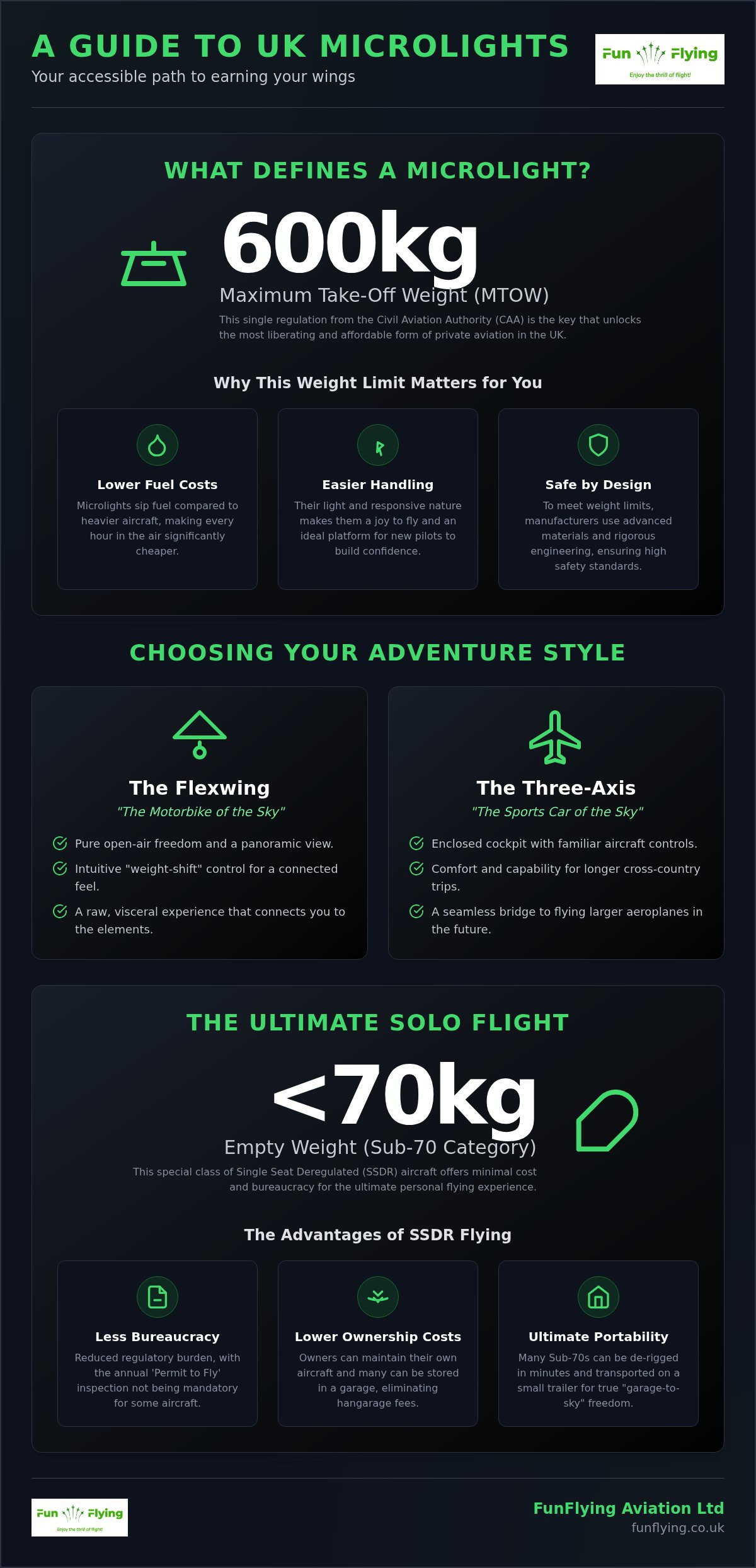
In the UK, the definition of a microlight is refreshingly simple. It’s not about the size or the engine, but about one key number: 600kg. This is the Maximum Take-Off Weight (MTOW) an aircraft can have to be classified as a microlight. This single regulation, set by the Civil Aviation Authority (CAA), is the key that unlocks the most liberating form of private aviation available today.
This weight limit is the secret sauce that makes microlighting the most affordable path into the sky. It means lighter materials, more efficient engines, and lower running costs. But don’t mistake ‘lightweight’ for ‘light-duty’. Modern microlights are sophisticated, high-performance machines that blend cutting-edge technology with the pure joy of flight. They represent a perfect balance: the freedom of less bureaucracy whilst operating under the UK’s world-class safety standards.
The Evolution of Lightweight Aviation
Microlights have come a long way from their origins as powered hang gliders. What started as a grassroots movement has evolved into a showcase of British engineering and innovation. The UK has consistently been at the forefront of this evolution, shaping sensible regulations that encourage both safety and adventure. The aircraft of today are a testament to this journey—sleek, reliable, and capable of incredible cross-country journeys.
Why Weight Limits Matter for You
So, why should you care about that 600kg limit? Because it directly translates into benefits for you as a pilot. A lighter aircraft means:
- Lower Fuel Costs: Microlights sip fuel compared to their heavier counterparts, making every hour in the air significantly cheaper.
- Easier Handling: Their light and responsive nature makes them an absolute joy to fly and an ideal platform for beginners to build confidence.
- Strict Engineering: To meet these weight limits without compromising on strength, manufacturers use advanced materials and designs. This means that, contrary to old-fashioned beliefs, microlight flying is incredibly safe, thanks to rigorous engineering and airworthiness standards.
Flexwing vs. Three-Axis: Choosing Your Adventure Style
When you picture a microlight, what do you see? The answer likely depends on which of the two main types you’ve encountered. Both will earn you the same National Private Pilot’s Licence (NPPL), but they offer fundamentally different flying experiences. Choosing between them is less about performance and more about personality. What kind of pilot do you want to be?
The Flexwing Experience: Pure Freedom
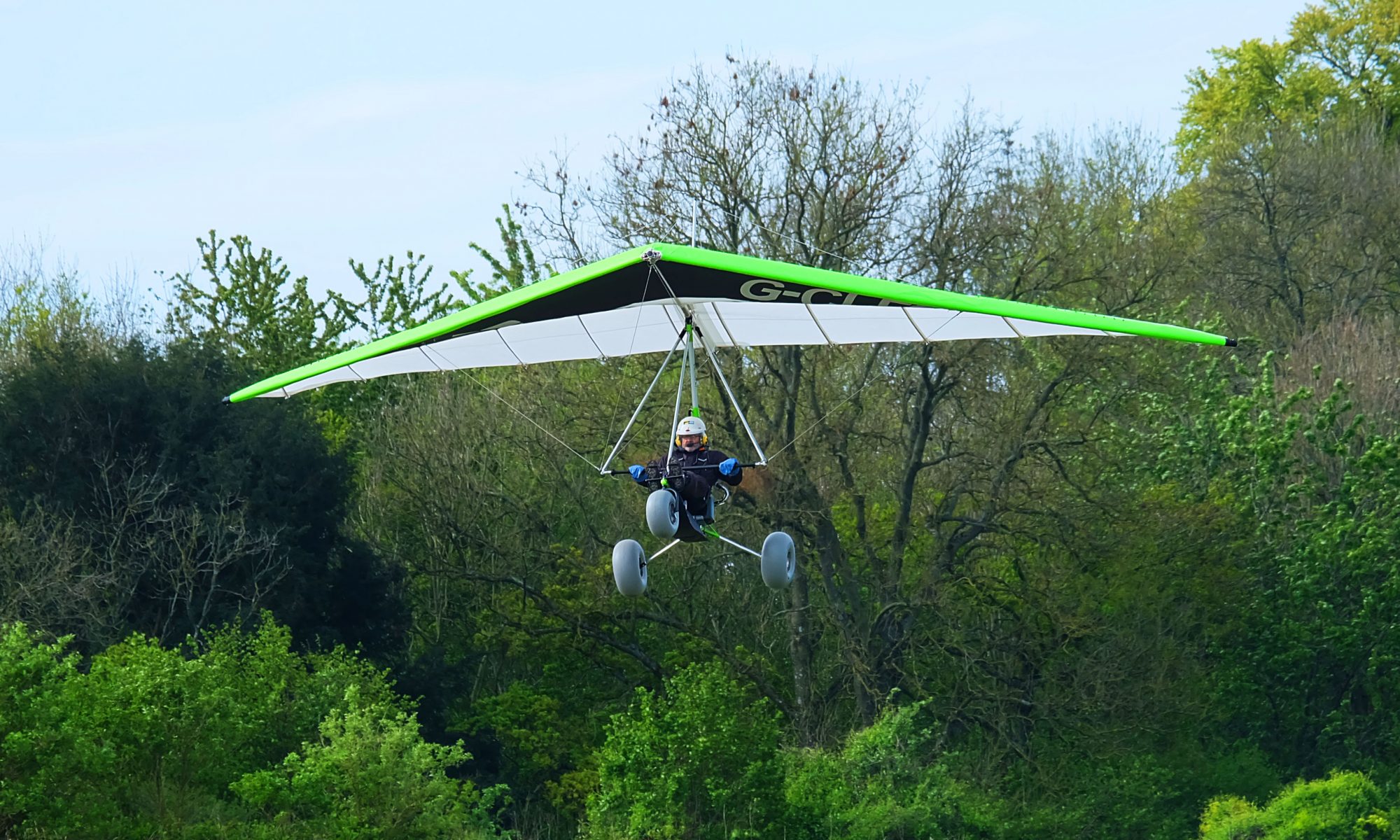
Often called the “motorbike of the sky,” a flexwing microlight is the essence of open-air freedom. Instead of a traditional cockpit, you sit in a streamlined ‘trike’ unit suspended beneath a fabric wing. There’s no stick or yoke; you steer by gently shifting your weight and moving the wing directly via a control bar. It’s an intuitive, connected way of flying that makes you feel part of the air itself.
With an uninterrupted panoramic view and the wind in your face, it’s no wonder flexwings are a firm favourite amongst photographers, nature lovers, and anyone seeking the purest form of flight. It’s a raw, visceral experience that connects you directly to the elements.
Three-Axis Microlights: The Modern Cockpit
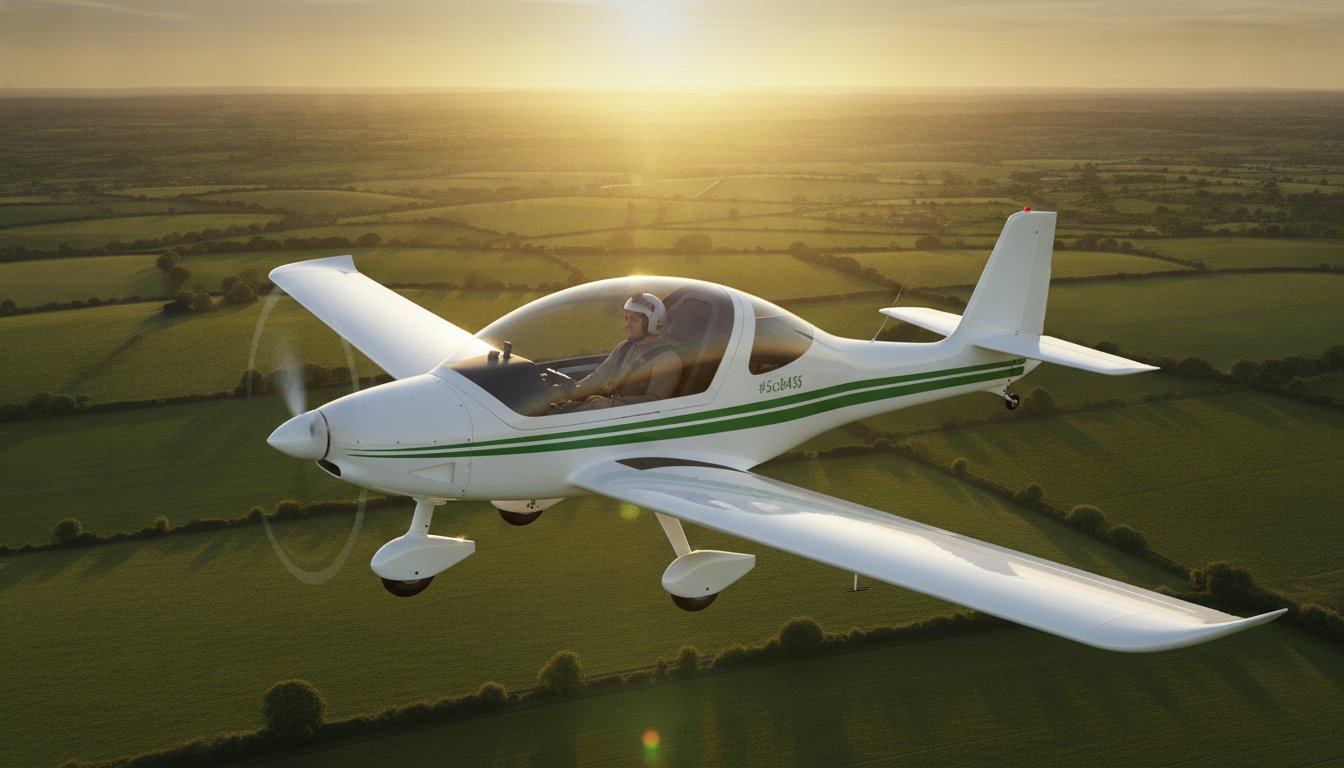
If a flexwing is a motorbike, a three-axis microlight is the sports car. At first glance, it looks just like a traditional light aircraft—and it flies like one, too. You sit in an enclosed cockpit, often side-by-side with your instructor or passenger, with familiar controls like a control stick and rudder pedals.
These aircraft offer a different kind of freedom: the freedom of comfort and capability. With features like cabin heat, impressive range, and luggage space, they are perfect for longer cross-country adventures. For those who dream of one day flying larger aeroplanes, three-axis microlight training offers a seamless and cost-effective bridge, teaching you the fundamental skills in a modern, comfortable environment.
Sub-70 and SSDR: The Ultimate Solo Flight
Beyond the two main categories lies the most exciting and accessible corner of UK aviation: Single Seat Deregulated (SSDR). This classification is a game-changer for pilots who want the ultimate freedom of owning and flying their own machine with minimal cost and bureaucracy.
Within this world, you’ll find the incredible Sub-70 category. These are the lightest of all microlights, so-named because their empty weight is under 70kg. Often taking the form of minimalist trikes, these aircraft are marvels of efficiency. The key advantage of SSDR is the reduced regulatory burden. For certain Sub-70 aircraft, the traditional annual ‘Permit to Fly’ inspection isn’t mandatory, which dramatically lowers the cost of ownership.
Flying Without the Fuss
The SSDR framework empowers pilots by allowing them to maintain their own aircraft. This doesn’t just save you a huge amount on annual maintenance bills; it fosters a deeper understanding and connection with your machine. It’s the ultimate expression of personal aviation. However, it’s crucial to understand that while the ownership rules are relaxed, the training standards are not. To fly any aircraft safely, microlight flying for beginners always starts with professional instruction to build the core skills and airmanship you need.
Is a Sub-70 Microlight Right for You?
If your dream is to have a personal flying machine for weekend adventures, a Sub-70 could be perfect. Their biggest advantage is portability. Many can be de-rigged in minutes and stored in a garage or on a small trailer, completely eliminating hangarage fees. This “garage-to-sky” capability offers a level of spontaneity that is simply unmatched. It’s about grabbing that perfect weather window and heading for the clouds on your own terms.
Taking the Controls: How to Start Your Journey in Wiltshire
Reading about flying is one thing. Experiencing it is something else entirely. The best way to understand the difference between these microlight aircraft types is to get in the pilot’s seat and fly them yourself. An introductory trial flight isn’t just a joyride; it’s your first lesson.
Here at FunFlying Aviation Ltd, based at the Wiltshire Microlight Centre in Yatesbury, we believe in a “take control from day one” philosophy. From your very first flight, you will be on the controls, feeling how the aircraft responds, with a professional instructor guiding you every step of the way. Whether you’re considering a gift voucher for an adrenaline-seeker or taking the first step towards a full pilot’s licence, it all starts here.
The Trial Flight: Your First Lesson
Your journey begins with an experience flight, available in 30, 60, or 90-minute sessions. During your pre-flight briefing, you’ll learn about the aircraft’s controls and the basic principles of flight. Once airborne, your instructor will hand control over to you, letting you perform gentle turns, climbs, and descents. And the best part? Every minute you fly counts towards the hours required for your NPPL licence, should you decide to continue your training.
Why Yatesbury is the Perfect Classroom
There is simply no better place to learn to fly. Our base at Yatesbury offers uncongested airspace and breathtaking views over the Wiltshire downs, ancient stone circles, and iconic white horses. Conveniently located for aspiring pilots from Swindon, Bristol, Newbury, and across the South West, our airfield provides a friendly, supportive club atmosphere. We invite you to visit us, meet the instructors, see the different aircraft types up close, and discover just how achievable your dream of flying really is.
Ready for your adventure to begin? Book your first flying lesson and take the controls today!
Frequently Asked Questions (FAQs)
Do I need a special medical certificate to fly a microlight in the UK?
No, for a microlight licence you don’t need a formal Class 2 aviation medical. Most people can fly on a simple self-declaration of medical fitness, which you sign yourself. For certain pre-existing conditions, a GP may need to countersign the form. This is one of the key factors that makes microlighting so accessible.
What is the difference between a microlight and a light aircraft?
The primary difference is weight. In the UK, a microlight has a Maximum Take-Off Weight (MTOW) of 600kg or less. A light aircraft is anything heavier than that. This weight difference leads to lower running costs, different licence requirements, and a more relaxed medical standard for microlights.
Can I fly a microlight if I am over 60 or have no prior experience?
Absolutely! There is no upper age limit for learning to fly a microlight, as long as you can meet the medical standard of a self-declaration. Many people take up flying later in life. And as for experience, everyone starts from zero. Microlights are the perfect aircraft for complete beginners.
How much does it typically cost to buy your own microlight aircraft?
The cost varies hugely. A second-hand, older model can be bought for just a few thousand pounds, similar to a used car. A brand-new, top-of-the-range three-axis or flexwing can cost over £100,000. The SSDR and Sub-70 categories offer some of the most affordable ownership options.
Which microlight type is easier to learn for a complete beginner?
Neither is inherently “harder,” but they require slightly different skills. Some people find the conventional stick-and-rudder controls of a three-axis more intuitive, whilst others immediately click with the direct, physical feel of a flexwing. The best way to find out which suits you is to book a trial flight in both!
Can I fly a microlight aircraft across the UK and into Europe?
Yes! Once you have your licence, you are free to explore the length and breadth of the UK. Flying to Europe is also perfectly possible and a popular adventure for many microlight pilots, though it requires some extra planning regarding flight plans and airspace regulations in different countries.